1. At a Glance – The New-Age Logistics Rocket 🚀
₹7,053 Cr market cap.
₹122 current price.
P/E: 202.
ROCE: 4.38%.
ROE: 2.25%.
Debt to Equity: 0.98.
And then BOOM — Q3 FY26 revenue at ₹1,160 Cr, up 65.5% YoY. PAT jumps 440%. Margins expanding. Festive season peak of 36 lakh daily orders.
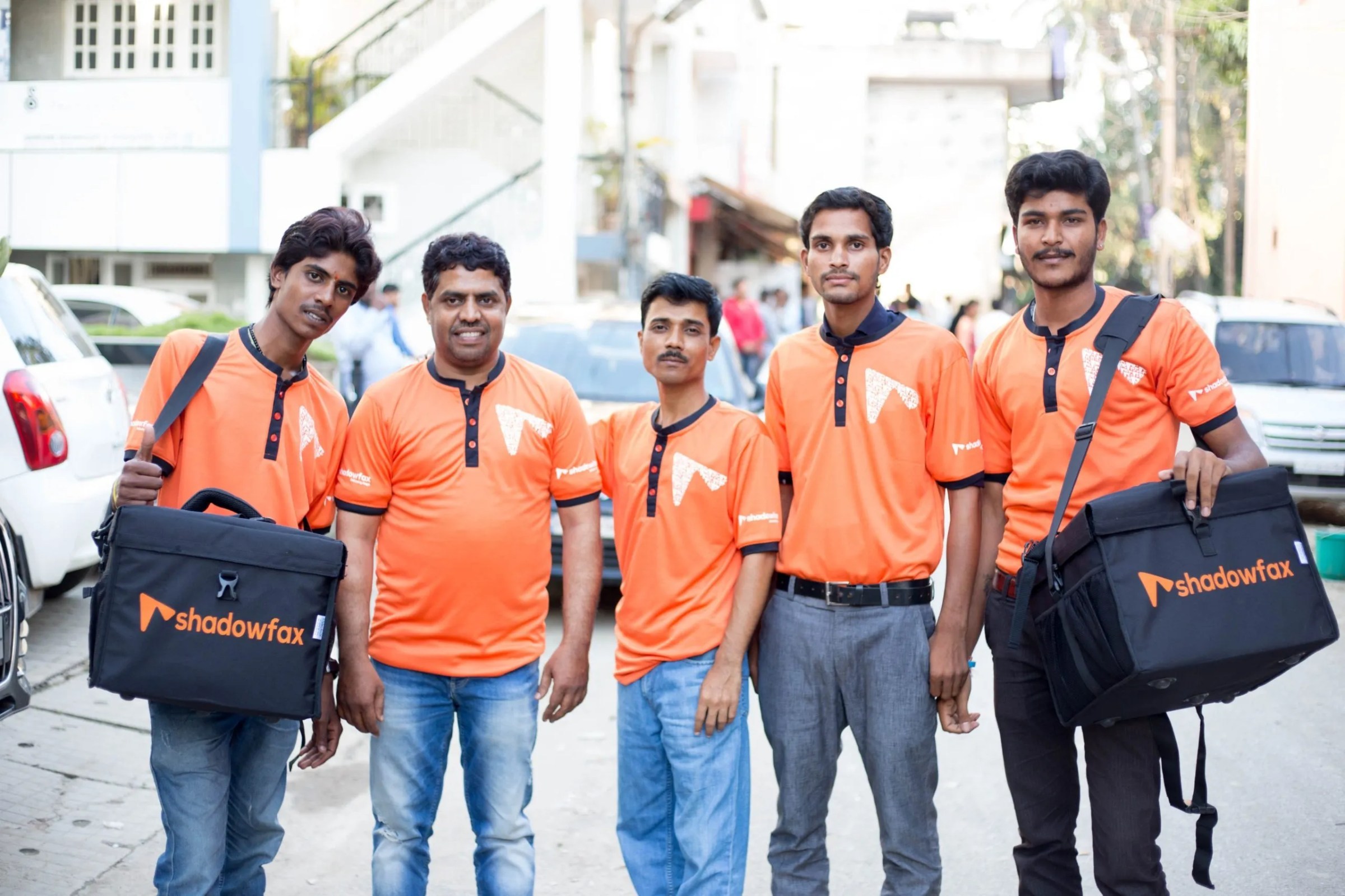
Welcome to Shadowfax Technologies Ltd, India’s hyperactive delivery machine that wants to be the “Power Grid” of digital commerce.
But here’s the masala:
- Earnings yield: 0.37%
- EV/EBITDA: 78.2
- Interest coverage: 1.28
- Promoter holding: 16.7%
So we have explosive growth… but razor-thin profitability… and a valuation that thinks it’s already Amazon Prime.
Is this the challenger rewriting logistics economics — or is the market delivering optimism faster than the company delivers parcels?
Let’s open the box.
2. Introduction – The Challenger With a Bike and a Dream
Founded in 2016 by two twenty-something founders who probably thought, “Why not compete with logistics dinosaurs?”, Shadowfax entered a battlefield ruled by legacy players and deep-pocketed giants.
And in less than a decade?
- 15,166 pin codes
- 4,519 touchpoints
- 3,000+ trucks daily
- ~2.5 lakh active delivery partners
- 45 lakh+ sq ft operations space
IPO done on Jan 28, 2026. ₹1,907 Cr raised. Fresh issue ₹1,000 Cr to fund network infra, lease payments, branding, and — wait for it — “unidentified inorganic acquisitions.”
Unidentified. Inorganic.
Translation: “We will buy something later. Trust us.”
Revenue has grown fast:
- FY23: ₹1,415 Cr
- FY24: ₹1,885 Cr
- FY25: ₹2,485 Cr
TTM sales growth: 31.8%
TTM profit growth: 154%
But profitability only recently turned positive. FY23: loss ₹143 Cr. FY24: loss ₹12 Cr. FY25: profit ₹6 Cr.
So we are witnessing a turnaround — not a long history of stable profits.
Now the big question:
Is Shadowfax finally entering its operating leverage era — or is this just festive-season fireworks?
3. Business Model – WTF Do They Even Do?
Shadowfax is a tech-led third-party logistics (3PL) company.
In simple Indian language:
They don’t sell stuff.
They don’t own most trucks.
They move everyone else’s stuff.
Revenue Split – H1 FY26
- Express Logistics: ~69%
- Hyperlocal: ~20%
- Other logistics: ~11%
What That Means
Express:
Forward parcels, reverse pickups, COD, same-day, next-day. Basically e-commerce oxygen.
Hyperlocal:
Quick commerce, food delivery, mobility. Think Blinkit, Zepto, Swiggy — the 10-minute economy.
Other Services:
Critical logistics (high-value goods), dark store ops, insourcing supply chain bits.
They serve:
Meesho, Flipkart, Myntra, Swiggy, BigBasket, Zepto, Nykaa, Blinkit, ONDC, Uber and more.
In short:
If you order something impulsively at 1 AM, Shadowfax might be the reason it reaches you at 11 AM.
And here’s the twist — asset-light model.
They lease facilities. They crowdsource delivery partners. Automation tech is in-house.
It’s like running a giant orchestra… without owning most instruments.
Smart? Yes.
Risky? Also yes.
Now ask yourself:
If e-commerce slows even slightly, what happens to this model?
4. Financials Overview – The Festive Quarter Special
Annualised EPS = 0.70 × 4 = ₹2.8
Now let’s compare:
Quarterly Comparison (₹ in Crores)
| Metric | Latest Q3 FY26 | Q3 FY25 | Q2 FY26 | YoY % | QoQ % |
|---|---|---|---|---|---|
| Revenue | 1,160 | 701 | 982 | 65.5% | 18.1% |
| EBITDA | 66 | 21 | 39 | 214% | 69% |
| PAT | 35 | 6 | 13 | 440% | 168% |
| EPS (₹) | 0.70 | 0.86* | 0.86 | — | — |
(*Earlier EPS numbers distorted due to pre-IPO capital structure.)
OPM expanded from 3% to 6%.
Adjusted EBITDA margin: 4.3%
That’s operating leverage kicking in.
But let’s not get carried away:
- Interest coverage: 1.28
- Debt: ₹393 Cr (FY25)
- Other income in FY25: ₹30 Cr
Question for you:
If margins are just 3–4%, how much room is there for a pricing war?
5. Valuation Discussion – Fair Value Range Only
Current Price: ₹122
Annualised EPS: ₹2.8
Implied P/E = 122 / 2.8 = ~43.5
But screener shows 202 P/E (based on trailing).
So let’s evaluate.
Method 1: P/E Based
Industry median PE: ~22
High-growth logistics: 25–35
Assume fair PE range: 25–35
Fair value = 2.8 × (25 to 35)
= ₹70 to ₹98
Method 2: EV/EBITDA
EV = ₹7,255 Cr
Q3 EBITDA = ₹66 Cr
Annualised EBITDA ≈ 66 × 4 = ₹264 Cr
EV/EBITDA fair range for logistics: 15–25
Fair EV range = 264 × (15 to 25)
= ₹3,960 Cr to ₹6,600 Cr
Current EV = ₹7,255 Cr
So it’s trading above typical band.
Method 3: Simplified DCF
Assume:
- Revenue growth: 25%
- EBITDA margin stabilises at 6%
- Discount rate: 12%
Intrinsic range suggests valuation below current EV.
Fair Value Range (Educational Estimate)
₹70 – ₹100
This fair value range is for educational purposes only and is not investment advice.
6. What’s Cooking – News, Triggers, Drama
Q3 Highlights:
- 20.6 Cr total orders
- 17 Cr express orders (+68% YoY)
- Adjusted EBITDA ₹49 Cr
- PAT ₹35 Cr
- Free cash flow ₹61 Cr (9M)
Capex:
- ₹140 Cr in 9M FY26
- Capex ~4.7% of revenue
Automation push:
Six large automated sort centres planned in next 3 years.
They call it the “Power Grid” model.
Sounds heroic.
But here’s the drama:
- Working capital days still positive.
- Lease liabilities ₹180 Cr.
- Trade receivables rising to ₹461 Cr.
Will scale fix everything — or stretch cash cycles?
7. Balance Sheet – Latest Consolidated (Dec 2025)
(₹ in Crores)
| Metric | Sep 2025 | Dec 2025 | Mar 2025 |
|---|---|---|---|
| Total Assets | 1,453 | 1,620 | 1,259 |
| Net Worth | 694 | 735 | 660 |
| Borrowings | 1 | 0 | 6 |
| Other Liabilities | 758 | 885 | 593 |
| Total Liabilities | 1,453 | 1,620 | 1,259 |
Observations:
- Cash ₹537 Cr.
- Borrowings negligible.
- Lease liabilities separate ₹180 Cr.
- Equity strengthened post IPO.
Funny summary:
- Debt? Almost gone.
- Cash? Comfortable.
- Liabilities? Growing with scale.
Is this the calm before margin expansion… or before another capex wave?
8. Cash Flow – Sab Number Game Hai
| Year | CFO | CFI | CFF |
|---|---|---|---|
| FY23 | -73 | -40 | 90 |
| FY24 | 132 | -311 | 200 |
| FY25 | 50 | -119 | 130 |
FY23: Burning cash.
FY24: Raised funds + capex heavy.
FY25: Positive operating but investing continues.
Free cash flow improving in FY26 (9M: ₹61 Cr).
They’re learning to balance growth and cash.
Logistics lesson:
Volume is sexy. Cash flow is sanity.
9. Ratios – Sexy or Stressy?
| Ratio | Value |
|---|---|
| ROE | 2.25% |
| ROCE | 4.38% |
| P/E | 202 |
| PAT Margin | ~3% (Q3) |
| Debt/Equity | 0.98 (FY25) |
ROE low.
Margins thin.
Valuation spicy.
Growth is the only thing carrying this multiple.
Would you pay 200x for 4% ROCE?
10. P&L Breakdown – Show Me the Money
| Year | Revenue | EBITDA | PAT |
|---|---|---|---|
| FY23 | 1,415 | -107 | -143 |
| FY24 | 1,885 | 19 | -12 |
| FY25 | 2,485 | 63 | 6 |
Classic startup curve:
Loss
Less loss
Tiny profit
Now scaling.
FY26 looks stronger.
But sustainability? That’s the exam.
11. Peer Comparison – The Logistics Arena
| Company | Revenue Qtr | PAT Qtr | P/E |
|---|---|---|---|
| Container Corp | 2,307 | 335 | 30 |
| Delhivery | 2,805 | 40 | 174 |
| Blue Dart | 1,616 | 68 | 47 |
| Transport Corp | 1,249 | 116 | 18 |
| Shadowfax | 1,160 | 35 | 202 |
Shadowfax:
- Highest growth %
- Highest P/E
- Lowest ROCE among mature peers
Market is pricing future dominance.
But execution must be flawless.
12. Shareholding & Promoters
Promoters: 16.71%
FIIs: 9.22%
DIIs: 16.38%
Public: 57.70%
Founders:
Abhishek Bansal (CEO) – 9.4%
Vaibhav Khandelwal – 7.31%
Institutional names include:
ICICI Prudential, Mirae Asset, IFC, Qualcomm Asia.
Promoter holding is low — but tech-style cap table.
Translation: Venture-style ownership.
Is that comforting or concerning for you?
13. Corporate Governance – Angels or Devils?
- No pledged shares.
- Clean IPO process.
- Independent board with experienced members.
- Transparent investor presentation.
But:
- Low promoter stake.
- Heavy ESOP usage historically.
- Other income meaningful in FY25.
So far, governance appears standard new-age corporate.
No red sirens. But early stage.
14. Industry Roast – The Great Indian Delivery War
India’s logistics sector is a gladiator arena.
You have:
- Legacy giants
- Asset-heavy rail operators
- E-commerce specialists
- Hyperlocal 10-minute warriors
Margins? 2–6%.
Competition? Ruthless.
Customers? Price-sensitive.
E-commerce growth fuels them. Quick commerce adds urgency.
But here’s the macro truth:
When funding is cheap → discounts fly → volumes boom.
When funding tightens → cost-cutting starts → margins squeezed.
Shadowfax wants to own the “mid-mile grid.”
Automation is their moat strategy.
If India’s digital commerce grows 15–20% annually for a decade, logistics players win.
If consolidation happens, weaker players vanish.
Question:
Will Shadowfax become the FedEx of India’s digital economy — or just another high-growth, low-margin player?
15. EduInvesting Verdict – The Challenger’s Crossroads
Shadowfax is no longer a scrappy startup.
It is:
- Publicly listed.
- Scaling fast.
- EBITDA positive.
- Free cash flow turning positive.
- Debt light.
Strengths:
- Strong client base.
- Tech-led operations.
- Rapid scale.
- Improving margins.
Weaknesses:
- Thin margins.
- Low ROCE.
- Premium valuation.
- Low promoter stake.
Opportunities:
- Quick commerce expansion.
- Automation-driven margin lift.
- Dark store & critical logistics.
Threats:
- Pricing wars.
- Client concentration.
- Economic slowdown.
- Execution risk in expansion.
This is a classic growth vs valuation debate.
The company is executing well.
The market is pricing excellence.
If margins double sustainably, valuation may justify itself.
If growth slows, multiple compression can be brutal.
For now, Shadowfax looks like a company transitioning from hyper-growth startup to structured logistics player.
The next 4–6 quarters will decide if it earns its valuation — or delivers disappointment.
And now I ask you:
Are you investing in the network of the future…
or paying peak price for peak optimism?
Written by EduInvesting Team | Date