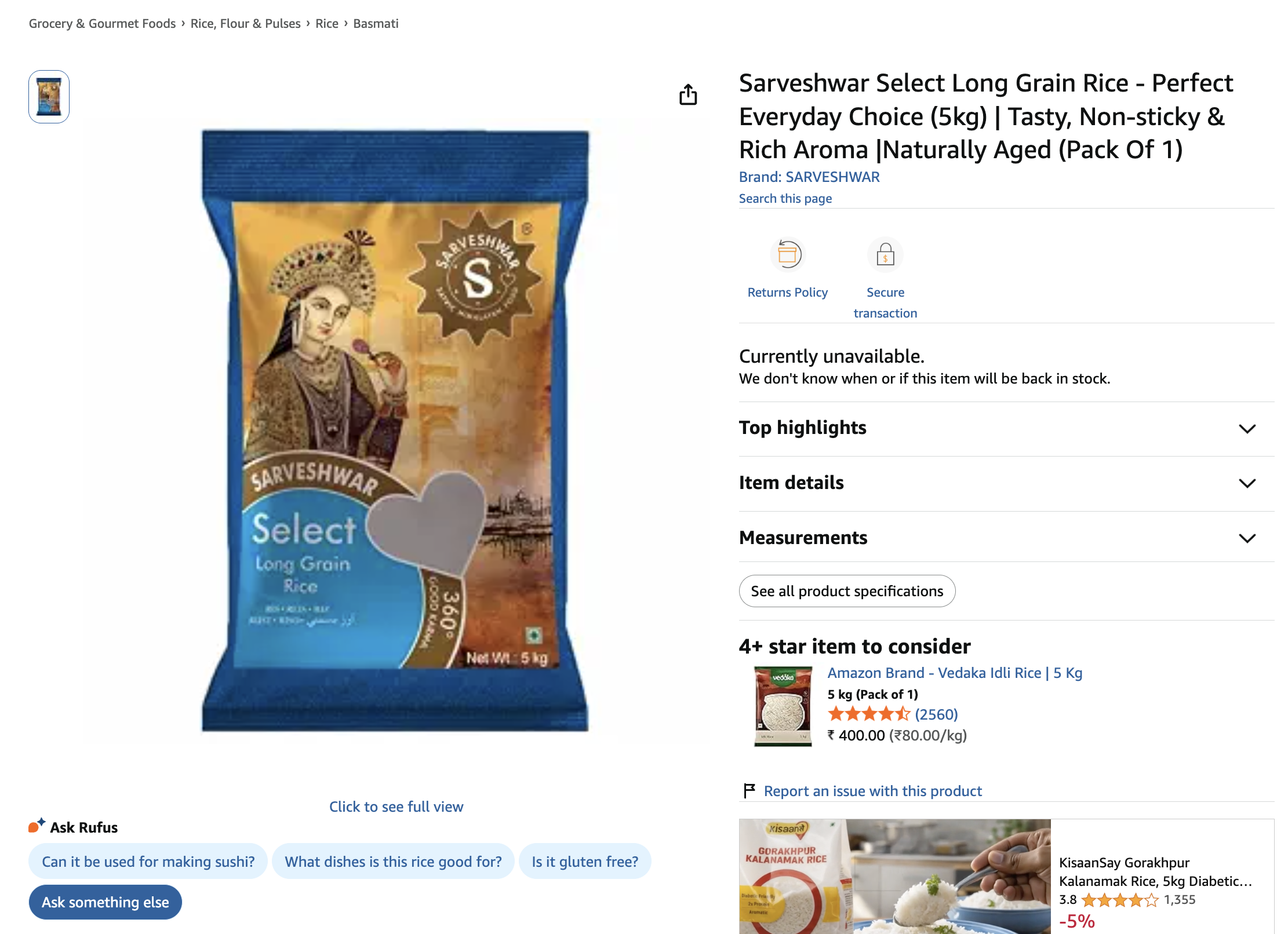
Sarveshwar Foods FY26: Sales Cross ₹1,346 Cr While Operating Cash Walks Out the Door at ₹63 Cr
Spotted a factual error — a wrong number, date, or fact? Tell us and we will check the source.
General information and entertainment, not investment advice. The author is not a SEBI-registered adviser or research analyst. No recommendation, no promised returns. Markets carry risk including loss of capital. Figures may not be current. Consult a registered adviser before acting.
1 — At a Glance
Sarveshwar Foods closed FY26 with revenue of ₹1,346 crore, up from ₹1,134 crore — the fourth straight year of double-digit growth and the first time the company has crossed the ₹1,300 crore line. Net profit landed at ₹31.8 crore against ₹26.9 crore the year before. On the surface, the top line and the bottom line both moved the right way.
Underneath, two numbers pull against each other. Operating profit actually slipped to ₹66 crore from ₹72 crore, so the entire profit gain was carried by interest costs falling to ₹26.5 crore from ₹39.7 crore. And operating cash flow ran to negative ₹63 crore — the worst figure in the dataset — even as the P&L showed a record profit. A rice business that ages its inventory and stretches its receivables will do that.
Borrowings, meanwhile, fell ₹74 crore to ₹252 crore, funded by a fresh equity issue that lifted net worth to ₹477 crore. The market pays 14.8x earnings here against an industry 19.2x. Promoter holding, once above 54%, now sits at 40.87%.
A company growing sales 19% while its operating cash turns sharply negative is telling you exactly where the money is parked: in paddy and in receivables. Whether the equity raise solves that or merely refills the tank is the year’s open question.
2 — Introduction
Sarveshwar Foods, incorporated in 2004, processes and markets basmati and non-basmati rice from a base in Jammu & Kashmir, selling under the Sarveshwar brand and the organic Nimbark brand. It is the listed face of the broader Sarveshwar group, a rice-sourcing lineage management traces back more than a century.
FY26 was a year of corporate machinery as much as milling. The board and shareholders cleared a USD 100 million fundraise via QIP/FCCB through a postal ballot passed on 15 June 2026, alongside an authorised-capital hike to ₹310 crore and a borrowing limit raised to ₹1,000 crore. A separate ₹150 crore raise flagged in management commentary earmarks roughly ₹130 crore for de-leveraging the balance sheet.
The company also signed a memorandum with JKHPMC for a ₹197.29 crore Basmati cluster project across the Jammu region, covering about 12,000 hectares and 7,500 farmers, and it acquired Singapore-based Green Point Pte. Ltd as a wholly owned subsidiary in April 2024.
The finance chair changed hands: Anand Sharda resigned as CFO effective 16 January 2026, and Ms. Meghna was appointed Group CFO from 9 April 2026. The FY26 results themselves arrived late — management attributed the delay to disruptions at its UAE subsidiary and missing consolidated data.
3 — Business Model: WTF Do They Even Do?
They buy paddy, age it, mill it, bag it, and sell rice. That is the whole engine, and it is harder than it sounds, because basmati needs to sit and mature before it fetches a good price — which means the business model is partly “rice company” and partly “warehouse that hopes.”
The portfolio splits into two stories. The Sarveshwar brand carries 30-plus SKUs of premium and non-basmati rice plus flour, pulses, spices and dry fruits, moving roughly 1.5 lakh tonnes. The Nimbark brand is the organic arm, with 200-plus SKUs — rice, pulses, flours, spices, honey, A2 cow ghee — sourced from over 30,000 acres of certified organic farmland. Management has repeatedly attributed margin quality to this organic stack; the CFO described margin improvement as “mainly the organic food products where we have a high gross margin.”
Two USFDA-approved milling plants give a combined 14-plus tonnes per hour. Distribution runs through 75-plus distributors and 45,000-plus retailers, fed by 17,000 farmers across four states, with 14 retail stores in Jammu, Delhi and Chandigarh. Exports reach 25-plus countries but remain about 12.5% of FY25 revenue — the company is still overwhelmingly a domestic seller dreaming of overseas depots.
The honest description: a thin-margin commodity processor trying to dress up as an FMCG brand, with the organic line as the suit. The dressing is real; whether it scales fast enough to change the consolidated margin is the part the income statement hasn’t settled yet.
A rice miller’s real asset isn’t the plant — it’s the inventory ageing in the warehouse, which is also its biggest cash trap.
4 — Financials Overview
Figures are consolidated, in ₹ crore.
Metric
Latest Q (Mar 2026)
YoY (Mar 2025)
QoQ (Dec 2025)
Revenue
382.62
349.72
326.78
Operating Profit
15.10
16.72
16.83
PAT
7.35
8.60
9.21
EPS (₹, FY basis)
0.26
0.22
—
Revenue grew 9.4% YoY and 17% QoQ, the strongest sequential print of the year.