General information and entertainment, not investment advice. The author is not a SEBI-registered adviser or research analyst. No recommendation, no promised returns. Markets carry risk including loss of capital. Figures may not be current. Consult a registered adviser before acting.
1 — At a Glance
Saraswati Saree Depot closed FY26 with revenue of ₹631.16 crore, up 4.6% over FY25’s ₹603.59 crore — the kind of growth that keeps the lights on without ever raising the pulse. The trouble sits one line down. Operating profit fell to ₹32 crore from ₹43 crore, and PAT dropped to ₹23.41 crore from ₹30.58 crore, a 23.5% decline. Management attributed the squeeze to higher procurement costs and pressure on gross margins.
So the top line grew while the bottom line shrank — a company selling more sarees for less profit on each. The operating margin compressed to 5.07% from 7.19%, a 211 bps fall the data sheet records plainly. Against that, the balance sheet is close to spotless: borrowings of ₹0.62 crore against net worth of ₹194.66 crore, and a dividend payout maintained at a healthy clip.
The market currently pays roughly 9.7x earnings here, against a peer median near 24.8x — a gap wide enough to be the whole story. A debt-free wholesaler with three decades of history and a falling margin, priced at well under half its peer set. The numbers that attract and the number that worries are sitting at the same table.
2 — Introduction
The saree business is older than most listed companies’ grandparents, and Saraswati’s roots run to 1966, with the formal partnership firm launched in 1993 and the public-company transition arriving in 2021. It is a B2B wholesaler — sarees first, then kurtis, dress materials, blouse pieces, lehengas, and bottoms — sourcing from over 900 weavers across hubs like Surat, Varanasi, Mau, Madurai, Dharmavaram, Kolkata, and Bengaluru.
FY26 was a year of moving parts beneath a flat surface. The company launched its first exclusive retail outlet in Kolhapur during the year, a ₹2.8 crore investment targeting ₹5–6 crore in revenue — its first deliberate step toward a consumer-facing presence after decades of selling only to retailers. It opened a 25,000 sq ft purchase office in Surat to sit closer to suppliers and trim COGS. And in November 2025 the board proposed adding a real-estate object to its memorandum, subject to shareholder approval.
The leadership chair also changed hands. Shankar Laxmandas Dulhani resigned as Chairman and Executive Director in June 2026; the board named Rajesh Dulhani Chairman days later. For a promoter family holding nearly 75%, this is a reshuffle within the household, not a contest.
3 — Business Model: WTF Do They Even Do?
They buy sarees in bulk and sell sarees in bulk. That’s the elevator pitch, and the elevator only goes up one floor.
The depth is in the catalogue and the concentration. The product range lists more than 300,000 SKUs, and roughly 1.57 crore units moved in FY26. Sarees alone drove over 90% of revenue in the nine months reported, with kurtis and dress materials a distant 6.6% and everything else — blouse pieces, shirt-and-pant lengths, lehengas — scrapping for the remainder. This is a one-product company that has politely arranged 299,999 other SKUs around its single star.
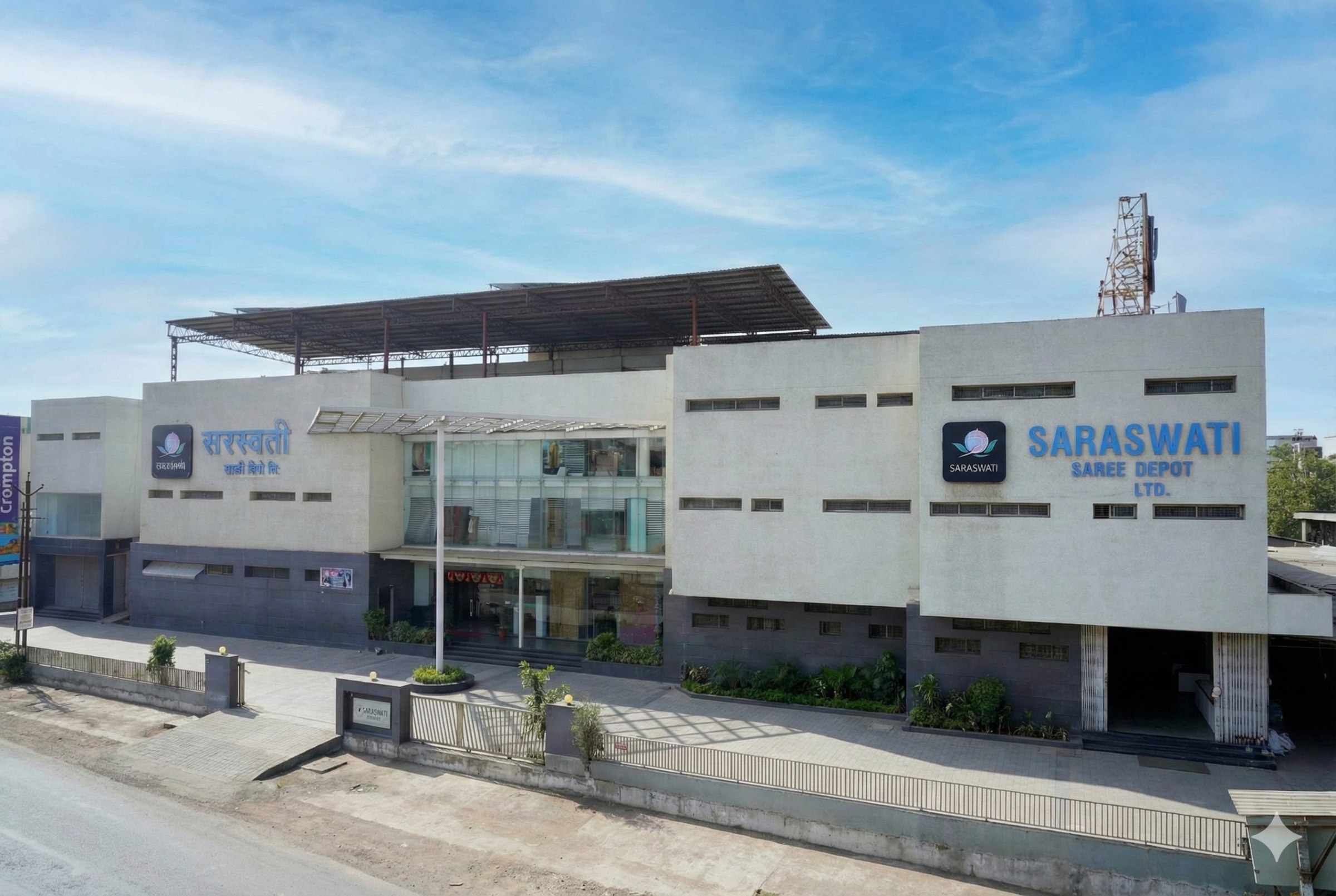
Geography is just as lopsided. West India contributed 85.5% of revenue and South the rest; the two stores in Kolhapur and Ulhasnagar cover 185,000+ sq ft, with the flagship Kolhapur outlet alone responsible for nearly 88% of combined sales. The flagship UTSAV event, running since 2002, contributes 13–15% of annual turnover — one sales festival carrying a sixth of the year.
The model’s quiet strength is its lack of dependence on any single counterparty: the top 10 suppliers account for under 26% of purchases, and the top 10 customers under 8% of sales. The weakness is the obvious one — a wholesaler of one product, in one region, from one dominant store. Diversification here means a saree in a slightly different colour.
Does a 300,000-SKU catalogue mean anything when one category is 90% of the till?
4 — Financials Overview
Figures are