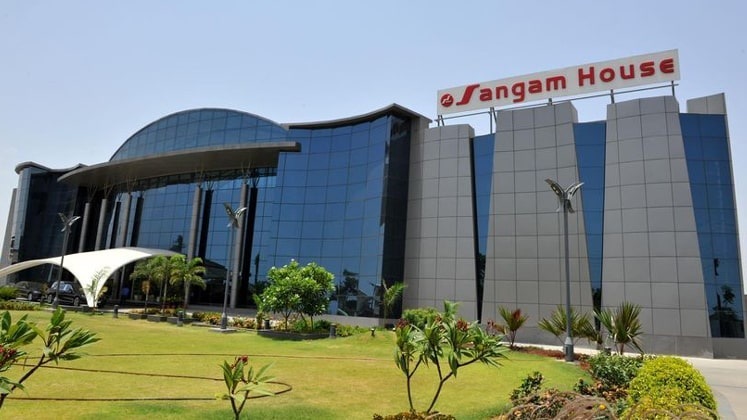
1. At a Glance – The Textile Circus Nobody Talks About
Here’s a company that sells yarn, fabric, denim, garments… basically everything between a cotton field and your wardrobe — and yet somehow, the real story is not in the fabric, but in the balance sheet threads barely holding things together.
Sangam (India) Ltd just posted a 160% jump in PAT to ₹83 Cr and a 12.9% revenue growth to ₹3,243 Cr. Sounds like a turnaround story? Maybe. But wait — the same company also carries ₹1,222 Cr debt, got its credit rating downgraded, and is still trying to convince investors that margins will magically improve because of “value-added products” and “renewable energy savings.”
Translation: profits are rising, but so is the risk.
This is not your simple textile exporter story. This is a fully integrated textile beast — spinning yarn, weaving fabric, stitching garments — trying to climb up the value chain while dragging a heavy debt backpack uphill.
And the real twist? Management says “the worst is behind us.”
But is it?
Or is this just another textile company temporarily saved by a cyclical recovery before the next downturn hits?
Let’s dig deeper.
2. Introduction – From Yarn King to Balance Sheet Acrobat
Sangam is one of those companies that looks impressive on paper. Market leader in PV yarn. Exports to 50+ countries. Clients like Walmart, Primark, Jockey. Fully integrated operations.
Basically, if textiles had a LinkedIn profile, Sangam would look like a superstar.
But then you zoom into the financials.
And suddenly, the story changes tone.
Margins? Thin.
ROE? Weak at ~8.7%.
Debt? Rising.
Credit rating? Downgraded.
Now here’s the irony:
Management claims this is a “landmark year” driven by value-added products and operational efficiency.
But rating agencies are saying:
“Boss, your leverage is too high and may stay high.”
So who do you believe?
The company selling optimism
or
The rating agency tracking cash flows?
That’s the central tension in this story.
And honestly, this is where it gets interesting.
3. Business Model – WTF Do They Even Do?
Let’s simplify this textile maze.
Sangam is basically running a vertical integration experiment:
Step 1: Spin yarn
Step 2: Convert yarn into fabric
Step 3: Convert fabric into garments
Step 4: Sell to