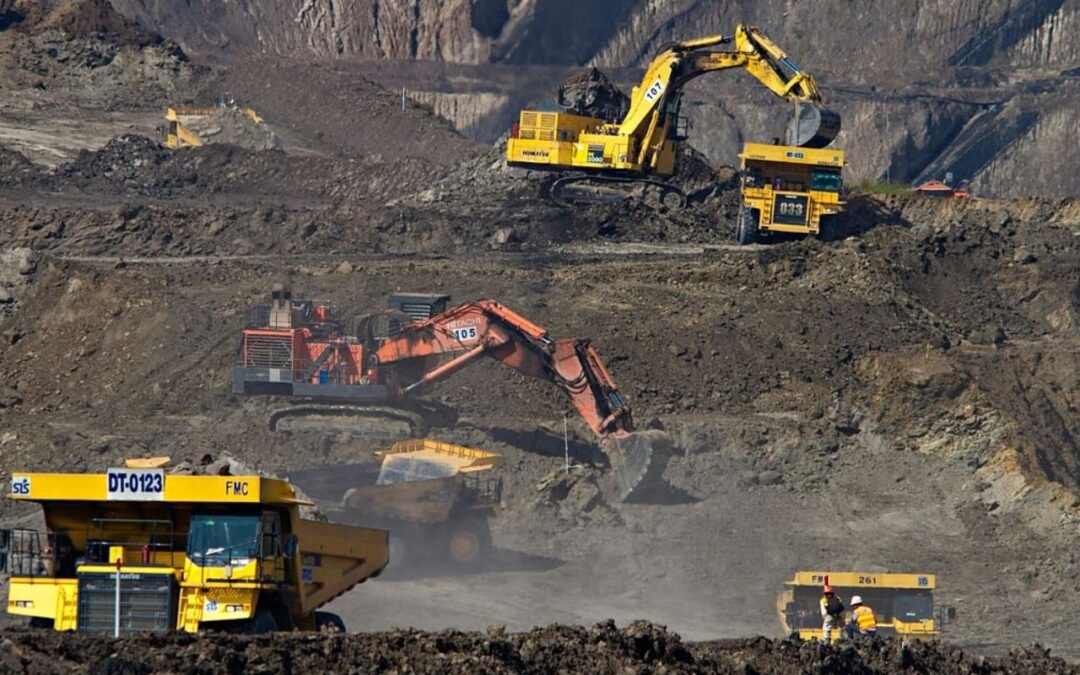
The “Sandur” brand has long been a quiet, cash-generating machine in the heart of Karnataka, but the FY26 results have officially turned the volume up to eleven. We aren’t just talking about a minor uptick in production; we are witnessing a complete structural metamorphosis. This isn’t your grandfather’s merchant miner anymore. By swallowing Arjas Steel, Sandur has transitioned from a pure-play commodity extractor into a high-value specialty steel powerhouse.
The numbers are screaming for attention. Despite a muted pricing environment for most of the year, the company managed to post its highest-ever production and sales volumes in its history. While the industry was crying about sluggish benchmarks, Sandur was busy digging deeper and selling faster—manganese ore sales volumes shot up by a staggering 93% YoY.
But here is the real kicker that should make every conservative investor sit up: in the middle of a massive acquisition and expansion cycle, the management decided they didn’t like the look of debt. In a boss move of capital allocation, they utilized their robust internal accruals to prepay and redeem ₹423 crore worth of NCDs. As of March 31, 2026, the standalone entity is Net Debt Free. In a world of over-leveraged infrastructure bets, Sandur is playing a different game.
1. At a Glance – The Auditor’s Deep Dive
If you’ve been following Sandur Manganese & Iron Ores (SMIORE) for the last decade, you know they move with the precision of a Swiss watch. But don’t let the “Net Debt Free” tag fool you into thinking it’s all sunshine and dividends. As an auditor, I look past the glossy presentations.
The acquisition of Arjas Steel is a massive bet. It fundamentally changes the risk profile of the company. You are now exposed to the cyclicality of the automotive sector, which accounts for a significant portion of the Special Bar Quality (SBQ) steel demand. If the EV transition or a global slowdown hits the auto OEMs, the “new” Sandur will feel a sting that the “old” mining-only Sandur never did.
Furthermore, look at the Return on Equity (ROE). While a 23.2% ROE is respectable, it has historically fluctuated wildly based on global commodity cycles. The company is currently sitting on high inventory levels for iron ore. Why? Because domestic realizations were bottoming out in Q2 and Q3. Management is betting on a Q1 FY27 price recovery to clear that stock. If prices stay flat, that’s a lot of capital locked in the dirt.
There is also the “forest charge” ghost that hasn’t fully left the building. The Karnataka High Court recently dismissed a writ petition regarding a ₹131.25 crore compensatory afforestation demand. While the company is taking this to the Supreme Court, it’s a hanging sword over the balance sheet.
However, you cannot ignore the sheer scale. They have reserves of 110 MT of Iron Ore and 17 MT of Manganese Ore. Their leases are locked in until 2033. They aren’t going anywhere. But as they scale from 1.6 MTPA to 4.5 MTPA in iron ore, the operational complexity is multiplying. Can the Ghorpade family maintain the same “simplicity and excellence” at 3x the scale?
2. Introduction
Sandur Manganese & Iron Ores Limited (SMIORE) is the flagship of the Karnataka-based Sandur Group, incorporated back in 1954. For decades, it was known as the 3rd largest manganese ore miner in India, operating out of the Hosapete-Ballari region.
The company’s DNA is built on “Scientific Mining.” They aren’t just digging holes; they are running an integrated operation that includes ferro-alloys, coke, and now, specialty steel. The core of their strength lies in their massive, low-phosphorous mining leases which provide a raw material security that most steel players would kill for.
In the last 24 months, the company has undergone a radical transformation. They didn’t just grow organically; they went on the offensive. From commissioning hybrid renewable energy plants to the strategic acquisition of Arjas Steel, they are building a vertical fortress.
The management, led by Bahirji A. Ghorpade, has shown a rare discipline: they expand only when the cash flows allow it. The recent 2:1 bonus and the consistent dividends are a testament to their “Shared Value” philosophy. But the question remains: is the market pricing in a miner or a steel company?
3. Business Model