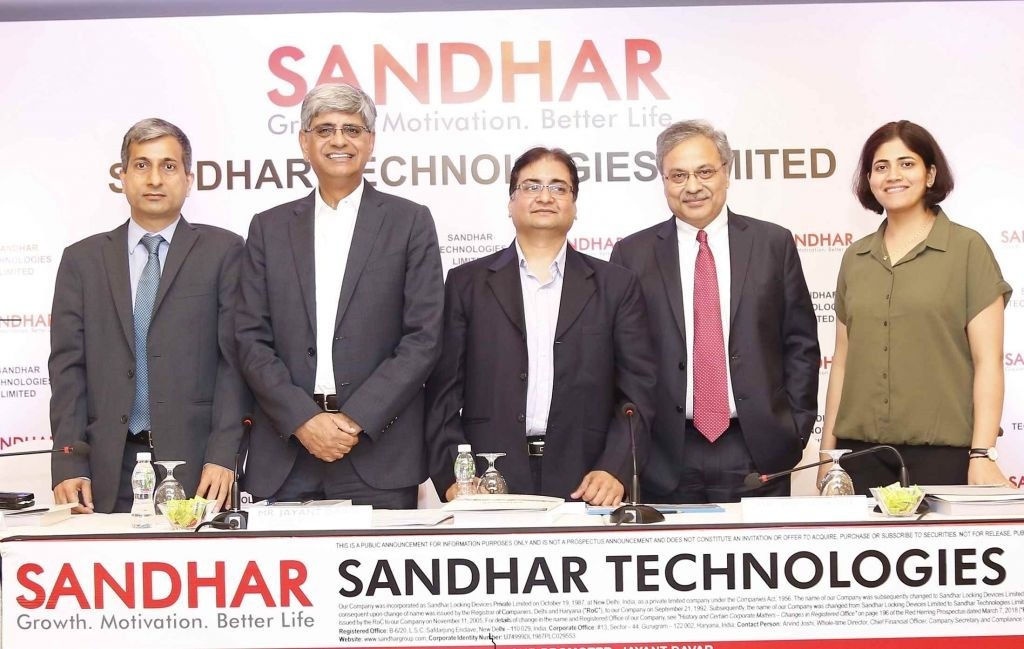
Sandhar Technologies FY26: A ₹4,852 Crore Auto-Ancillary Symphony Conducted with Debt and Drama
Section 1 — At a Glance
Sandhar Technologies Limited completed FY26 with a bold top-line surge, delivering consolidated revenue from operations of ₹4,852.09 crore, marking a significant 24.91% increase from the previous year’s ₹3,884.50 crore. This aggressive expansion, however, carries visible pockets of financial friction. While consolidated net profit expanded by 40.25% to reach ₹198.66 crore, the cash generation engine showed clear signs of stress. Cash flow from operating activities deteriorated to ₹209.91 crore from ₹246.97 crore in FY25, highlighting an earnings profile heavily anchored in non-cash working capital accumulation rather than liquid surplus.
When operational growth consistently outpaces cash generation, a business is not merely scaling; it is borrowing from its own future liquidity to fund today’s headlines.
Investor attention is currently torn between the impressive structural expansion in domestic original equipment manufacturer (OEM) supply chains and a parallel escalation in consolidated leverage. Gross debt swelled to ₹1,147.61 crore, driven primarily by heavy capacity additions at Indian subsidiaries and sustained working capital injections into the struggling European operations. Furthermore, a significant portion of the fiscal year’s reported profitability was anchored in one-off capital gains rather than pure automotive manufacturing margins, creating an optic of earnings health that requires deeper dismantling. The subsequent analysis will explore whether these newly laid manufacturing blocks can transition from structural drags into genuine yield engines.
Section 2 — Introduction
Sandhar Technologies Limited (STL) is a deeply entrenched player in the Indian auto-ancillary ecosystem, specializing in safety, access, and electromechanical systems. Historically dependent on traditional mechanical locking and vision systems, the company has spent the last few years executing an intensive capital expenditure cycle to pivot toward high-pressure aluminum die casting (ADC) and localized electronic component assembly.
The corporate architecture has expanded into an intricate web of 25 domestic manufacturing plants alongside three active European manufacturing footprints. Management’s current strategic focus is characterized by an aggressive effort to integrate major recent acquisitions—most notably the Sundaram Clayton Limited high-pressure die casting asset—while simultaneously attempting to stem structural losses emanating from its step-down overseas operations. This transition places Sandhar at a critical financial junction where execution must rapidly match capacity.
Section 3 — Business Model: WTF Do They Even Do?
At its core, Sandhar operates like an industrial tailor that tightly binds itself to a handful of massive automotive original equipment manufacturers (OEMs). If you ride a Hero motorcycle, a TVS scooter, or a Royal Enfield, the odds are absolute that Sandhar manufactured the locks keeping it secure and the mirrors keeping you alive. They are the single-source supplier for lock sets and vision systems to multiple auto giants, which sounds highly prestigious until you look at the customer concentration risks. Their top two clients, Hero MotoCorp and TVS, swallow up a staggering 56.1% of their revenue pipeline, leaving the business highly exposed to the operational whims of just two executive boardrooms.
Consolidated Revenue Mix by Product Category (FY26) Aluminum Die Casting (ADC) – 31.0% Locking Systems – 17.9% Sheet Metal Components – 18.0% Cabins & Fabrication – 12.1% Assemblies & Wheels – 10.0% Vision Systems (Mirrors) – 5.3% Other Precision Parts – 5.7%
Operationally, the revenue mix has increasingly leaned toward Aluminum Die Casting (ADC), which now commands 31.0% of the top line, leaving traditional locks at 17.9%. The business model requires constant capital expenditure to set up manufacturing units right next door to OEM factories. While this ensures flawless logistics, it also means Sandhar takes on heavy fixed costs, building dedicated factories that live and die by the specific volumes of their clients’ underlying vehicle models.
Section 4 — Financials Overview
Figures are consolidated, in ₹ crore.
Headline Performance Trend
Metric
Latest Quarter (Q4 FY26)
YoY (%)
QoQ (%)
Revenue from Operations
₹1,306.99
28.88%
10.33%
EBITDA / Operating Profit
₹144.84
32.74%
30.58%
Profit After Tax (PAT)
₹63.82
49.78%
90.82%
Reported EPS (₹)
₹10.60
49.78%
90.82%
A sharp divergence between multi-quarter margin trends and sudden bottom-line spikes usually points to asset-sale engineering rather than manufacturing excellence.
The quarterly performance numbers look exceptional on paper, with a near-50% year-on-year jump in net profit for Q4 FY26. However, looking deeper into the income statement reveals that “Other Income” ballooned to ₹15.86 crore during the quarter. For the full year, other income reached ₹75.36 crore, driven heavily by a non-recurring profit of