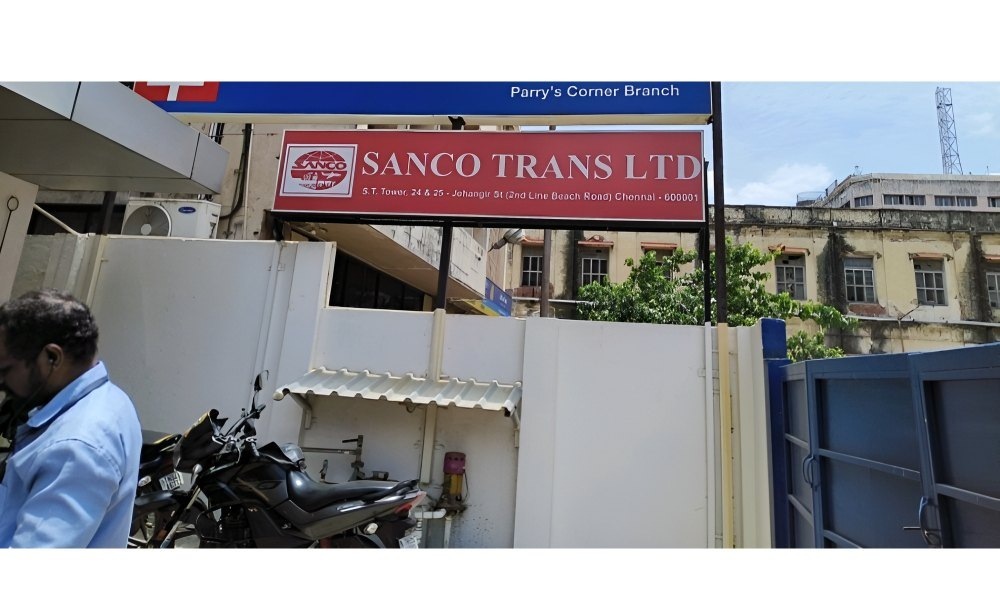
Sanco Trans just reported Q3 FY26 numbers that made the stock wake up from its logistics nap. Sales jumped 34.86% YoY and PAT more than doubled. Sounds exciting? Yes. But then you look at ROE of 1.03% and realize the business still runs slower than Chennai port traffic on a rainy Monday.
It trades at 25x earnings with ROCE at 2.55%. That’s like charging five-star hotel rates for a decent highway dhaba experience. The company is almost debt-free, promoters hold 72.4%, and price is just 1.18x book value.
So is this a silent turnaround in logistics… or just one strong quarter flexing muscles?
Let’s unload the containers and inspect.
2. Introduction – 1979 Se Chal Raha Hai, Par Return Kahan Hai?
Sanco Trans was incorporated in 1979. That’s older than most startup founders and probably older than half the logistics apps claiming to “disrupt supply chains.”
The company operates container freight stations (CFS), provides fleet hire services, warehousing, freight forwarding — basically everything that happens after your container arrives at port and before it reaches your factory.
They own 9 acres of maintenance yard, can handle 7,500 TEUs import containers monthly, and 1,000 TEUs export containers. Warehouse space? 2 lakh sq ft.
Sounds serious, right?
But here’s the twist: over the last 5 years, sales growth is just 1.78%. Three-year sales growth is negative. Profit growth over 3 years? -39%.
And then suddenly in TTM, profit growth is 214%.
Logistics business or Bollywood comeback story?
Is this a structural improvement? Or just a good year riding freight cycle?
3. Business Model – WTF Do They Even Do?
Let’s simplify.
Imagine a container arrives at port.
Before it reaches its final destination:
It needs temporary storage.
Customs clearance.
Handling.
Transport.
Possibly maintenance.
Sanco Trans owns Container Freight Stations (CFS). That’s basically a big organized yard where containers are stored, processed and dispatched.
Revenue breakup FY23:
Handling earnings: 60%
Equipment & fleet hire: 26%
Warehouse: 10%
Agency & other: 4%
Translation? 60% revenue depends on container volume. If imports slow down, revenue sulks.
They also closed a container freight operations contract in Andarkuppam in September 2022. They even divested their WoS investment in 2021.
So management seems to be trimming.
But here’s a question:
If you can handle 7,500 TEUs monthly, are you running at full capacity? Or is that yard sometimes just sunbathing?
4. Financials Overview – Numbers Don’t Lie, They Just Whisper