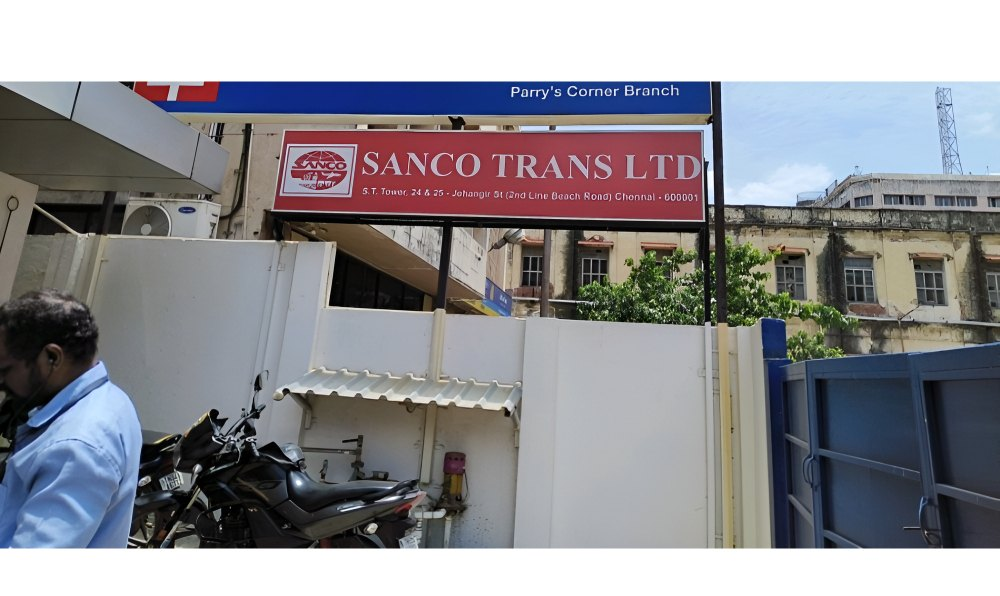
Sanco Trans Ltd – incorporated in 1979 – is one of those veteran logistics firms that somehow survived four decades by stacking containers, renting forklifts, and forwarding freight. Market cap? ₹133 Cr. Sales? ₹115 Cr. Profits? A laughable ₹2.9 Cr. ROE = 1%, ROCE = 2.5% – basically FD returns, but with trucks. Yet stock trades at a P/E of 46. Either the market sees hidden value, or it’s rewarding patience like an LIC policy.
2. Introduction
Imagine a family-owned logistics adda where ships come, containers sit, and customers pray their cargo is handled faster than Indian Railways’ freight wagons. That’s Sanco Trans. They operate container freight stations, warehouses (2 lakh sq ft), and transport fleets. On paper, they can handle 7,500 import TEUs per month – which sounds massive, until you realize CONCOR sneezes that number before breakfast.
The company’s growth has been flatter than a dosa – 10-year sales CAGR = 3%. But suddenly FY25 Q4 profit jumped 592% YoY. Why? Maybe other income, maybe operational efficiency, maybe divine logistics blessings. Investors, however, aren’t fully convinced. The stock trades at 1.2× book, but P/E = 46 – as if this tiny player is Blue Dart’s cousin, not a Chennai-based container yard operator.
3. Business Model – WTF Do They Even Do?
Sanco Trans’ business is simple:
Container handling (60% of revenue) – they move import/export boxes at CFS.
Fleet hire & equipment rentals (26%) – cranes, trailers, forklifts.
Warehousing (10%) – bonded & general storage.
Agency/other services (4%).
They also had a side-gig WoS called SANS CFS Ltd, which they sold in 2021. And in 2022, they shut one contract with a related party (Andarkuppam CFS). Basically, a logistics “family enterprise” where every estate sale or contract closure changes the story.
4. Financials Overview
Metric
Latest Qtr (Jun’25)
YoY Qtr (Jun’24)
Prev Qtr (Mar’25)
YoY %
QoQ %
Revenue
₹33.6 Cr
₹23.3 Cr
₹28.3 Cr
+44%
+19%
EBITDA
₹3.0 Cr
₹1.1 Cr
₹1.1 Cr
+175%
+173%
PAT
₹1.66 Cr
₹0.24 Cr
₹0.46 Cr
+592%
+261%
EPS (₹)
9.2
1.3
2.6
+607%
+258%
Annualised EPS (based on Jun’25) = ~₹37. P/E on that = 20×. On reported TTM EPS = ₹16, P/E = 46×. This is why small caps are like Chennai auto fares – never predictable.
5. Valuation – Fair Value Range
Method 1: P/E Method
EPS (TTM) = ₹16
Apply P/E band 15–25× (industry ~29×, discount for low ROE)
FV = ₹240 – ₹400
Method 2: EV/EBITDA
EV = ₹139 Cr
EBITDA (FY25) = ₹6 Cr
EV/EBITDA = 23× → way too high. Apply fair 8–12×
FV = ₹50 – ₹75 Cr EV → ₹270 – ₹350 per share
Method 3: DCF (assume 8% growth, WACC 12%)
FV ≈ ₹300
👉 Overall FV Range: ₹270 – ₹400/share (Stock at ₹740 = trading well above this) Disclaimer: For educational purposes only.