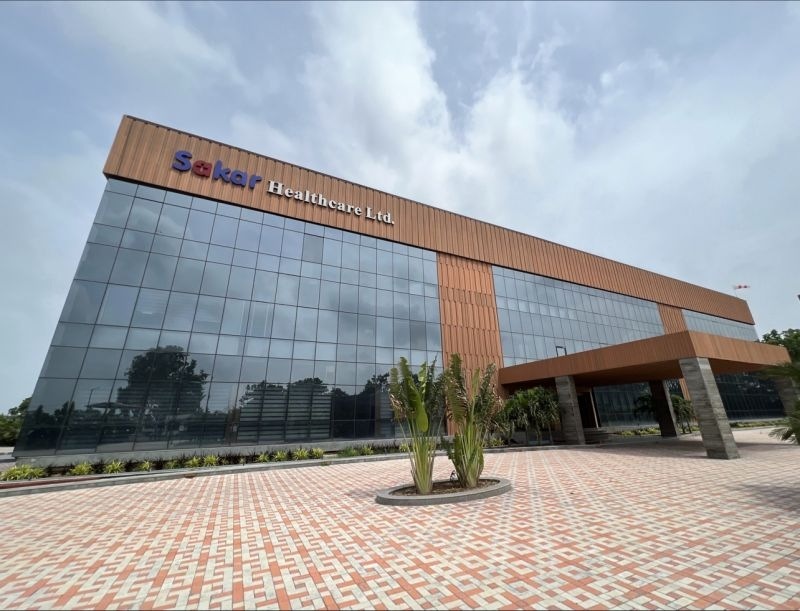
At a Glance
Sakar Healthcare Ltd is currently undergoing a structural metamorphosis, moving from a legacy general formulations player to a specialized, research-driven oncology powerhouse. The financial numbers for the year ended March 31, 2026, suggest that the heavy capital expenditure incurred between FY22 and FY24 is finally beginning to yield high-margin fruit. With a Market Cap of ₹1,334 Cr and a current price hovering around ₹599, the stock is commanding a premium P/E of 43.7, reflecting significant investor anticipation of future earnings from its newly minted oncology division.
The company reported Revenue of ₹252 Cr for FY26, a massive leap compared to earlier years, primarily fueled by a 62% YoY growth in Q3 and a 42% YoY growth in Q4. What is truly catching the eye of the street is the EBITDA margin expansion, which touched a staggering 37% in Q4FY26, up from 31% in the same quarter last year. This isn’t just organic growth; it is a shift in the very DNA of the company’s product mix. Exports now contribute 70% of the revenue, focusing on high-margin own-brand sales across 60 countries.
However, beneath this glossy surface of growth lies a history of intense capital hunger. The company has raised nearly ₹178.6 Cr through various equity infusions since 2017 to fund its Bavla oncology unit. While the unit is now EU-GMP approved, the scaling has been slower than some aggressive estimates might have suggested, with oncology sales for FY25 standing at ₹36 Cr. The “detective” in any auditor would note that while the top line is sprinting, the Working Capital Cycle remains a chunky 135 days, and the company has a history of reducing promoter holding, which has dropped by nearly 8% over the last three years.
Is the company finally ready to dominate the regulated markets, or is it just another mid-cap pharma player caught in the regulatory “stop-clock” of the EU? Management claims to have 250 dossiers shared globally, with 125 submitted. The execution of these filings will decide whether the current P/E of 43.7 is a bargain or a burden.
Introduction
Sakar Healthcare is no longer the small liquid syrup manufacturer it was back in 2004. Today, it stands as an integrated pharmaceutical player with a specific focus on cytotoxic (oncology) formulations. The company operates through two primary units: the legacy facility at Changodar and the state-of-the-art oncology plant at Bavla.
The story of Sakar is a classic tale of a “pivot.” For years, the company operated in the low-margin, high-volume general generics space—think cough syrups and basic antibiotics. However, seeing the plateau in those segments, management bet the house on oncology. They didn’t just build a factory; they built an integrated platform that handles everything from Active Pharmaceutical Ingredients (APIs) to Final Dosage Forms (FDF).
The strategy is clear: Contract Development and Manufacturing (CDMO) for the big boys (Zydus, Torrent, Intas) while simultaneously pushing their own brands into emerging and regulated markets. The recent EU-GMP approval for the Bavla unit is the “Golden Ticket” they’ve been waiting for. It allows them to supply the lucrative European market, where price erosion is less brutal than in the domestic trade.
But as with any high-stakes pharma play, the risks are as potent as the drugs they manufacture. Regulatory hurdles, long lead times for serialization and artwork in the EU, and the sheer complexity of handling “high-potent” substances mean there is zero room for error. The company has already seen some senior exits, including the SVP of Finance and a Non-Executive Director in late 2025, which adds a layer of intrigue to the corporate governance narrative.
Business Model – WTF Do They Even Do?
If you think pharma is just about pressing tablets and filling bottles, Sakar wants to have a word with you. They operate in the “Hazardous but Profitable” zone of oncology.
Imagine you are trying to bake a cake, but the flour is toxic if you breathe it in. That’s an oncology plant. Sakar’s Bavla unit uses advanced containment systems to manufacture oral liquids, capsules, and lyophilized injections (freeze-dried drugs). They don’t just sell these drugs; they sell the capability to make them.
The Three Pillars of Revenue:
- Own Brand Exports: This is the crown jewel. They register their own products in countries like Kenya, Vietnam, and now Europe. They get to keep the full margin.
- CDMO / CRAMS: They act as a sophisticated “kitchen” for global giants like Accord Healthcare and Dr. Reddy’s. These partners provide the technology or the market reach, and Sakar provides the manufacturing muscle.
- API Integration: Unlike many peers who buy their “flour” (raw material) from China, Sakar is backward integrated. They make their own oncology APIs, which is why their EBITDA margins are suddenly looking “sexy.”
The business model is shifting from “Sell whatever you can in India” to “Sell specialized cancer drugs to the world.” It’s a bold move, but it makes them vulnerable to global regulatory whims. One “Form 483” from a major regulator could stall the entire engine.
Financials Overview
The numbers for the Full Year FY26 show a company that is finally hitting its stride. We see a massive jump in the bottom line as the operating leverage from the oncology unit kicks in.
| Particulars | Latest Qtr (Mar 2026) | Same Qtr Last Year (YoY) | Previous Qtr (QoQ) |
|---|---|---|---|
| Revenue | ₹ 71.10 Cr | ₹ 50.24 Cr | ₹ 70.34 Cr |
| EBITDA | ₹ 26.24 Cr | ₹ 15.72 Cr | ₹ 18.59 Cr |
| PAT | ₹ 11.02 Cr | ₹ 5.76 Cr | ₹ 10.25 Cr |
| EPS (Reported) | ₹ 4.96 | ₹ 2.66 | ₹ 4.59 |
| Annualised EPS | ₹ 4.96 | – | – |
Export to Sheets
Financial Wisdom: In the world of high-growth pharma, look at the EBITDA margin expansion rather than just revenue. A 6% jump in margins (31% to 37%) on a growing revenue base is the sign of a product mix shift toward higher-value specialized drugs.
Management has “walked the talk” regarding the oncology ramp-up. In the Feb 2026 concall, they promised commercialization of Imatinib and other molecules. The March 2026 results reflect this, with the oncology segment contributing heavily to the ₹252 Cr annual revenue.
Valuation Discussion – Fair Value Range
Valuing a high-growth pharma company with a heavy R&D pipeline requires a mix of math and hope.
1. P/E Method
The company is currently trading at a P/E of 43.7. This is higher than the industry median of 30.0.
- FY26 EPS: ₹ 13.70
- Conservative Multiple (35x): ₹ 479
- Optimistic Multiple (50x): ₹ 685
2. EV/EBITDA Method
- FY26 EBITDA: ₹ 68.88 Cr
- Enterprise Value (EV): ₹ 1,389 Cr
- Current EV/EBITDA: ~20.1x
- The sector usually trades between 15x and 22x for specialty players. At 20x, we get an EV of ₹1,377 Cr.
3. DCF (Discounted Cash Flow)
Assuming a 15% Free Cash Flow growth for the next 5 years (given the oncology pipeline) and a 12% discount rate:
- Terminal Value calculation based on the 40% revenue growth trajectory suggested by management.
- Step-by-step: With FY26 CFO at ₹49.25 Cr and Capex stabilizing, the Free Cash Flow is finally turning positive after years of being in the red (₹2.21 Cr in FY26 vs -₹35 Cr in FY24).
Fair Value Range: ₹ 510 – ₹ 640
Disclaimer: This fair value range is for educational purposes only and is not investment advice.
What’s Cooking – News, Triggers, Drama
The drama in Sakar isn’t just in the balance sheet; it’s in the regulatory filings.
- The Accord Partnership: In February 2025, Sakar signed a massive deal with Accord Healthcare (Intas Group) to manufacture 7 oncology products for the EU and UK. This is the big catalyst. Management stated in the Feb 2026 call that Accord dominates 60-70% of certain molecules in Europe. Sakar is essentially hitching its wagon to a market leader.
- The “Slot” Problem: Management admitted a hilarious yet frustrating bottleneck: they have the dossiers ready, but they can’t get a “slot” to apply for Marketing Authorizations in Europe. It’s like having a VIP pass to a club but waiting in line because the bouncer is slow.
- Resignation Fever: On September 27, 2025, the SVP of Finance and a Non-Executive Director (Rita S. Shah) both resigned on the same day. While the company claims it’s part of a “manpower revamp,” auditors usually raise an eyebrow when the money-man leaves during a high-growth phase.
Do you think a company losing its finance head during a 42% growth spurt is a red flag or just “corporate spring cleaning”?
Balance Sheet
Sakar’s balance sheet is a story of “Asset Creation.” They have converted cash into high-tech steel and glass at Bavla.
| Particulars (in ₹ Cr) | Mar 2026 | Mar 2025 | Mar 2024 |
|---|---|---|---|
| Total Assets | 481.09 | 415.34 | 336.00 |
| Net Worth | 324.53 | 285.56 | 263.00 |
| Borrowings | 55.30 | 65.00 | 79.00 |
| Other Liabilities | 101.26 | 63.78 | 44.00 |
| Total Liabilities | 481.09 | 415.34 | 336.00 |
Export to Sheets
- The Debt Diet: Borrowings have come down from ₹119 Cr in 2023 to ₹55.3 Cr. They are finally paying off the house they built.
- Equity Infusion Junkies: The Net Worth has jumped, thanks to promoters and outsiders pumping in cash through preferential allotments.
- Receivable Bloat: “Other Assets” (including receivables) have surged. They are selling more, but the money is taking its sweet time to hit the bank.
Cash Flow – Sab Number Game Hai
The Cash Flow Statement is where the truth lives. For years, Sakar was a “Cash Burner.”
| Year | Operating (CFO) | Investing (CFI) | Financing (CFF) |
|---|---|---|---|
| Mar 2026 | ₹ 49.26 Cr | ₹ (28.35) Cr | ₹ (20.96) Cr |
| Mar 2025 | ₹ 34.03 Cr | ₹ (30.71) Cr | ₹ (3.48) Cr |
| Mar 2024 | ₹ 24.00 Cr | ₹ (52.00) Cr | ₹ 27.00 Cr |
Export to Sheets
The transformation is visible. In 2024, they were borrowing (CFF +27) and spending on plants (CFI -52). By 2026, the plant is generating cash (CFO +49), and they are using that money to pay back debt (CFF -20). This is the definition of a “Maturing Growth Stock.”
Ratios – Sexy or Stressy?
The ratios show a company that is improving but still has baggage.
| Ratio | Value (Mar 2026) | Commentary |
|---|---|---|
| ROE | 9.99% | Improving, but still below the “Elite” 15% club. |
| ROCE | 12.67% | Finally crossing the cost of capital. A huge relief for investors. |
| Debt to Equity | 0.17 | Very comfortable. They aren’t drowning in interest. |
| PAT Margin | 12.11% | Up from 10%. The oncology “kick” is working. |
| Inventory Days | 207 Days | Stressy. They are holding a lot of stock. |
Export to Sheets
The Cash Conversion Cycle of 127 days is a bit of a mood killer. It means they are working hard, but their money is tied up in bottles and boxes for a long time.
P&L Breakdown – Show Me the Money
Let’s look at the three-year trajectory. It’s like watching a rocket launch—slow at first, then a sudden burst.
| Year | Revenue (₹ Cr) | EBITDA (₹ Cr) | PAT (₹ Cr) |
|---|---|---|---|
| Mar 2026 | 252 | 69 | 30 |
| Mar 2025 | 178 | 50 | 18 |
| Mar 2024 | 153 | 38 | 12 |
Export to Sheets
The Net Profit has tripled in two years. If this were a stand-up comedy set, the punchline would be “Wait for the European approvals.” The operating leverage is so high that even a small increase in EU sales will disproportionately blow up the PAT.
Peer Comparison
Sakar is a tiny fish in a pond of sharks, but it’s a very specialized tiny fish.
| Name | Revenue (₹ Cr) | PAT (₹ Cr) | P/E |
|---|---|---|---|
| Sun Pharma | 15,520 | 3,381 | 36.1 |
| Divi’s Lab | 2,604 | 583 | 71.1 |
| Mankind Pharma | 3,567 | 413 | 53.7 |
| Sakar Healthcare | 71 (Qtr) | 11 (Qtr) | 43.7 |
Export to Sheets
While Sun Pharma is the King, Sakar is trying to be the “Divi’s of Oncology.” Its P/E is high, but compared to Divi’s at 71, the market thinks Sakar still has some “cheap” growth left in the tank.
Miscellaneous – Shareholding and Promoters
The shareholding pattern is where things get interesting.
- Promoters: 52.86%. Sanjay S. Shah is the man at the helm with a 44.98% stake.
- The Institutional Hook: Tata Capital Healthcare Fund II holds 10.38%. When the Tatas put money in a small-cap pharma company, you know they’ve checked the “Corporate Governance” boxes multiple times.
- Foreign Interest: HBM Healthcare Investments (7.88%) and Cobra India are sitting at the table.
Promoter Roast: Management has a habit of issuing warrants to themselves and then converting them. It’s a great way to keep control while the company burns cash, but for public shareholders, the constant dilution of the equity base (Equity Capital rose from ₹19 Cr to ₹22 Cr) is like a slow leak in a tire.
Corporate Governance – Angels or Devils?
Sakar has a mostly clean record, but there are nuances.
- Audit Switch: The recent appointment of M/s. Kashyap R. Mehta & Partners as Secretarial Auditors to fill a “casual vacancy” (after a resignation) is a note to watch.
- Pledges: Zero. This is the ultimate “Angel” sign. Promoters haven’t pawned their shares to fund a lifestyle.
- Related Party Transactions: The company has a wholly-owned subsidiary, Sakar Oncology Pvt Ltd, which surprisingly has carried out zero business transactions according to the March 2026 report. Why keep a subsidiary dormant while doing all oncology business under the parent? It’s a question for the next AGM.
Are you comfortable with a company whose “Oncology Subsidiary” does nothing while the parent does everything?
Industry Roast and Macro Context
The Indian pharma industry is currently obsessed with “Specialty Chemicals” and “Complex Generics.” Everyone wants to be the next big oncology player because the margins in general paracetamol are now thinner than a single-ply tissue.
The macro context is the “China+1” strategy and the EU’s push for supply chain resilience. By getting EU-GMP approval, Sakar is positioning itself as a reliable non-Chinese source for life-saving cancer drugs. However, the sector is plagued by extreme regulatory scrutiny. One bad batch, one failed inspection, and the stock price doesn’t just fall—it craters.
EduInvesting Verdict
Sakar Healthcare is at a definitive tipping point. The “Capex Phase” is over, and the “Monetization Phase” has begun.
Past Performance: Reliable but slow. The company spent a decade building the foundation. History: A family-run business that successfully transitioned to an institution-backed specialty player. Headwinds: 1. Regulatory Delays: The “Slot” problem in the EU could delay revenue by quarters. 2. Working Capital: The 135-day cycle is a massive drag on ROE. 3. Competition: Big boys like Dr. Reddy’s and Biocon are also in the oncology space.
Tailwinds:
- Integrated API: Backward integration will keep EBITDA margins above 30%.
- Strong Partnerships: The Accord/Intas deal provides immediate volume visibility.
- Low Leverage: With a Debt-to-Equity of 0.17, the company isn’t at risk of a financial collapse.
SWOT Analysis
- Strengths: EU-GMP certified integrated oncology plant; Institutional backing (Tata Capital).
- Weaknesses: High Working Capital; Slow scaling of the oncology unit relative to the high P/E.
- Opportunities: 250+ dossiers in the pipeline; 70% revenue from high-margin exports.
- Threats: Regulatory “Stop-clocks” in the EU; Departure of key financial personnel.
Sakar is no longer a “story” stock; it’s an “execution” stock. The market has priced in the potential. Now, management needs to deliver the dispatches.
Fair Value Disclaimer: This fair value range and analysis are for educational purposes only and do not constitute investment advice, a buy/sell recommendation, or a target price. Always consult with a SEBI-registered advisor before making financial decisions.