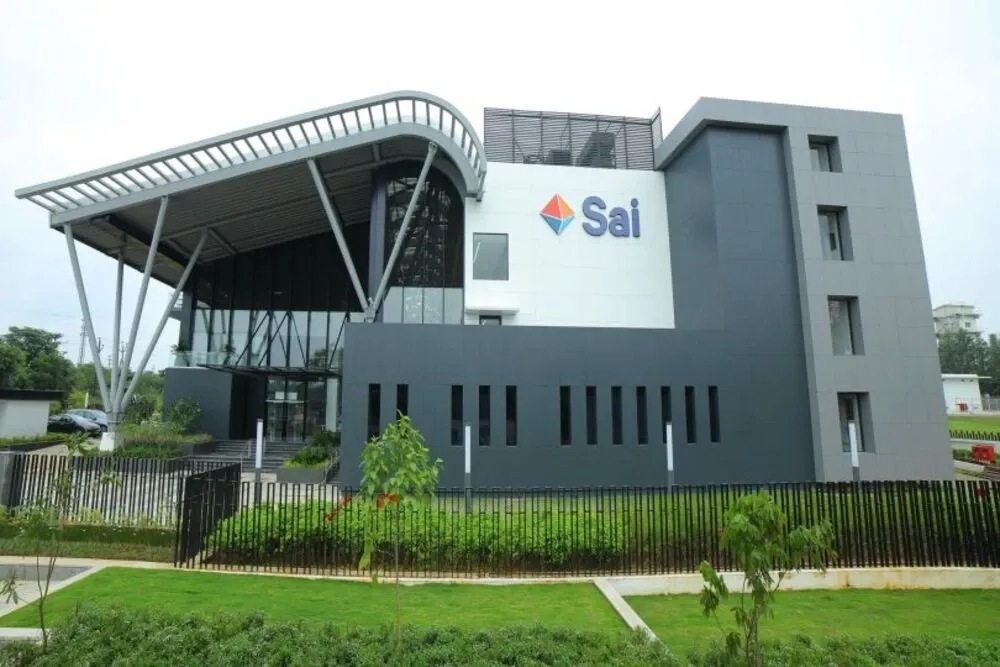
1. At a Glance
The financial community has turned its spotlight toward the contract research, development, and manufacturing landscape, where Sai Life Sciences Ltd is aggressively positioning itself. Operating as an integrated contract research, development, and manufacturing organization (CRDMO), the entity serves global innovator pharmaceutical and biotechnology players. Recent financial disclosures show significant top-line expansion, with annual consolidated revenue from operations reaching ₹21,924.92 million for the full fiscal year ended March 31, 2026, up from ₹16,945.70 million in the previous fiscal year. This represents an annual sales growth of approximately 29.4%.
Concurrently, consolidated net profit for the fiscal year grew to ₹3,489.10 million, compared to ₹1,701.32 million in the prior year, marking a profit expansion of over 105%. This acceleration has occurred alongside a substantial capital expenditure deployment strategy, aimed at growing aggregate manufacturing capacity from approximately 700 KL to 1,150 KL.
However, this rapid operational scaling introduces structural pressure points that warrant institutional scrutiny. The asset base has expanded through heavy capital commitment, with property, plant, and equipment rising to ₹15,344.14 million and capital work-in-progress reaching ₹2,704.53 million. This asset-heavy transition leaves the company highly vulnerable to utilization risk if global pharmaceutical pipelines face clinical trial attrition or macroeconomic delays.
Furthermore, the organization operates under severe geographic concentration, deriving roughly 99% of its revenue mix from export markets, primarily the United States and Europe. This absolute dependency on Western biopharma budgets exposes the business model to sudden swings in international funding environments, regulatory shifts, and foreign exchange volatility.
The industry is also grappling with a noted contraction in US biotechnology funding. While management has leveraged multi-year large pharmaceutical relationships to insulate current operations, any prolonged funding drought across the early-stage biotech ecosystem could severely compress the discovery pipeline.
Additionally, a series of ongoing legal adjustments and multi-million tax demands across central and state jurisdictions present immediate cash outflow risks. Investors tracking this high-momentum entity must balance the visible operating leverage against structural concentration risks and an aggressive capital deployment timeline that leaves zero room for operational error.
2. Introduction
Sai Life Sciences Ltd has transitioned from a closely held contract service provider into a publicly listed corporate entity, following its Initial Public Offering (IPO) that culminated in a stock exchange listing on December 18, 2024. The capital raising exercise structured a total fund generation of up to ₹3,042.62 crore, comprising a fresh issue of equity shares worth ₹9,500.00 million and an offer for sale by existing stakeholders.
Historically rooted in drug discovery chemistry since its inception in 1999, the enterprise has spent over two decades constructing an infrastructure framework that links laboratory-scale discovery to commercial-scale active pharmaceutical ingredient (API) manufacturing.
The structural thesis for contract manufacturing rests heavily on the outsourcing patterns of global pharma innovators seeking capital efficiency and supply chain diversification. By anchoring its core operations in major life sciences hubs—headquartered in Hyderabad with satellite research operations and specialized process centers in Manchester and Boston—the company presents an integrated services framework.
The strategy requires maintaining compliance profiles under multiple global regulatory jurisdictions, including the United States Food and Drug Administration (USFDA) and the Pharmaceuticals and Medical Devices Agency (PMDA) of Japan.
As corporate governance frameworks adjust to public market standards, the long-term viability of the business depends on its ability to transition early-stage laboratory discovery molecules into high-volume, late-stage commercial manufacturing contracts.
In the capital allocation architecture of an expanding pharma exporter, real wealth is not generated by chasing short-term volume spurts, but by establishing an enduring process-driven infrastructure that converts complex chemical synthesis into recurring, multi-year commercial manufacturing mandates.
3. Business Model – WTF Do They Even Do?
To understand how this enterprise converts chemical configurations into cash flows, one must dissect the dual pillars of its operational framework: Contract Research (CRO) and Contract Development and Manufacturing (CDMO). The revenue mix recorded for the first half of the fiscal year 2026 allocates 64% of total turnover to CDMO activities, while the remaining 36% is driven by CRO operations.
The CRO engine operates as the front-end customer acquisition funnel. Here, a staff of laboratory scientists handles computational drug design, medicinal chemistry, toxicology, and preclinical studies. This phase is highly specialized, intellectual property-insensitive for the provider, and transactional, helping clients move target molecules toward Investigational New Drug (IND) filings.
Once a molecule clears early-phase clinical hurdles, it moves into the CDMO domain, where the financial stakes change significantly. In this segment, the company develops optimized chemical processes, analytical testing frameworks, and scales up production from clinical trial grams to multi-ton commercial API volumes.
The asset portfolio includes 30 commercial molecules alongside over 160 early-stage programs, with more than 40 programs currently positioned in active clinical trial phases. Production occurs across manufacturing infrastructure with an installed capacity of approximately 700 KL, anchored by a 13-acre research and development campus within the Genome Valley ecosystem in Hyderabad.
The core challenge of this business model is managing clinical attrition; the vast majority of early-stage molecules naturally fail during clinical progression. To insulate the P&L from single-molecule failures, the operational strategy intentionally targets a diversified basket of smaller chemical assets valued between $5 million and $10 million each, rather than relying exclusively on massive blockbusters.
This creates a structural buffer, ensuring that the termination of an individual clinical program does not destabilize the underlying manufacturing infrastructure.
Are long-term outsourcing relationships genuinely sticky, or do global innovators shift suppliers the moment a cheaper manufacturing alternative emerges in a competing geography?
4. Financials Overview
The performance matrices over recent periods highlight clear top-line expansion and shifting margin dynamics. The