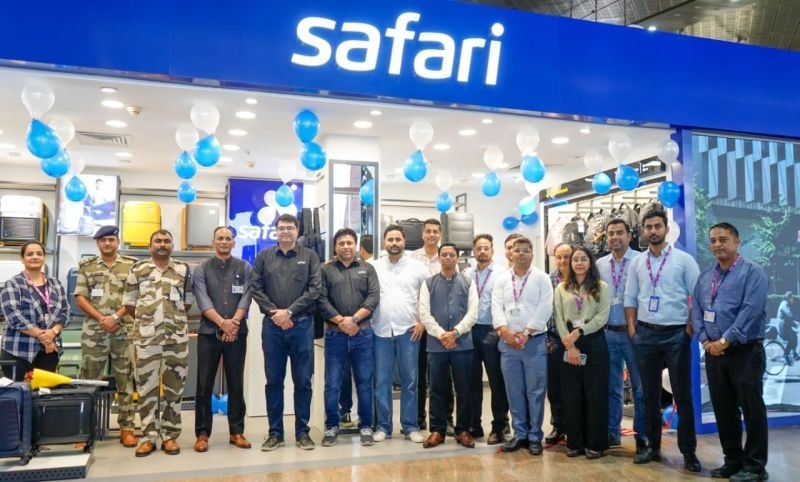
1. At a Glance – The Travel King Packing Profits (and Ambition)
Safari Industries is currently quoting at ₹1,938, with a market cap of ₹9,496 Cr. Over the last 3 months, the stock has politely corrected -11.9%, as if the market said, “Boss, calm down.”
But here’s the spicy bit:
Q3 FY26 Sales: ₹512 Cr
Q3 FY26 PAT: ₹32.9 Cr
TTM Sales: ₹1,995 Cr
TTM PAT: ₹168 Cr
ROCE: 18.7%
ROE: 15.8%
Debt to Equity: 0.11
Stock P/E: 56.6
Book Value: ₹213
This is not a tiny suitcase company anymore. This is a ₹9,500 Cr business betting big on India’s travel boom.
And just when you thought it was quietly selling luggage, the board drops a ₹500 Cr QIP bomb in Feb 2026.
Question: Is Safari expanding runway… or overpacking?
Let’s unzip the numbers.
2. Introduction – From Suitcase to Serious Scale
Founded in 1974, Safari has been around longer than most airport security queues.
Originally just a luggage manufacturer, today it is a brand-driven consumer discretionary company riding India’s aspirational travel wave.
India is travelling more. Tier-2 cities are flying. Honeymoons, work trips, destination weddings, Instagram vacations — all need luggage. And preferably something better than the old steel trunk.
Safari operates in two broad segments:
Hard luggage (54%)
Soft luggage (46%)
Unlike some peers that import heavily, Safari manufactures hard luggage in-house at Halol, Gujarat. That’s where margin control begins.
The company has also:
Expanded capacity to 6,50,000 pieces per month
Launched new premium brand Urban Jungle
Raised ₹229 Cr via preferential allotment
Now approved up to ₹500 Cr QIP
This isn’t slow, conservative compounding. This is “let’s build the next Samsonite of India” energy.
But is the financial performance backing the ambition?
3. Business Model – WTF Do They Even Do?
Safari sells luggage. But not just luggage. They sell “aspiration with wheels.”
Revenue Mix
Hard luggage: 54%
Soft luggage: 46%
Hard luggage = polypropylene (PP) and polycarbonate (PC), manufactured in-house. Soft luggage = mostly imported fabric-based products.
Why does this matter?
Because hard luggage gives:
Better margin control
Better brand premium
Better manufacturing leverage
They sell via:
Standalone stores
Canteen Stores
B2B
B2C
Amazon, Flipkart
Own websites (D2C push)
They’ve even launched Urban Jungle in the premium casual segment.
So they’re not just selling suitcases. They’re trying to become a lifestyle luggage brand.
The real question: Can they sustain growth without discounting heavily?
Let’s see the numbers.
4. Financials Overview – The Quarterly Reality Check