1. At a Glance – The ‘Arre Yeh Kaun Hai?’ Moment
Royal Arc Electrodes Ltd is that quiet industrial uncle who never posts reels, never flexes cars, but somehow keeps minting money while everyone else is busy shouting “Make in India” on LinkedIn. Sitting at a market cap of roughly ₹183 crore, trading around ₹165, this SME-listed welding consumables manufacturer has quietly delivered a 37% jump in quarterly profit and a 15.5% rise in quarterly sales, while most capital goods SMEs are still blaming elections, monsoons, and Mercury retrograde.
Return over the last six months stands at about 21%, ROCE is a respectable 22.2%, ROE is 16.4%, and debt is so low (₹5.53 crore) that even a conservative banker won’t lose sleep over it. The company operates in a sector that nobody brags about at parties — welding electrodes, flux-cored wires, MIG/TIG wires — yet these boring sticks literally hold together factories, refineries, ships, bridges, and half of India’s infra dreams.
Latest half-yearly results (H1 FY26) show sales of ₹53 crore and PAT of ₹4 crore, translating into an EPS of ₹3.88 for the half-year. No drama, no accounting gymnastics, just steady industrial grinding. But is this consistency hiding something spicy underneath, or is Royal Arc simply doing what Indian manufacturing companies are supposed to do — make things, sell them, and collect cash? Let’s put on our funny-auditor glasses and find out.
2. Introduction – A 1996-Born Company That Refuses to Act Its Age
Royal Arc Electrodes was incorporated in 1996, which means it has survived liberalisation hangovers, the 2008 crisis, demonetisation, GST chaos, COVID lockdowns, and the great SME IPO circus of 2024–25. That alone deserves some respect. While many SMEs pop up, raise money, and disappear faster than a crypto influencer, Royal Arc quietly kept manufacturing welding consumables in Gujarat like a disciplined factory supervisor who clocks in before sunrise.
The company finally decided to list in February 2025, raising about ₹36 crore through its IPO. Unlike many IPO stories where “general corporate purposes” is code for “trust me bro,” Royal Arc clearly stated its intentions: expand manufacturing capacity, strengthen working capital, and improve infrastructure. Boring? Yes. Reassuring? Also yes.
What makes Royal Arc interesting is not explosive topline growth or meme-stock volatility, but the combination of decent margins, low debt, improving exports, and a product portfolio that benefits directly from India’s obsession with infrastructure, industrial capex, and “Viksit Bharat” PowerPoint slides.
But before we crown it as the next industrial darling, we need to understand what exactly this company does — and whether it’s actually good at it.
3. Business Model – WTF Do They Even Do? (With Sparks, Obviously)
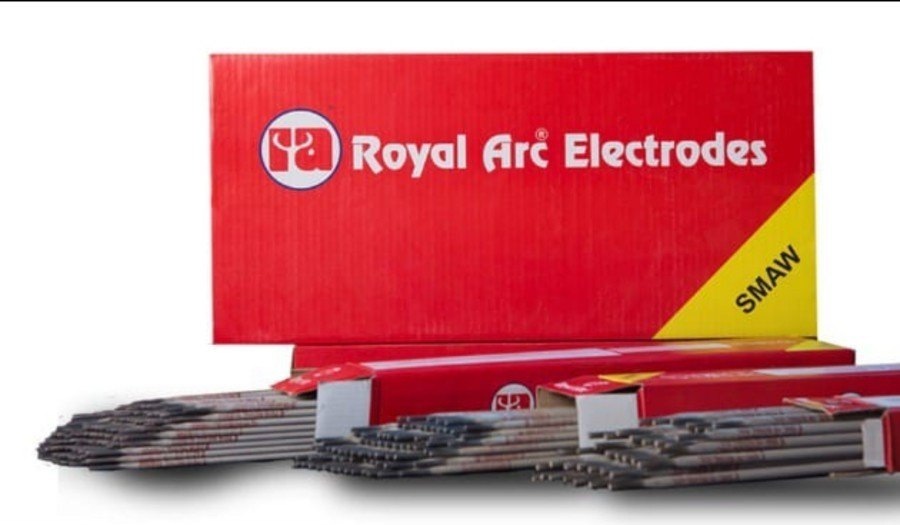
Royal Arc Electrodes manufactures welding consumables. Translation for non-engineers: they make the stuff that allows two pieces of metal to become one inseparable emotional unit. Their main products include welding electrodes, flux-cored wires, and MIG/TIG wires — all critical consumables in construction, shipbuilding, refineries, PEB structures, automotive plants, telecom towers, sugar factories, and pretty much anywhere sparks fly.
Their revenue mix is refreshingly transparent:
- Flux-cored wires contribute about 50.7% of revenue — high-deposition, higher-value products used in heavy industrial applications.
- Welding electrodes (by weight) make up ~33%.
- TIG/MIG wires add another ~8.6%.
- The rest comes from welding electrodes by pieces and small ancillary products.
About 90% of revenue comes from manufacturing, while only ~9.5% is trading. This matters because manufacturing margins are real margins; trading margins are “chai-paani ke baad kya bacha” margins.
Geographically, 85.6% of sales are domestic, with exports contributing ~14.4%. The company recently executed its first export order to a European distributor in November 2025 — small in value (₹12.5 lakh) but symbolically important. Every exporter starts small before posting photos of containers on LinkedIn.
The company operates from a single manufacturing facility in Valsad, Gujarat, spread across 6.2