Raja Bahadur International Ltd Q3 FY26 – ₹7.40 Cr Sales, ₹0.96 Cr PAT, Debt ₹266 Cr & 75.6 P/E… Royal Heritage or Real Estate Hangover?
1. At a Glance – The Maharaja With a Mortgage
Raja Bahadur International Ltd is that 1926-born royal relic that now runs on real estate rentals and hope. Current price? ₹4,598. Market cap? ₹115 Cr. Stock P/E? A royal 75.6. Debt? ₹266 Cr. ROE? -7.52%.
Latest quarterly sales (Dec 2025): ₹7.40 Cr. PAT: ₹0.96 Cr. Quarterly profit up 243% YoY. Sounds impressive… until you notice interest cost of ₹3.91 Cr in the same quarter.
Book value is ₹438 and the stock trades at 10.5x book. Return over last 3 months? 7.56%. So price is calm. Fundamentals? Not so calm.
Operating margins are chunky at 45% (TTM), but earnings include ₹9.09 Cr other income.
This is a real estate company with heritage, high debt, negative 3-year ROE, and a valuation that thinks it’s Lodha’s distant cousin.
Question is simple: Is this a sleeping royal asset or just a heavily mortgaged palace with a shiny gate?
2. Introduction – From Textile Raja to Rental Rani
Founded in 1926. That’s pre-Independence. Pre-Twitter. Pre-Everything.
Raja Bahadur once manufactured textile products, pillow cases, drawing office equipment, mini drafters, high precision machine tools… basically everything except peace of mind for investors.
Today? It’s a real estate developer and landlord.
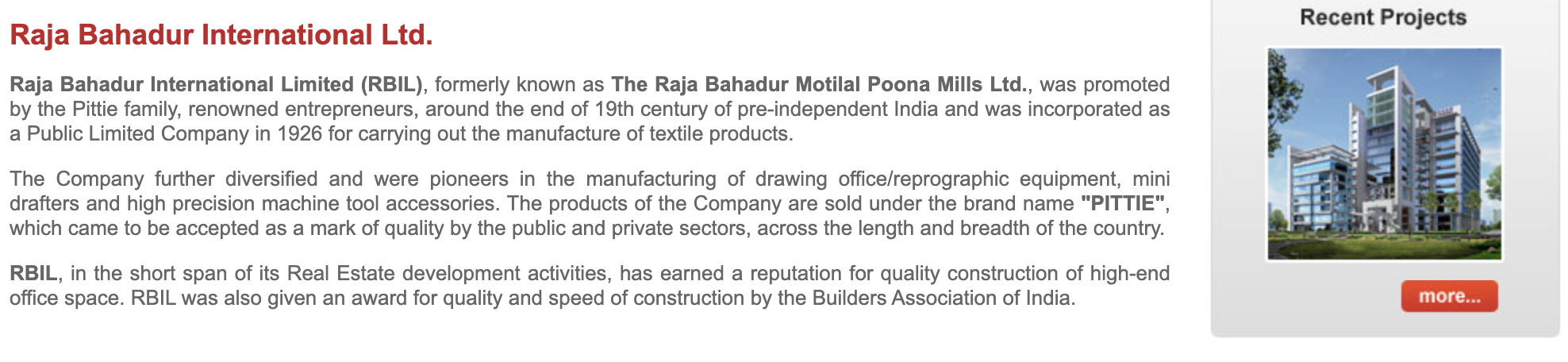
It constructed Raja-Shree Business Park in Pune and leased it to Tata Consultancy Services Ltd. That’s the shiny badge. TCS as tenant is like saying “My tenant pays on time and doesn’t damage furniture.”
Revenue breakup FY22 shows diversified sources:
48% Sale of Residential Flats
34% Rental income
15% Sale of TDR
1% Retail shop products
2% Other income
But here’s the twist — the company has been reporting recurring losses for many years and debt levels are very high.
And to meet working capital needs? It approved accepting fixed deposits from members.
When a real estate company with ₹266 Cr debt starts raising deposits from members, do you call that smart funding… or emotional borrowing?
3. Business Model – WTF Do They Even Do?
Let’s simplify.
They:
Develop real estate projects.
Sell residential flats.
Lease commercial property.
Generate some rental income.
Borrow aggressively.
Primary asset: Raja-Shree Business Park in Pune. Main tenant: TCS.
So recurring rental income is the backbone.
Then there’s residential inventory like Pittie Kourtyard at Kharadi, which management says most inventory was sold.
They also plan to create additional premises for generating rental income.
Translation? They want to be a landlord with leverage.
Real estate model usually works like this:
Borrow money.
Build property.
Sell or rent.
Repay debt.
Repeat.
But here, debt keeps rising.
Borrowings:
Mar 2023: ₹126.61 Cr
Mar 2024: ₹152.55 Cr
Mar 2025: ₹212.74 Cr
Sep 2025: ₹266.04 Cr
That’s not “controlled leverage.” That’s debt on growth steroids.
If rental income doesn’t grow meaningfully, interest eats profit faster than termites in an old haveli.
So ask yourself: Are they building assets faster than they’re building liabilities?