Raj Rayon Industries Ltd Q4 FY26: Profit Soars 146% to ₹33.99 Crore as Corporate Restructuring collides with Persistent Audit Qualifications
1. At a Glance
The financial arena loves a resurrection story. Raj Rayon Industries Ltd is attempting precisely that, drawing substantial investor attention with an aggressive post-insolvency ramp-up. On paper, the numbers are dazzling. The company has delivered a massive 146% TTM profit growth, with its full-year FY26 net profit reaching ₹33.99 crore. Revenue from operations expanded to ₹1,179.72 crore, showing a significant top-line expansion that signals an operational rebound. Yet, behind this shiny curtain of growth lies an interlocking web of structural, legal, and operational vulnerabilities that should make any analytical mind pause.
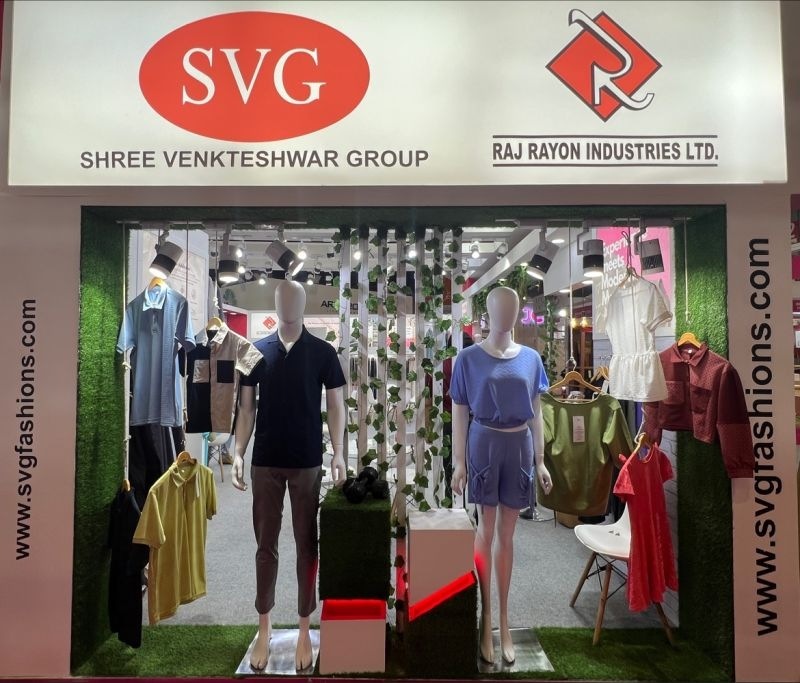
This is a business that literally rose from the graveyard of the National Company Law Tribunal (NCLT) after completely halting production in 2018 due to obsolete machinery and suffocating debt. Acquired by the SVG Group in FY21, the company has seen its metrics surge alongside a massive capital expenditure blueprint. Investors have rushed back, captivated by plans to scale polymerisation capacity to 700 tonnes per day (TPD).
However, corporate resurrections are rarely clean. While the top line is expanding, the company is operating on razor-thin standalone margins in a highly cyclical, crude-oil-dependent textile segment. Worse, the operational engine is running ahead of its compliance framework. For three consecutive years, statutory auditors have slapped the company with a modified audit opinion because management cannot—or will not—produce the documentation for three inoperative bank accounts from its pre-insolvency era.
Simultaneously, the promoters hold an astonishing 94.14% of the equity, leaving a minuscule public float and triggering structural non-compliance with SEBI’s Minimum Public Shareholding (MPS) guidelines. Fines from stock exchanges are piling up, and the company recently reversed a ₹55 lakh provision for these penalties on the mere “pretext” that it has applied for a waiver. Can a company truly reward long-term investors when its corporate governance framework remains tangled in regulatory disputes and unverified banking records? The operational growth is real, but so are the structural fault lines.
2. Introduction
Raj Rayon Industries Ltd was initially incorporated in 1993, anchoring its operations in the manufacturing and trading of polyester chips, polyester yarn, and processed yarn. For over two decades, the company navigated the volatile textile landscape until structural inefficiencies, uncompetitive cost structures, and an escalating debt burden broke its operational back. By 2018, production had ceased completely, and the company was dragged into insolvency proceedings under the NCLT.
The turning point arrived during FY21 when the SVG Group stepped in as the resolution applicant, acquiring an 85% stake in the crippled entity for a modest cash consideration of ₹549 million. The acquisition provided the company with a clean slate regarding historical operational creditors and an asset base spanning 25 acres with a 6 lakh square foot manufacturing facility in Silvassa. Under the stewardship of the Agarwal family, the company set out to rebuild its production capabilities, completely purging obsolete machinery and installing modern, technology-driven manufacturing setups.
The new management structure is highly centralized. Mr. Rajkumar Satyanarayan Agarwal occupies the position of Managing Director, while Mr. Sandiip Satyanarayan Agarwal serves as both Whole-Time Director and Chief Financial Officer. Both individuals bring over 25 years of industrial experience via the parent entity, SVG Fashions Private Limited.
This relationship forms the core of Raj Rayon’s modern operational thesis. The parent company utilizes Raj Rayon’s yarn for its own downstream knitting and garment manufacturing operations, establishing a built-in captive consumption model. In FY25, this backward integration strategy saw SVG Fashions sourcing 26% of its total yarn requirements directly from Raj Rayon, up from 17% in FY24.
3. Business Model – WTF Do They Even Do?
At its core, Raj Rayon operates as a heavy industrial processor transforming petro-chemical derivatives into synthetic textiles. The company buys Purified Terephthalic Acid (PTA) and Mono Ethylene Glycol (MEG)—both of which are volatile crude oil derivatives—and runs them through thermal and chemical processes to manufacture man-made fibers.
The output is divided into three primary categories: Polyester Chips, Partially Oriented Yarn (POY), and Drawn Textured Yarn (DTY). These products serve as the foundational raw materials for downstream weavers, knitters, and apparel manufacturers who convert them into everyday clothing, home textiles, and industrial fabrics.
To move away from the hyper-commoditized base yarn market, management has designed a product profile that includes specialized cross-sections like Round, Trilobal, and Octalobal yarns, alongside Full Dull, Semi Dull, Bright, Cationic, and Doped Dyed varieties. They even market high-margin functional variants such as Fire Retardant and Anti-Microbial yarns.
The structural reality of this business model is capital intensity and thin processing margins. The company acts as a middleman between massive petrochemical conglomerates and fragmented textile weavers. This means Raj Rayon lacks pricing power on both ends. When international crude prices fluctuate, the input costs for PTA and MEG shift instantly, while passing these costs down to fabric manufacturers involves a painful time lag.
To survive, the business model demands absolute scale. If the machines aren’t running at peak capacity 24/7, fixed depreciation and finance costs quickly consume all operating cash flows.
4. Financials Overview
A precise inspection of Raj Rayon’s latest financial disclosures confirms that the company reports under a single operating segment: Manufacturing & Marketing of Textile Yarns. The latest official financial results published on May 14, 2026, represent audited full-year and fourth-quarter results. Therefore, for the purpose of true operational assessment, the Q4 FY26 EPS of ₹0.25 is analyzed without artificial annualization, reflecting the exact balancing figures between the full audited year and the nine-month period.
Financial Performance Comparison
The financial figures below maintain the original reporting currency unit from the official disclosure, which is declared in ₹ Lakhs. For broader readability, key aggregates are cross-compared in equivalents of ₹ Crores.
Metric
Latest Quarter (Mar 2026)
Previous Quarter (Dec 2025)
Same Quarter Last Year (Mar 2025)
YoY Change (%)
Revenue from Operations
₹29,481.72 Lakhs
₹30,539.01 Lakhs
₹20,584.51 Lakhs
+43.22%
EBITDA (Operating Profit)
₹1,724.26 Lakhs
₹1,403.87 Lakhs
₹1,123.64 Lakhs
+53.45%
Profit Before Tax (PBT)
₹755.77 Lakhs
₹738.81 Lakhs
₹745.93 Lakhs
+1.32%
Profit After Tax (PAT)
₹1,403.21 Lakhs
₹586.82 Lakhs
₹1,344.35 Lakhs
+4.38%
Basic EPS (₹)
₹0.25
₹0.11
₹0.24
+4.17%
Note: EBITDA has been derived by adding back Finance Costs (₹479.23 Lakhs) and Depreciation (₹486.26 Lakhs) to the PBT of ₹755.77 Lakhs for the quarter ended March 31, 2026.
Operational Commentary
The top-line growth is substantial. Revenue from operations jumped 43.22% year-on-year, driven by the commercialization of the Phase II capacity expansion. This project came online at the end of the first half of FY26, lifting raw material throughput.
However, a sequential review reveals emerging friction: revenue fell by 3.46% quarter-on-quarter from ₹30,539.01 Lakhs in December 2025 to ₹29,481.72 Lakhs in March 2026. This sequential slowdown indicates that macro pricing headwinds or domestic supply gluts are testing the company’s ability to maintain volume momentum.
The bottom-line numbers also contain a significant structural distortion. Look at the transition from PBT to PAT in the latest quarter: PBT stood at ₹755.77 Lakhs, but PAT finished much higher at ₹1,403.21 Lakhs. This occurred because the company recorded a positive deferred tax credit of ₹647.44 Lakhs during the quarter, effectively bypassing current cash tax outflows.
When analyzing core operational earnings power, smart investors strip out these non-cash tax accounting entries. Without this deferred tax credit, the net operational profit would have been significantly lower.
How sustainable do you believe a company’s net profit growth is when a major portion of its recent quarterly bottom line is driven by deferred tax accounting credits rather than cash operating margins?
5. Valuation Discussion
To evaluate the current financial positioning of Raj Rayon Industries Ltd, we apply three distinct valuation methodologies based strictly on the verified numbers available up to the close of May 15, 2026. The stock closed at ₹20.65, representing a total market capitalization of ₹1,148.31 crore.
The company reported a standalone full-year net profit of ₹33.99 crore for the financial year ended March 31, 2026. With a current market capitalization of ₹1,148.31 crore, the trailing P/E ratio stands at:
P/E Ratio = (Market Capitalization)/(Net Profit) = (1,148.31)/(33.99) = 33.78x
The median industry P/E for the textile and apparel sector is reported at 18.22x. Raj Rayon is trading at an 85% premium to its sector peers.
Conservative Bound (At Industry Median 18.22x): Implies an equity value of ₹619.30 crore, or ₹11.13 per share.
Aggressive Bound (Maintaining current 33.78x on expected capacity ramp-up): Implies an equity value of ₹1,148.31 crore, or ₹20.65 per share.
Method 2: EV-to-EBITDA Multiple Valuation
The Enterprise Value (EV) of the company is derived by taking the Market Capitalization (₹1,148.31 crore) and adding the total outstanding borrowings (₹238.73 crore consisting of ₹160.61 crore long-term and ₹78.12 crore short-term), then subtracting cash and bank balances (₹18.30 crore consisting of ₹8.03 crore cash equivalents and ₹10.27 crore other bank balances). This yields an Enterprise Value of approximately ₹1,368.74