1. At a Glance
Radix Industries (India) Ltd is currently navigating a peculiar financial landscape. On one hand, the company has managed to scale its top-line to ₹50.52 crore for the full year FY26, but on the other, the operational engine seems to be sputtering. The latest quarterly numbers reveal a sharp 32.8% decline in Net Profit compared to the same period last year. If you look closely, the Operating Profit Margin (OPM) has collapsed from a healthy 11.85% in March 2024 to a measly 4.18% in March 2026.
This is a classic red flag. When a company sells more but keeps significantly less, it usually indicates either a loss of pricing power or an inability to control raw material costs. For a company specialized in the “human hair” niche—a business that relies heavily on procurement and processing—this margin contraction is alarming. The only reason the bottom line doesn’t look like a complete disaster is a timely injection of Other Income, which jumped significantly this quarter.
Investors are currently paying a P/E of 89.1, a valuation that usually suggests hyper-growth or massive brand moat. Does a human hair processing unit in West Godavari justify a multiple higher than most FMCG giants? Radix is trading at 12.2 times its book value, while its ROE remains stagnant at 14.5%. The market seems to be pricing in a future that the current operational margins simply do not support.
The company recently exited the 100% Export Oriented Unit (EOU) scheme, which might change its tax and operational dynamics. While the balance sheet remains virtually debt-free, the mismatch between valuation and operating performance is a gap that needs serious scrutiny.
2. Introduction
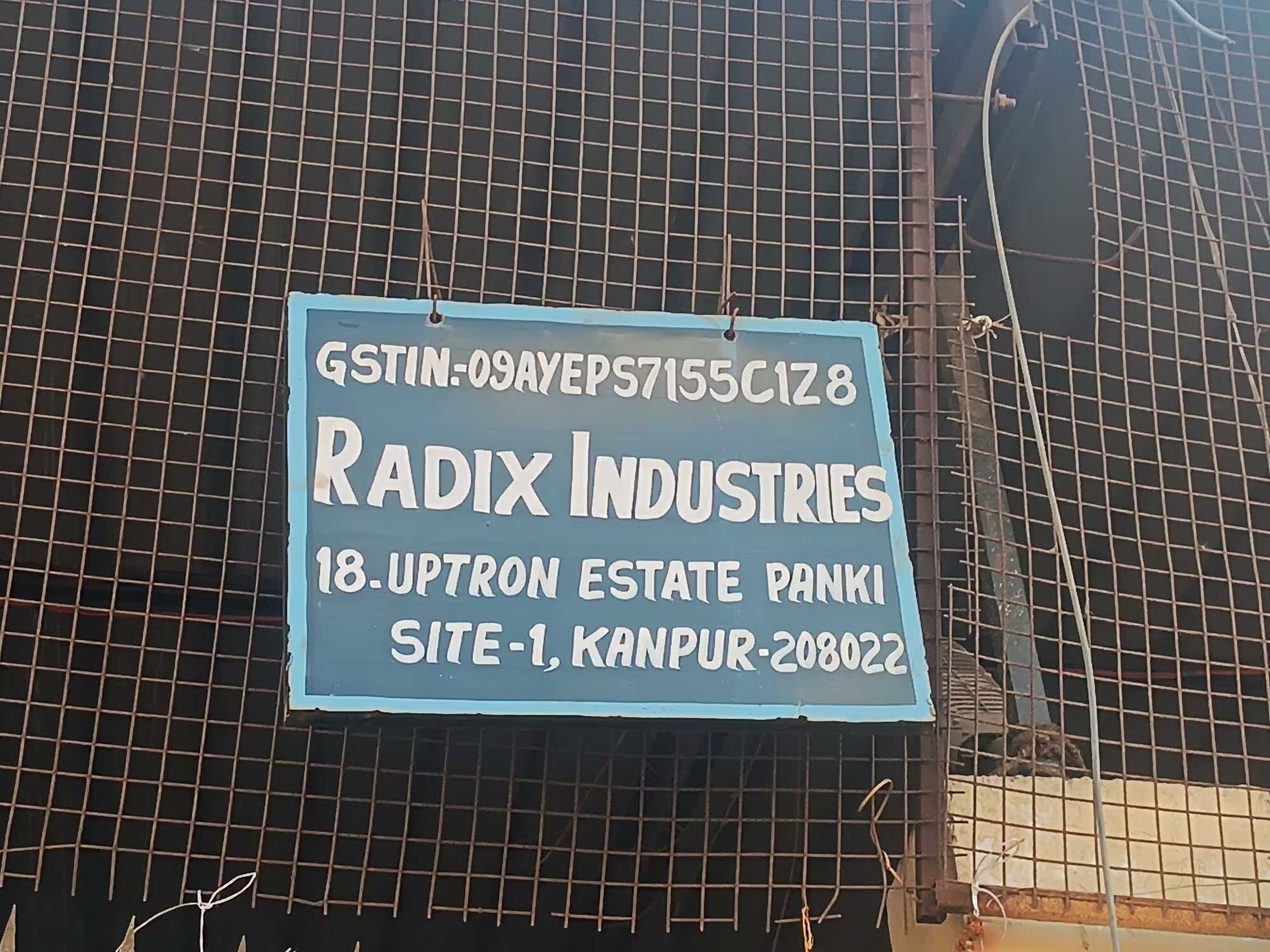
Radix Industries didn’t start its journey in the salon or the wig factory. Its history is a testament to the wild pivots common in the Indian small-cap space. Originally incorporated in 1998, the company spent its early years bottling LPG for domestic and commercial use. In 2011, it was acquired by the promoters of Arqube Industries, who decided that the future wasn’t in gas, but in hair.
Since that acquisition, the company has transformed itself into a specialized player in the human hair products market. They operate out of Tanuku, Andhra Pradesh, focusing on the export of wigs, extensions, and processed natural Remy hair. The business model is straightforward: procure hair, process it through various hygienic stages, and sell it to global markets.
Currently, the company’s revenue is split between exports (58%) and domestic sales (42%). This diversification provides a hedge against local economic shifts, but it also exposes the company to