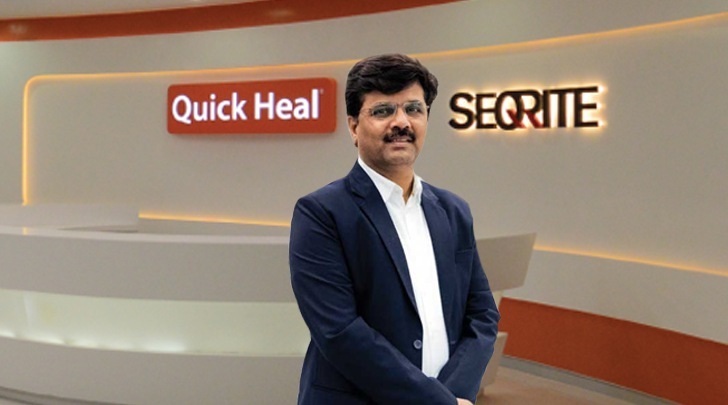
1. At a Glance – “Antivirus Bech Rahe The… Ab Khud System Scan Ki Zarurat Hai”
There are two kinds of companies in the stock market.
One that fight cyber threats.
And one that become the threat to your portfolio.
Quick Heal Technologies Ltd currently sits somewhere in the middle… like your Windows laptop stuck on “Scanning for threats… 99% complete” for 3 hours.
Here’s the mystery:
- Revenue? Flat.
- Profit? Suddenly positive.
- Margins? Still gasping for oxygen.
- CEO? Resigned mid-crisis.
- Expenses? Ate the entire business alive.
And yet… the market is pricing it like it’s about to become India’s answer to CrowdStrike.
Stock P/E: 133
ROCE: negative
Profit growth: -74% (TTM)
If this was a Bollywood movie, this is the interval point where you realise… the hero might actually be the villain.
But the real question is:
Is this a turnaround story… or just a better-looking decline?
Because when a cybersecurity company starts losing control of its own margins…
…you have to ask:
Who exactly is protecting the investors?
2. Introduction – From “Install Antivirus” to “Install Hope.exe”
Remember those days?
You bought a new laptop… first thing the shopkeeper says:
“Sir Quick Heal daal lo, warna virus aa jayega.”
That was the brand power.
Quick Heal was basically the LIC agent of your computer safety.
But fast forward to FY26…
The world has changed.
- Cybersecurity = cloud + AI + zero trust
- Customers = enterprises, not just home users
- Competition = global giants with billion-dollar budgets
And Quick Heal?
Still trying to transition from:
“Rs 499 antivirus CD”
to
“enterprise cybersecurity platform”
And this transition is not smooth.
It’s like asking a paanwala to suddenly open Starbucks.
Let’s break the drama:
- Consumer segment revenue collapsed earlier (~30% fall in FY23)
- Company panicked → increased R&D to 46% of revenue
- Marketing + admin expenses also exploded
- Result → EBITDA margin fell from 31% → 1%
Yes. From hero to zero in one financial year.
Even in FY24, margins only recovered to 6%, which is basically “survival mode.”
And now in FY26?
- Revenue barely growing
- Profit showing recovery
- But operating performance still shaky
This is not a growth story.
This is a repositioning survival experiment.
And then comes the leadership twist:
- CEO Vishal Salvi → resigned
- VP Delivery → resigned
- HR Head → resigned
Three key exits.
All in one phase.
If this was your startup… you’d be updating LinkedIn quietly.
So now the real question:
Is management building the future… or abandoning the present?
3. Business Model – WTF Do They Even Do?
Alright, let’s simplify this without corporate jargon.
Quick Heal basically runs two businesses:
1. Consumer Antivirus (Old School)
- Anti-virus software for individuals
- Sold via 35,000 dealers
- India-heavy business (~94%)
Think:
“Laptop mein virus aa gaya? Quick Heal lagao.”
Problem?
- This market is dying.
- Free antivirus + built-in Windows security = game over.
2. Enterprise Cybersecurity (SEQRITE)
This is the “future dream” segment.
- Endpoint security
- Zero trust solutions
- XDR (Extended Detection & Response)
- Data privacy tools
Basically trying to compete with:
- Palo Alto
- CrowdStrike
- Fortinet
…with a Pune office and optimism.
Here’s the twist:
Enterprise segment is growing.
Consumer segment is shrinking.
So the company is doing this:
👉 Kill old business slowly
👉 Build new business aggressively
Sounds smart.
But execution?
That’s where things go from “strategic” to “suspicious.”
Because to build enterprise: