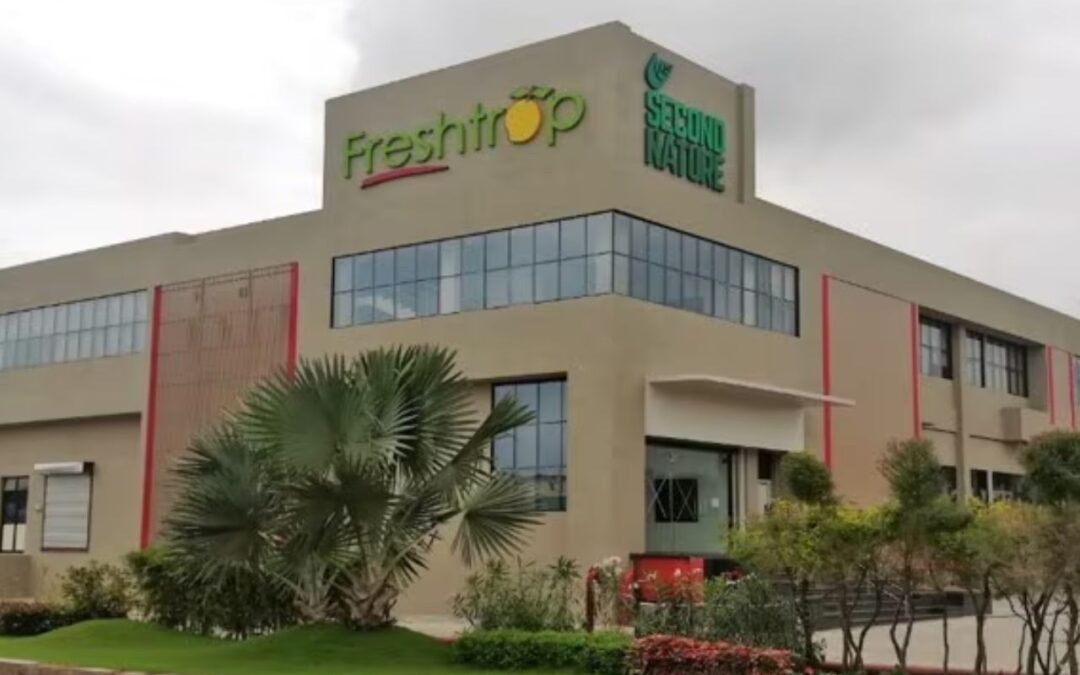
Puretrop Fruits Limited is currently a financial enigma. On one hand, the company has divested its core fresh fruit business, and on the other, it is reporting a Net Profit surge to ₹25.29 crore for FY26 compared to ₹11.87 crore last year. The headline EPS of ₹31.73 looks mouth-watering for a stock priced at ₹165, but the layers underneath reveal a complex transition. With a massive buyback of 11 lakh shares at ₹200 per share just completed in May 2026, the management is shrinking the equity base aggressively while sitting on a pile of cash and investments.
The “Fresh” has been dropped from the name—literally. Formerly known as Freshtrop Fruits, the new identity “Puretrop” signals a pivot away from the volatile fresh fruit export business toward processed pulps and high-tech juices. However, the balance sheet tells a story of a company that is currently more of an investment vehicle than a high-growth FMCG player. With Other Income of ₹21.9 crore (including gains from discontinued operations) propping up the bottom line, the core operational strength is under heavy scrutiny.
Investors are witnessing a massive reorganization. The company sold its fresh fruit undertaking to Green Agrevolution Private Limited, yet it continues to collect a percentage of revenue from grape and pomegranate exports as part of the deal. This “earn-out” structure means the P&L is currently a hybrid of ghost operations and a struggling processed food segment. While the debt-to-equity ratio is a negligible 0.01, the working capital cycle has exploded to 253 days. Is this a lean, mean processing machine in the making, or a company losing its operational rhythm post-divestment?
1. At a Glance
Puretrop Fruits is a classic case of “Change or Die.” For decades, it was the go-to exporter for Indian grapes to European giants like Tesco and Marks & Spencer. Today, that entire business has been sold off. What remains is the processed segment—mango pulps, pomegranate concentrates, and the “Second Nature” brand of cold-pressed juices. The latest results for March 2026 show Sales of ₹40.67 crore, a 49% jump YoY, which sounds fantastic until you realize the Operating Profit Margin (OPM) has collapsed from historical double digits to just 5.51% this quarter.
The red flags are waving in the working capital department. When a company sells its main business, you expect it to become lean. Instead, Puretrop’s Inventory Days have skyrocketed to 417 days in FY25, and though they improved recently, the cash conversion cycle remains a massive 96 days. The company is sitting on Investments worth ₹61 crore, nearly half its market cap. This suggests management is struggling to find high-yield avenues to deploy the cash generated from the slump sale.
The recent buyback of 11 lakh shares at ₹200 (a significant premium to the current market price of ₹165) indicates that the promoters believe the stock is undervalued, or they simply have no better use for the ₹22 crore they just spent. For the retail investor, the “Total Operations” EPS of ₹31.73 is a distraction. The EPS from continuing operations is only ₹9.11. If you value the company on what it actually does today,