01 — At a Glance
The Building Materials Disaster That Just Turned Into a Math Problem
- 52-Week High / Low₹176 / ₹110
- Q3 FY26 Revenue₹1,759 Cr
- Q3 FY26 EBITDA₹158 Cr
- Q3 FY26 PAT₹72 Cr
- Q3 EPS₹1.73
- Book Value₹29.0
- Price to Book4.31x
- EBITDA Margin9.0%
- Debt / Equity1.16x
- Return on Equity-4.0%
The Honest Summary: Prism Johnson—a company that made loss after loss after loss—has suddenly started printing money again. Q3 FY26 consolidated EBITDA jumped 241% YoY to ₹158 crore. Revenue up 5.9% to ₹1,759 crore. All three divisions (Cement, Tiles, RMC) are recovering simultaneously. The math works. The stock is trading at 32.2x earnings, because apparently the market got tired of this company being cheap. Debt still at ₹1,694 crore. The story ain’t finished yet.
02 — Introduction
Nine Years of Agony. One Quarter of “Wait, This Might Actually Work”
Prism Johnson Limited is a textbook case of a company that had everything—geographic presence, diversified products, historical profitability—and somehow managed to lose money on every single business for nearly a decade. Not metaphorically. Literally.
From FY16 onwards, this integrated building materials company (cement, tiles, ready-mix concrete, sanitaryware, bath fittings) got repeatedly punched in the face by: fuel costs that wouldn’t stop rising, raw material prices that defied gravity, export demand that collapsed, gas prices in Andhra Pradesh that turned tile manufacturing into an exercise in value destruction, and general market headwinds that made profitability a luxury item.
By FY24-FY25, the story looked genuinely terminal. ROCE of 2.2%. Return on Equity of negative 4% over three years. Net debt climbing to ₹1,106 crore in March 2025. The company was selling assets (office space in Mumbai for ₹165 crore in Q3 FY26) just to keep debt ratios from blowing up. This is what financial desperation looks like in a consolidated balance sheet.
But then something weird happened. Raw material costs normalised. Power and fuel prices didn’t explode. The RMC business—which nobody was betting on—started printing real cash. Tiles underwent modernisation. Cement premiumisation worked. And suddenly, in Q3 FY26, all the pain from the past nine years got compressed into one quarter of “Wait, they’re actually profitable again?”
Let’s dig into whether this is a genuine recovery or just a sugar rush before the next beatdown.
From Investor Presentation (Feb 2026): “From Headwinds to Recovery: Performance Inflection Across Businesses.” Translation: We stopped getting destroyed. Now we’re merely unprofitable on paper while somehow making cash.
03 — Business Model: Three Bets That Used To Fail Individually
Cement. Tiles. Concrete. A Diversified Disaster, Or A Diversified Recovery?
Prism Johnson operates across three integrated building materials divisions, each of which can independently destroy shareholder wealth or independently print money. It’s a diversification strategy that works perfectly—until one of them doesn’t. Currently, they’re all working. Suspicious? Yes. Impossible? No.
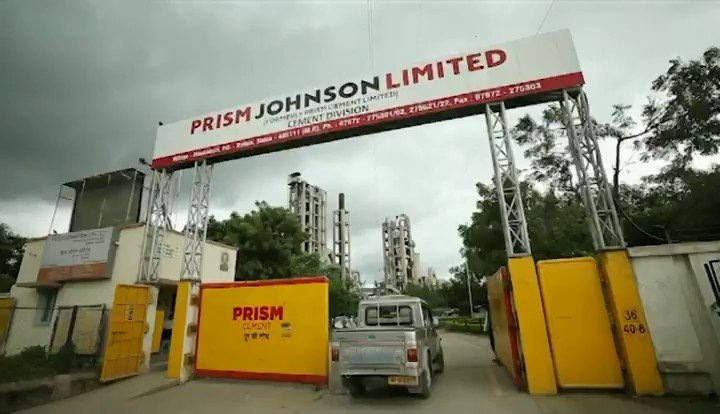
Prism Cement: 5.6 MTPA installed capacity at Satna, Madhya Pradesh. Serves Central and Eastern UP, MP, Bihar. Blends its own cement, sells under brands like Champion (regular), Champion Plus (premium), Champion Duratech, Champion All Weather (moisture-resistant). Geographic moat? Non-existent. Price moat? Gets destroyed every quarter. But the company is leaning hard into premiumisation—57.5% of Q3 FY26 sales are premium products vs 40.4% in Q3 FY25. That’s smart portfolio management, assuming the premium actually sticks in a price-sensitive market.
H&R Johnson (Tiles & Bath): 64 million m² of tile capacity. 11 manufacturing plants. Sanitaryware JV. The division that got absolutely hammered by gas price inflation and export collapse. ROCE fell from 17.2% in FY22 to 3.8% in FY25. They’ve been doing plant modernisation, energy efficiency, advertising campaigns in regional languages (May 2025 multimedia blitz). Capacity utilisation at 65.7% in Q3—meaning they’re running at two-thirds speed with one-third headroom for growth. Either they fill that capacity or it’s dead weight.
Prism RMC: 87 RMC plants across 41 cities. The unexpected winner. Commercial concrete + mega projects (highways, bullet trains, refineries). Q3 revenue up 14.1% YoY to ₹395 crore. EBITDA margin 8.4% (up from 5.1% in Q3 FY25). The order book is robust. This division is basically the only reason the consolidated numbers don’t look terminal.
Cement Revenue45%Q3 FY26 Mix
Tiles Revenue33%Q3 FY26 Mix
RMC Revenue22%Q3 FY26 Mix
The Structural Problem: All three businesses are commoditised or near-commoditised. Cement has 51% market share in Castrol. Prism has maybe 5% nationally and is a central India player. Tiles compete with Kajaria, Orient Bell, Somany, and 10,000 unorganised units. RMC is relationship-driven and project-dependent. There’s no pricing power. Every upturn will eventually mean more competitors show up and destroy margins again.
💬 Real talk: Do you think Prism Johnson’s recovery is durable, or are they just riding a commodity price cycle that’ll reverse in 18 months? Drop your bet in the comments.
04 — Financials: The Quarter Everything Changed (Probably Temporarily)
Q3 FY26: When EBITDA Exploded For The Right Reasons