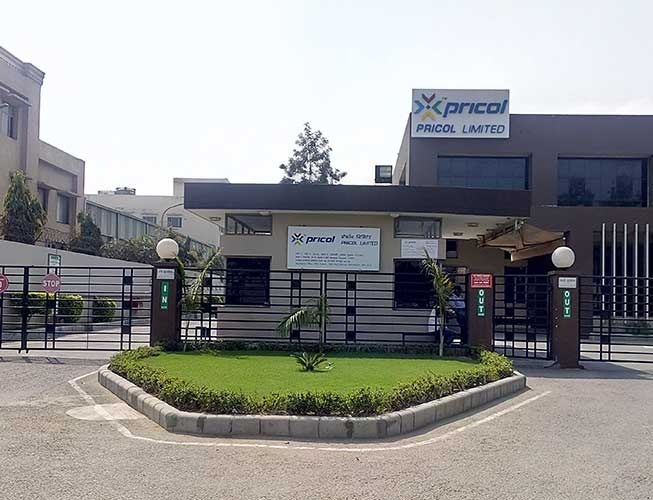
Pricol Ltd Q4 FY26: Consolidated Revenue Touches ₹3,963.85 Crore as Operating Cash Flow Moderates to ₹281.26 Crore Under Capacity Constraints
1. At a Glance
The financial performance of automotive component manufacturers often serves as an early indicator of broader macroeconomic trends. Pricol Ltd has attracted considerable attention due to its expanding top-line figures and strategic realignment within the automotive ecosystem. In the financial year ended March 31, 2026, the company reported consolidated revenue from operations of ₹3,963.85 crore. This is a substantial absolute increase from the ₹2,620.91 crore reported in the previous fiscal year, driven largely by inorganic expansion and structural shifts in product premiumization.
However, a granular evaluation of the financial statement reveals clear pressure points that warrant institutional scrutiny. While top-line growth appears robust, the company’s consolidated cash generated from operations stood at ₹367.15 crore, which reduced to a net cash flow from operating activities of ₹281.26 crore after paying direct taxes of ₹85.89 crore. This marks a structural divergence between paper profitability and cash efficiency. The organization faced significant working capital pressure, with inventory deployment expanding sharply from a cash utilization of ₹4.23 crore in FY25 to a massive outflow of ₹176.70 crore in FY26.
Furthermore, trade receivables consumed ₹119.92 crore of liquidity during the year. This indicates that while the company is aggressively pushed inventory into the system and booking accounting revenues, it has increasingly compromised its cash conversion cycle. The balance sheet confirms this structural shift, showing that total consolidated borrowings escalated sharply to ₹379.00 crore by March 31, 2026, compared to just ₹113.00 crore in the prior fiscal period. This is a capital allocation dynamic that cannot be ignored by discerning analysts.
2. Introduction
Pricol Ltd operates within the highly competitive auto-components ecosystem, specializing primarily in driver information systems and fluid management solutions. The domestic automotive landscape in India has undergone rapid regulatory and technological transformations over the past three years. This has forced component suppliers to transition from traditional mechanical assemblies to complex electronic, thin-film transistor (TFT), and liquid-crystal display (LCD) solutions.
Financial statements must always be interpreted through a clear lens: standalone metrics show the health of the core legacy manufacturing units, whereas consolidated metrics reveal the full weight of subsidiaries, structural debt, and operational adjustments. For Pricol, this distinction is critical. The latest official financial statements are declared as full-year audited reports matching Q4 FY26 benchmarks, which means the underlying metrics represent the comprehensive, fully-consolidated operational reality of the group.
A primary fundamental rule of corporate analysis states that wrong base numbers lead directly to flawed projections. This article relies exclusively on the verified consolidated financial disclosures for the period ending March 31, 2026, to assess whether the management’s aggressive capital expenditure cycle aligns structurally with sustainable liquidity generation.
3. Business Model – WTF Do They Even Do?
To put it simply, Pricol manufactures the dashboards, instrument clusters, gauges, and connected telematics systems that sit directly in front of a driver, alongside automated pumps and switches. If you ride a two-wheeler in India, there is a statistical probability approaching 65% that the digital or analog cluster tracking your speed was engineered by this company. Globally, the firm ranks as the second-largest instrument cluster manufacturer by volume.
The revenue framework is divided into specific product lines:
Dashboard Instruments and Driver Information Systems: Consistently accounts for approximately 70% to 75% of total sales volume.
Pumps and Mechanical Products: Contributing roughly 17% of total revenue.
Switches and Sensors: Comprising the remaining portion of the corporate product mix.
The institutional customer base is heavily skewed toward domestic Original Equipment Manufacturers (OEMs), which generate 89% of operational turnover. This customer concentration includes marquee automotive names such as TVS Motor Company, Hero MotoCorp, Bajaj Auto, Tata Motors, and Royal Enfield. Meanwhile, export channels represent 6% of revenue, and the remaining 5% is serviced via the automotive aftermarket.
The underlying vulnerability here is glaringly obvious: the entire business model is completely tethered to the volume cycles of domestic passenger vehicle and two-wheeler manufacturing. If domestic consumer demand cools down, their factory lines cool down even faster.
4. Financials Overview
The financial results for the final quarter of FY26 indicate structural expansion in volume, accompanied by shifts in operational profitability margins. For the calculation of the price-to-earnings metrics, the consolidated baseline EPS for the full financial year ended March 31, 2026, stands exactly at ₹20.57 per share, eliminating any need for statistical annualization distortion.