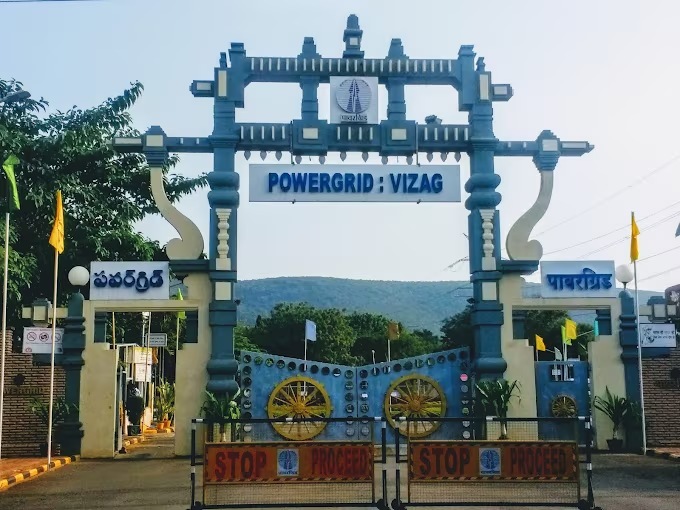
Power Grid Corporation:
₹32,000 Cr CapEx. Execution Inflection. They Finally Fixed The Transmission Network.
Highest quarterly revenue ever. Capex guidance raised to ₹32,000 crores. Nearly ₹23,000 crore commissioned in nine months. And they’re positioning for a structural shift from nomination-based to competitive-bid transmission projects worth ₹3.6 lakh crores by 2032.
The ₹3 Lakh Crore Grid That’s Finally Moving
- 52-Week High / Low₹322 / ₹250
- Q3 FY26 Revenue₹12,395 Cr
- Q3 FY26 PAT₹4,185 Cr
- 9M FY26 PAT₹11,382 Cr
- Q3 EPS₹4.50
- Book Value₹106
- Price to Book2.81x
- Dividend Yield3.01%
- Debt / Equity1.37x
- 9M CapEx Spend₹26,761 Cr
India’s Boring Utility That Just Became Interesting
Power Grid Corporation of India owns something most investors never think about: the metal lines that carry electricity across 45% of India’s total power transmission. Maharatna-rated. Government-owned 51.34%. Zero execution drama for most of its 30-year history. That is, until December 2024 when the real growth story started.
For three years, POWERGRID was the investment equivalent of waiting for water to boil. CapEx targets were announced. Projects were commissioned late. Management blamed Right-of-Way (RoW) constraints, land acquisition delays, and equipment supply bottlenecks. Analysts yawned. The stock delivered a measly 0.0% CAGR over a decade despite the business generating ₹36,000+ crore in annual operating cash.
Then something happened. The Government of India issued new RoW compensation guidelines in March 2025. State authorities started actually adopting them. Equipment suppliers bulked up transformer procurement. And suddenly, in Q3 FY26, POWERGRID commissioned ₹18,700 crore of transmission assets—nearly matching the *full year* plan in just nine months. Management is now raising guidance and saying publicly they intend to beat it. When a government CPSU says “we will exceed guidance,” that’s not confidence—that’s evidence that the bottlenecks are actually broken.
This is the story of how a utility company just became a growth story. Not hypergrowth—sensible, tariff-backed, infrastructure-led growth. That’s rarer than you think.
They Move Other People’s Electricity. Boring. Essential. Profitable.
Power Grid moves electricity. Not generates it. Not distributes it to your home. Moves it—from power plants to regional grids, across state lines, into industrial hubs, and from renewable energy zones to load centres. Think of them as the logistics company for electricity, except the electricity doesn’t lose volume in transit, the system availability is 99.82%, and the customers (distribution utilities and generators) are legally obligated to pay bills through a point-of-connection mechanism backed by letters of credit.
They operate 1,83,174 circuit kilometers of transmission lines. 288 substations. 5,99,016 MVA of transformation capacity. 18 HVDC stations (high voltage direct current—think long-distance power highways). Inter-regional transfer capacity of ~101 GW. They transmit more than 45% of India’s electrical energy. System availability: 99.84%. Annual tripping per line: 0.21 (they claim it’s comparable to global peers). Revenue comes from tariffs charged to state distribution utilities, power generators, and industry. Cost-plus structure for ~94.5% of assets. Return: predictable. Risk: low.
Emerging businesses: Battery Energy Storage Systems (just won first 150 MW project), data centres, renewable energy transmission through BOOM model (Build, Own, Operate, Maintain), and international transmission PPP partnerships (starting with Kenya). These are nascent but directionally important.
Q3 FY26: Numbers & What They Mean
Result type: Quarterly Results | Q3 FY26 EPS: ₹4.50 | Annualised EPS (Q3×4): ₹18.00 | 9M FY26 EPS: ₹12.24
Source table
| Metric (₹ Cr) | Q3 FY26 Dec 2025 |
Q3 FY25 Dec 2024 |
Q2 FY26 Sep 2025 |
YoY % | QoQ % |
|---|---|---|---|---|---|
| Revenue | 12,395 | 11,233 | 11,476 | +10.3% | +8.0% |
| EBITDA | 10,607 | 9,533 | 9,055 | +11.3% | +17.2% |
| OPM % | 86% | 85% | 79% | +100 bps | +700 bps |
| PAT | 4,185 | 3,862 | 3,566 | +8.4% | +17.3% |
| EPS (₹) | 4.50 | 4.15 | 3.83 | +8.4% | +17.5% |
What’s The Grid Company Actually Worth?
Method 1: P/E Based
CY25 full-year EPS = ₹16.68. Current P/E = 17.9x (CMP ₹299). Sector median P/E for power/transmission = 17.9x. POWERGRID trades at sector median, not premium, despite Maharatna status and monopoly transmission footprint. Conservative 16x–19x band.
Range: ₹267 – ₹317
Method 2: EV/EBITDA Based
TTM EBITDA = ₹38,958 Cr. Current EV = ₹4,05,385 Cr → EV/EBITDA = 10.4x. Quality infrastructure / utilities trade at 8x–12x. Near-zero regulatory risk given government backing.
EV range (9x–11x): ₹3,50,600 Cr – ₹4,28,500 Cr → Per share (930Cr shares):
Range: ₹376 – ₹460
Method 3: DCF Based
Base FCF: ₹36,223 Cr (FY25 OCF). Growth: 5–7% for 5 years (elevated capex phase). Terminal growth: 3%. WACC: 9.5% (low risk).
→ Terminal Value (3% growth / 6.5% cap rate): ~₹2,65,000 Cr
→ Total EV: ~₹4,40,000 Cr (after debt of ₹1,35,984 Cr)
Range: ₹310 – ₹370
The RoW Miracle & The TBCB Portfolio Flip
🟢 The Execution Inflection: Finally Breaking Through
For three years, POWERGRID missed capex targets due to Right-of-Way (RoW) constraints, land delays, and transformer supply bottlenecks. All three are now improving. Government of India issued revised RoW compensation guidelines in March 2025 (and again in December 2025). States adopted them. Market-rate compensation is now standard. The result: commissioning jumped to ₹18,700 crore in 9M (vs ₹7,423 crore last year). Management confidence is warranted. They’re raising FY26 targets to ₹32,000 crore CapEx and >₹22,000 crore capitalization, and publicly stating intent to exceed both.
✅ Critical Assets Commissioned
- • 765 kV D/C Khetri–Narela (8.1 GW Rajasthan solar evacuation)
- • Khavda II-B & II-C (9 GW renewable evacuation)
- • Ahmedabad–Lakadia & Navsari lines (critical for UMPPS)
- • 1500 MVA 765/400 kV transformers at 5 locations
- • New substations: Narela, Ananthapuram
⚠️ Portfolio Shift: The Real Transformation
- • Backlog ₹1,45,513 Cr: 80–90% TBCB, 10–20% RTM
- • TBCB = Tariff-Based Competitive Bidding (variable returns)
- • RTM = Regulated Tariff Mechanism (cost-plus, 14.5% return)
- • Future pipeline ~₹3.6 lakh Cr bidding over 4 years
- • Market share guidance: maintain 50–60% win rate
✅ New Growth Vectors
- • Battery Energy Storage Systems (BESS): First 150 MW/350 MWh Kalikiri win
- • Data Centres: Pilot in Manesar; renewable self-consumption 50% achieved
- • Green Hydrogen: Pilot at Neemrana
- • International PPP: Kenya transmission project with Africa50 (₹311 cr estimated)
- • ESG tech: Ester-oil transformers, 35–40% ROW reduction via monopoles
⚠️ Regulatory Headwinds
- • HVDC bidding delayed due to equipment sourcing (only 3 global suppliers)
- • Transformer capacity constraint: India capacity ~2.28 lakh MVA, demand ~4.21 lakh MVA
- • Fines: BSE/NSE fined ₹5.42 lakh each for Reg 17(1) non-compliance (Feb 2026)
- • Terrain challenges: Leh-Ladakh, desert geographies, forest clearances remain “pain points”
Large CapEx Means Larger Borrowings
Source table
| Item (₹ Cr) | Mar 2023 | Mar 2024 | Mar 2025 | Sep 2025 (Latest) |
|---|---|---|---|---|
| Total Assets | 252,225 | 250,829 | 266,019 | 278,412 |
| Net Worth (Eq + Reserves) | 83,026 | 87,146 | 92,663 | 98,906 |
| Borrowings | 128,584 | 123,516 | 131,030 | 135,984 |
| CWIP (Capital Work In Progress) | 13,772 | 18,197 | 33,585 | 43,808 |
| Debt / Equity | 1.55x | 1.42x | 1.41x | 1.37x |
Capital Work-in-Progress ballooned from ₹33,585 Cr (Mar’25) to ₹43,808 Cr (Sep’25). This is the commissioning pipeline. As these projects move from CWIP to fixed assets, they’ll generate tariff income. Pipeline is real.
Despite massive capex, debt-to-equity improved from 1.55x (Mar’23) to 1.37x (Sep’25). Internal accruals (~₹36k Cr annual OCF) are covering significant capex. Government is funding ~70–80% of capex through debt; rest through internal.
Gross fixed assets are now ₹3,04,336 Cr (CMD cited crossing ₹3 trillion). Largely cost-plus tariff assets (94.5% of gross block), meaning revenue recovery is contracted upfront.
₹36,000 Crore OCF. Then What?
Source table
| Cash Flow (₹ Cr) | FY23 | FY24 | FY25 | 9M FY26 |
|---|---|---|---|---|
| Operating CF | +40,203 | +37,290 | +36,223 | +26,761* |
| Investing CF | -7,138 | -13,114 | -23,533 | -26,761* |
| Financing CF | -30,450 | -25,903 | -12,357 | -12,000* |
| Net Cash Flow | +2,615 | -1,728 | +333 | -12,000* |
How Does A Utility Score Against Itself?
Annual Trends — FY23 to 9M FY26
Source table
| Metric (₹ Cr) | FY23 | FY24 | FY25 | 9M FY26 |
|---|---|---|---|---|
| Revenue | 45,603 | 45,843 | 45,792 | 35,714 |
| EBITDA | 39,576 | 39,244 | 38,837 | 29,846 |
| EBITDA Margin % | 87% | 86% | 85% | 84% |
| PAT | 15,420 | 15,573 | 15,521 | 11,382 |
| EPS (₹) | 16.58 | 16.74 | 16.69 | 12.24 (annualized: 16.3) |
This is the picture of a company that was growth-capped for three years. FY23, FY24, FY25 revenue was essentially identical (~₹45.8k Cr). But the 9M FY26 pace suggests a potential acceleration. If they sustain this trajectory into FY27–28 with all the TBCB wins in the backlog, the growth story will restart.
POWERGRID vs The Other Grid Guys
Source table
| Company | Qtr Revenue (₹ Cr) | Qtr PAT (₹ Cr) | P/E | ROCE % | Market Cap (₹ Cr) |
|---|---|---|---|---|---|
| Power Grid Corpn | 12,395 | 4,185 | 17.9x | 12.8% | 2,78,228 |
| IndiGrid Trust (Infrastructure) | 862 | 100 | 57.5x | 7.5% | 18,725 |
| Powergrid Infrastructure | 317 | 198 | 6.1x | 16.0% | 8,308 |
| Median (4 Utilities) | 589 | 148 | 17.9x | 10.1% | 13,517 |
POWERGRID is the king by scale. IndiGrid Trust is a pure-play infrastructure trust trading at a premium multiple and lower ROCE. Powergrid Infrastructure (subsidiary) is tiny and cheaper. POWERGRID trades at sector median, not a significant premium—despite owning 45% of India’s transmission network.
Who Owns The Grid?
- President of India (Promoter)51.34%
- Public (Retail & Institutional)3.67%
- FIIs24.73%
- DIIs (incl. LIC)20.19%
Promoter pledge: 0.00%. Shareholders: 13.74 million (and climbing). Government is the majority owner but runs the company like a listed entity with transparency and dividend discipline.
Promoter: Government of India (51.3%)
President of India as nominee. Maharatna CPSU status. Works for Ministry of Power. Strategic importance: ensures energy security and transmission network continuity. The government isn’t exiting. This is a permanent structure.
Foreign Ownership at 24.7%
FIIs hold nearly one-quarter of the company. LIC (through various funds) is a significant DII investor. Institutional participation is strong, indicating institutional confidence in the dividend yield, tariff-backed model, and India’s infrastructure thesis.
How Clean Is The Cupboard?
✅ The Boring Excellence
- ✓ AAA Credit Rating (ICRA, reaffirmed Dec 2025) — highest safety
- ✓ 37 straight years of dividend payouts (since IPO). Current yield 3.01%
- ✓ Clean audit history — no material qualifications or reservations
- ✓ Zero promoter pledge — 0.00% throughout
- ✓ Collection efficiency >100% — PoC mechanism + LoC security
- ✓ Interest coverage of 3.27x — comfortable debt service
- ✓ ROE of 18.5% (5yr avg) — capital efficiently deployed
⚠️ The Watch Items
- ⚠ Recent fines (Feb 2026): BSE/NSE fined ₹5.42 lakh each for Reg 17(1) non-compliance
- ⚠ Capex execution risk: CWIP at ₹43,800 Cr. Commissioning delays hit earnings
- ⚠ TBCB portfolio shift: 80–90% of future projects are competitively bid (variable returns)
- ⚠ Debt rising: D/E at 1.37x. Will climb further in capex cycle
- ⚠ Transformer supply constraint: India capacity vs demand gap exists through FY27
India’s Energy Transition & Why The Grid Is The Bet
India is adding ~120 GW of renewable capacity annually. Solar and wind are cheap, abundant, and distant from load centres. Transmission capacity to evacuate this power is the constraint, not generation. POWERGRID’s ₹3.6 lakh crore pipeline by 2032 is essentially the transmission backbone required to make India’s 500 GW renewable target feasible. No competing network can be built. Regulatory approval is guaranteed. Tariffs are indexed to inflation. This is not a commodity business—it’s infrastructure that the system *must* have.
🌿 The Renewable Evacuation Play
POWERGRID’s ₹1.09 lakh crore in TBCB projects are largely renewable evacuation lines. Khavda (9 GW), Khetri (8.1 GW), Rajasthan–Mumbai corridor, Bhadla II–III extensions—these are all solar/wind evacuation. Every megawatt of renewable energy that flows to the grid passes through a POWERGRID line. This is the definition of a captured growth opportunity. As renewable capacity scales (and it will), POWERGRID tariffs and project awards auto-scale proportionally.
⚡ The TBCB Risk (But Not Really)
Competitive bidding means lower returns on individual projects compared to cost-plus (14.5% RoE). But execution risk is transferred to the lowest bidder. Win probability scales with POWERGRID’s execution reputation. They’ve won 50–60% of bids despite competing against REC and others. Lower per-project margin, but 10x more project volume in the pipeline. It’s a scale-up strategy disguised as a risk. Management confidence in maintaining 50–60% market share suggests they believe their execution moat is defensible.
🔋 Emerging Vectors (BESS, Data Centre, Green Hydrogen)
POWERGRID’s first Battery Energy Storage win (150 MW/350 MWh Kalikiri) is instructive. They’re positioning for a future where grid stability becomes as critical as transmission capacity. Data centre immersion cooling (pilot at Manesar) and green hydrogen (pilot at Neemrana) are early bets on India’s energy mix evolution. Not meaningful today, but optionality for 2030+ is real.
⚠️ Execution Headwinds: Can They Stay Broken?
Three years ago, POWERGRID couldn’t execute because of RoW delays, land acquisition friction, and transformer supply gaps. Recent improvement is evident. But history teaches caution: the moment capex targets get aggressive, bottlenecks resurface. Equipment sourcing is still constrained (only 3 global HVDC suppliers; transformer capacity gap persists). Management is betting that bulk procurement, state-level RoW adoption, and dedicated execution cells will sustain the current velocity. Worth watching quarterly.
Competitive moat: POWERGRID owns 45% of India’s transmission network. Regulation prevents duplication. Government backing ensures credit quality. Scale gives them leverage with equipment suppliers. Execution track record (despite recent delays) is stronger than peers. This is not a competitive industry—it’s a regulated near-monopoly with growth kickers.
The Grid Wakes Up
Power Grid was in the penalty box for three years. Capex targets missed. Commissioning delayed. Analysts complained. The stock returned 13.6% annually but didn’t deliver earnings growth. Q3 FY26 changed the narrative. Execution inflected. Management raised guidance. RoW constraints are actually easing. CWIP at ₹43,800 Cr is being systematically commissioned. This is not hype. This is data-driven confidence backed by ground reality (new assets being energised every quarter).
The Capex Supercycle Story: FY26 ₹32,000 Cr → FY27 ₹37,000 Cr → FY28 ₹45,000 Cr. This is the intentional ramp-up to capture India’s renewable evacuation opportunity. Post-FY28, capex should normalise to ~₹15k–20k Cr annually. The elevated spend is temporary and funded. Debt-to-equity will peak in FY27–28, then decline as depreciation kicks in and interest coverage remains comfortable at 3.27x.
The TBCB Portfolio Shift: Moving from 100% cost-plus (14.5% RoE guaranteed) to 80–90% TBCB (variable returns, higher execution risk) sounds scary. It’s not. Larger project volumes, proven execution track record (50–60% win rate), and near-monopoly position in transmission mitigate risk. Lower margin per project, but 10–15x project count. Net effect: scale-up in earnings power over the medium term.
Valuation Context: CMP ₹299 is at sector median P/E of 17.9x. Fair value range ₹267–₹460 (depending on terminal CapEx profile and TBCB win probability). Dividend yield of 3.01% is sustainable (62.6% payout ratio). The stock has delivered 13.6% CAGR over 1 year, 20.5% over 3 years, 19.3% over 5 years—driven by dividend yield + modest price appreciation. That pattern likely continues if execution holds.
✓ Strengths
- 45% of India’s transmission network — near-monopoly
- ₹36k Cr annual operating cash flow — fortress financials
- Tariff-backed revenue for 94.5% of assets
- ₹3.6 lakh Cr pipeline aligned to renewable energy rollout
- Execution inflection showing in Q3 FY26 results
- AAA credit rating + 51.3% government backing
- 37 years of unbroken dividend payouts
✗ Weaknesses
- Low ROCE at 12.8% (vs 15%+ for quality industrials)
- Revenue growth stagnant (0.3% CAGR FY23–FY25)
- TBCB portfolio shift lowers margin visibility
- Debt climbing (D/E rising from 1.37x to TBD in FY27)
- Execution history: missed targets for 3 years
- Transformer supply gap (capacity vs demand)
- International expansion nascent (Africa PPP only at pilot stage)
→ Opportunities
- India’s 500 GW renewable target = renewable evacuation demand
- HVDC projects (Barmer II, Bikaner V, Paradeep–Andaman)
- BESS & energy storage (first win; uptake expected)
- Data centre cooling (immersion fluid business 4–5 years out)
- Green hydrogen transmission infrastructure
- International PPP (Africa, SAARC, Southeast Asia)
- Tariff escalation tied to WPI/inflation
⚡ Threats
- Execution relapse (RoW delays resurface)
- Equipment supply bottleneck persists (HVDC, transformers)
- Competitively bid projects compress margins faster than expected
- Interest rate environment (INR weakness, borrowing costs)
- State distribution utility defaults (counterparty risk)
- Regulatory delays (forest clearances, CERC approvals)
- Data centre/green hydrogen bets don’t materialise on timeline
Power Grid Corporation is no longer a boring dividend machine. It’s a scaled execution story with optionality.
The company is positioned at the centre of India’s renewable energy transition. Transmission is the constraint, not generation. The government is backing them. The capex is funded. Execution is finally improving. And the stock trades at sector median valuation despite owning a near-monopoly in critical infrastructure.
Fair value range ₹267–₹460 reflects three scenarios: conservative (current trajectory), base case (TBCB wins at 50–60% probability), and bull case (capex acceleration + renewable boom). CMP ₹299 is squarely in the lower range of fair value, suggesting upside if execution sustains or accelerates.
The dividend yield of 3.01% plus price appreciation from earnings growth should deliver mid-to-high teens returns over a 3–5 year horizon. This is not a rocket-ship stock. It’s a well-managed government CPSU with improving execution, fortress finances, and a growth kicker tied to India’s energy transition. That’s worth paying attention to.