Power & Instrumentation (Gujarat) FY26: Revenue Crosses ₹219 Cr, Profit Climbs 23%, and the EPS Stands Perfectly Still
Spotted a factual error — a wrong number, date, or fact? Tell us and we will check the source.
General information and entertainment, not investment advice. The author is not a SEBI-registered adviser or research analyst. No recommendation, no promised returns. Markets carry risk including loss of capital. Figures may not be current. Consult a registered adviser before acting.
1. At a Glance
Power & Instrumentation (Gujarat) closed FY26 with consolidated sales of ₹218.76 crore, up from ₹168.84 crore a year earlier — a 29.6% jump that continues a three-year sales CAGR of roughly 32%. Net profit rose to ₹14.42 crore from ₹11.76 crore, a gain of about 23%. Operating profit reached ₹23 crore, holding the operating margin near 10.5% for a second straight year.
Two numbers sit in tension. Profit grew 23%, yet reported EPS moved only from ₹6.73 to ₹6.81 — almost flat. The share count is the reason: equity capital rose from ₹17.48 crore to ₹21.17 crore over the year as warrants converted and fresh shares were allotted, so the larger profit was divided across more shares.
The balance sheet also changed shape. Fixed assets (net block) jumped from ₹0.65 crore to ₹45.4 crore, the year the company consolidated subsidiary Peaton Electricals after raising its stake. The market currently pays about 16x earnings here against an industry P/E near 31.
A reference entry records what happened; it does not tell anyone what to make of a profit that grew while per-share profit stood still. That gap is the period’s defining feature.
2. Introduction
Incorporated in 1975, Power & Instrumentation (Gujarat) is an electrical EPC contractor — engineering, procurement and construction for electrical requirements, largely for state-owned distribution companies. It migrated from the NSE Emerge platform to the main boards of NSE and BSE in May 2023.
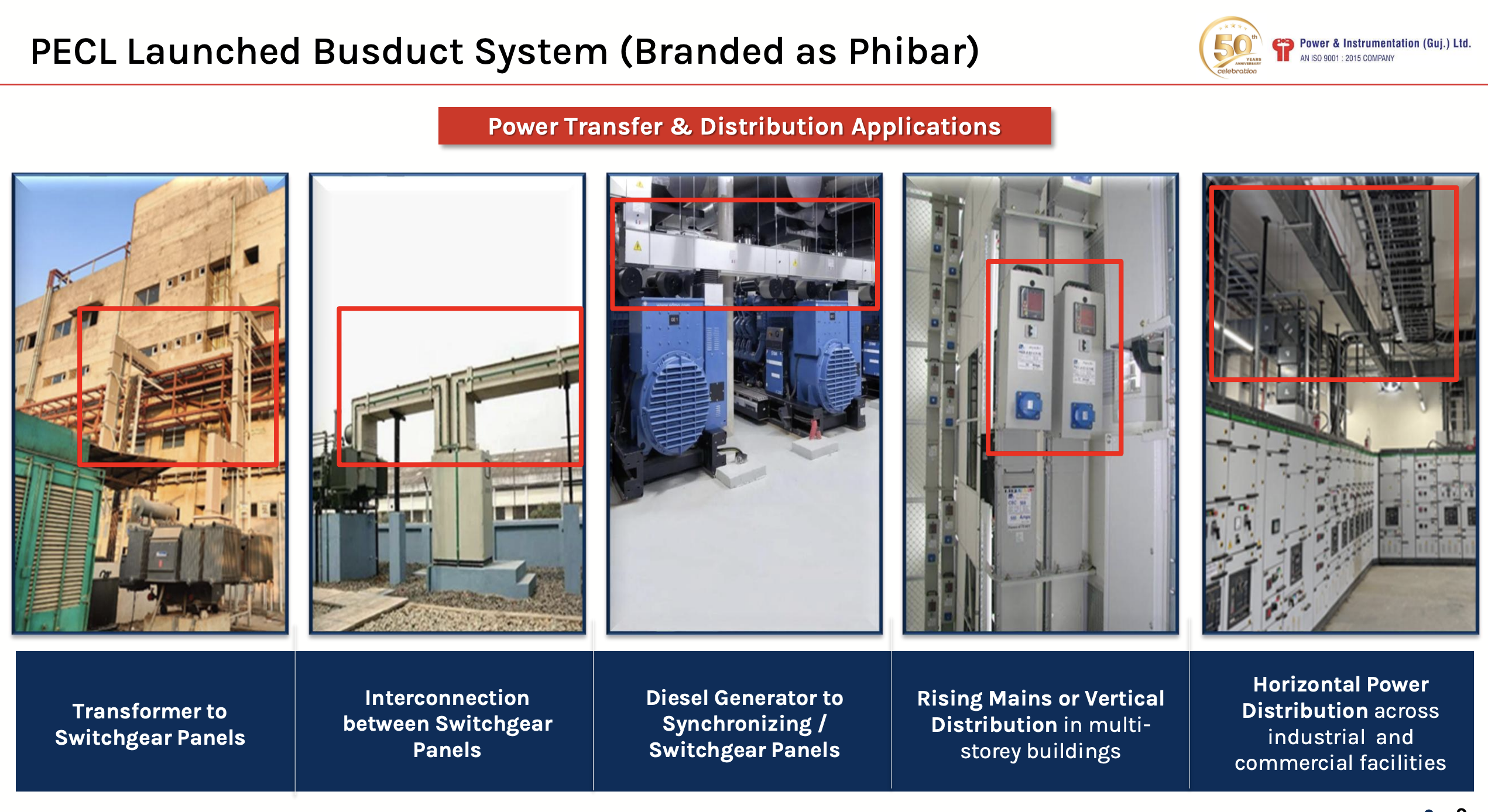
FY26 carried several recorded moves. In Q3, the company secured contracts totalling ₹124.17 crore: a ₹102.78 crore turnkey RDSS distribution order from Ajmer Vidyut Vitran Nigam in Rajasthan, and a ₹21.39 crore industrial project from ATS Techno in Ahmedabad. Subsidiary Peaton received CPRI approval for an 11 kV segregated-phase busduct system branded “Phibar.” Through early 2026 it kept adding to the AVVNL order — a ₹7.14 crore top-up in May and a ₹3.72 crore addition in June, the latter taking that order line to ₹38.28 crore.
The board approved FY26 audited results on 30 May 2026 and appointed a company secretary, an internal auditor, and a cost auditor. The consolidated audit carried a Statement of Impact Qualification.
3. Business Model: WTF Do They Even Do?
PIGL wires things — substations, transformers, distribution panels, generators, lighting, UPS systems, access control — and increasingly lays the lines and electrifies the circles that state discoms hand out under the RDSS scheme. The order book, per management’s own framing, is around ₹450 crore and overwhelmingly government-backed; private work is described as roughly 2–3%. That is the model in one sentence: bid for government electrification, execute over 12–24 months, collect when the government pays.
The client list reads like a roll call of institutions that take their time settling invoices — Ajmer discom, Airport Authority of India, ISRO, BSNL, MTNL. The company has, per its own materials, completed over 35 airport projects, electrified more than 100,000 BPL households, and laid over 20,000 km of HT and LT lines. Five decades of doing one thing, “Electrical Contracting,” which the company itself reports as its single operating segment.
The newer wrinkle is manufacturing. Through Peaton, now a consolidated subsidiary, the company makes panels, cable trays, and the Phibar busduct. Management positions busduct for data centres, metros, and airports, and targets it eventually contributing 20–25% of the top line. For now it is a launch, not a line item.
What does a business living on government receivables actually own? Mostly a pipeline of work and a stack of unpaid bills.