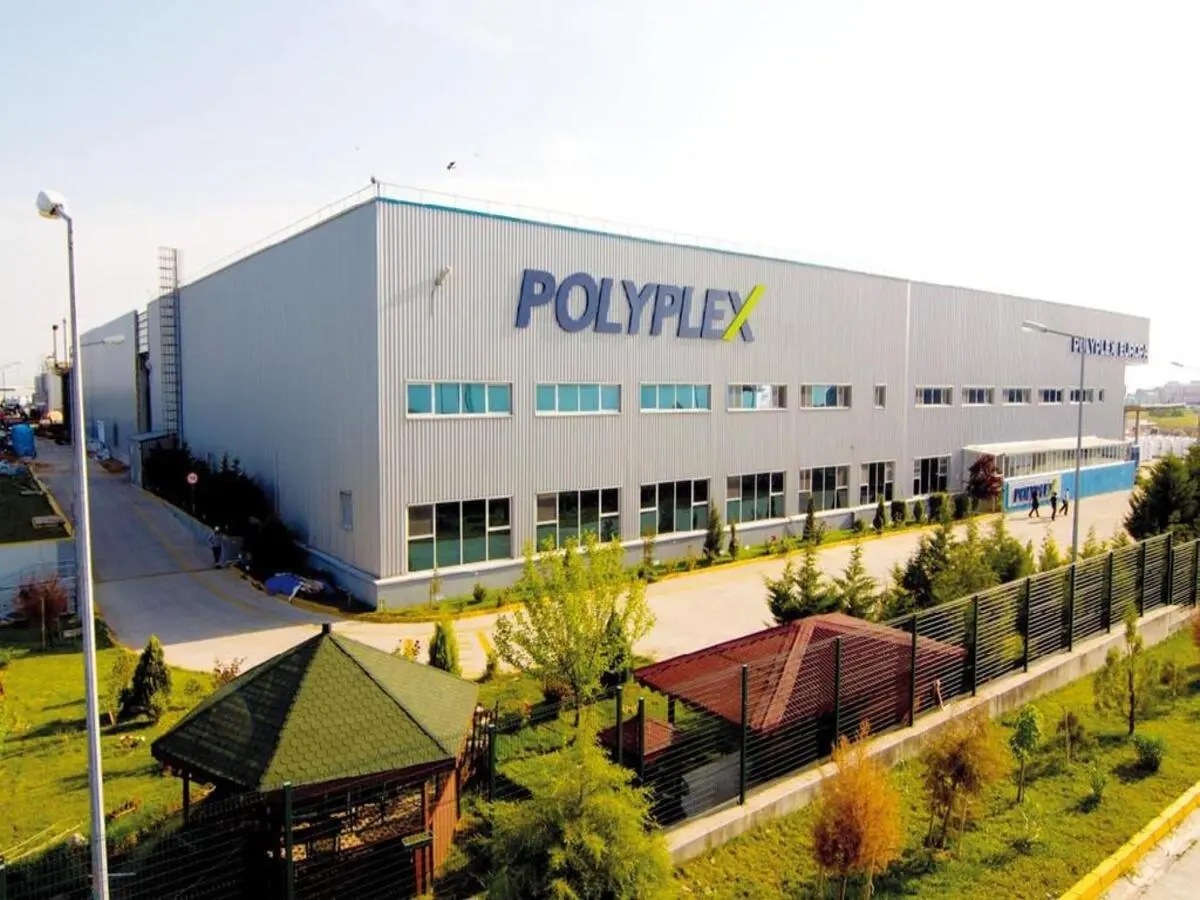
Polyplex Corporation Q4 FY26: A ₹45 Cr Profit Reality Check on a 65x Multiple
Section 1 — At a Glance
The financial performance of Polyplex Corporation Limited in the full year ending March 31, 2026, presents an instructive study in the decoupling of volumetric output from economic rent. Total consolidated sales for the year closed at ₹7,085.86 crore, a minor 2.91% improvement over the ₹6,885.18 crore posted in FY25. However, consolidated net profit experienced a severe contraction, collapsing from ₹209.21 crore to just ₹44.95 crore—representing a 78.51% absolute destruction of bottom-line value year-over-year.
This severe divergence between top-line maintenance and bottom-line evaporation underlines a fundamental structural vulnerability. The company expanded its sales volume across all films to a record 370,515 metric tonnes in FY26, heavily supported by the capital-intensive commercialisation and ramp-up of its new production facility in the United States. Yet, this incremental physical volume failed to translate into economic value, as intense industry-wide oversupply combined with aggressive reciprocal import tariffs inside the US market severely compressed pricing power and eroded structural spreads.
Investor anxiety has concentrated on capital allocation efficiency. The company’s Return on Capital Employed (ROCE) deteriorated to a marginal 0.98%, while Return on Equity (ROE) dropped to 1.12%. At the current market capitalisation of ₹2,907.26 crore, the stock trades at a trailing price-to-earnings (P/E) multiple of 64.68x, signaling a significant mismatch between speculative market pricing and real earnings generation.
When structural overcapacity forces an asset-heavy business to trade capital efficiency for commoditised volume, a high trailing multiple ceases to indicate growth and instead highlights the severe vulnerability of cyclical earnings.
As management continues to deploy heavy capital expenditure into a globally oversupplied environment, the central question turns to whether forward integration into downstream value-added portfolios can successfully insulate the bottom line from commodity price wars.
Section 2 — Introduction
Polyplex Corporation occupies a prominent, albeit highly exposed, position within the global flexible packaging infrastructure. With over 38 years of operating history, the company has grown into the second-largest manufacturer of thin biaxially oriented polyethylene terephthalate (BOPET) films globally outside of China, controlling an estimated 10% global market share in the segment. The enterprise maintains an expansive footprint, operating eight state-of-the-art manufacturing facilities distributed across five nations: India, Thailand, Turkey, Indonesia, and the United States.
The fundamental investment narrative for Polyplex has historically rested on its deep backward and forward integration. It remains one of the few global film producers to build dedicated polymer resin plants at every single manufacturing location, an architectural choice designed to secure supply chains and capture specialty chemical margins. However, this extensive asset base demands high maintenance capital and uniform utilization to absorb heavy fixed overheads.
In recent periods, management has attempted to pivot away from hyper-commoditised standard film lines by acquiring downstream processing capabilities and expanding into high-margin digital printing and specialty substrates. This strategy was formalised on April 30, 2026, through the acquisition of a 51% controlling stake in TechNova Printrite Products Private Limited for a consideration of ₹62.10 crore. While this transaction adds immediate specialized product lines, the macro backdrop of global oversupply continues to challenge the earning potential of the parent company’s base asset base.
Section 3 — Business Model: WTF Do They Even Do?
Polyplex manufactures plastic films—the unglamorous, ubiquitous transparent layers that wrap everything from your midnight potato chips to the solar panels sitting on your roof. At its core, the business converts petrochemical derivatives like purified terephthalic acid (PTA) and monoethylene glycol (MEG) into base plastic films through heavy extrusion lines.
The company divides its empire into two primary economic sectors: Packaging, which brings in 69% of historical revenues across food staples and personal care wraps, and Industrial applications, which constitutes the remaining 31% via electronic components, cable wraps, and lamination liners.
The corporate strategy operates as an integrated value chain. Raw petrochemical materials (PTA and MEG) feed into in-house resin plants to achieve 100% captive sourcing. This resin is transformed via base film extrusion lines into Thin/Thick BOPET, BOPP, and CPP films. Finally, downstream processing capabilities like metallising, coating, and holography apply the finishing touches before products hit end markets.
The company claims a unique “on-shoring and near-shoring” business model, establishing physical operations directly within key global consumption hubs to bypass shipping delays and save clients from cross-border freight volatility. They have also built a proprietary segment labeled “D-PAC”—Differentiated Product, Application, or Customer—which attempts to dress up standard polyester films with custom chemical coatings and metallised barriers. While these specialized films make up 31% of their volume, they are forced to run the remaining 69% of the machine capacity churning out standard commodity packaging films. This layout means that despite all the advanced technology and corporate branding, the company’s ultimate financial performance remains tightly bound to global commodity pricing cycles.
Section 4 — Financials Overview
Figures are consolidated, in ₹ crore.
Polyplex reports on a quarterly schedule. The table below displays the sequential and year-over-year operational trajectory concluding with the final quarter of financial year 2025–2026.
Metric
Q4 FY26 (Latest Quarter)
YoY Change (%)
QoQ Change (%)
Revenue
1,870.72
+11.44%
+11.19%
EBITDA / Operating Profit
88.20
-8.67%
-16.10%
PAT
24.80
+194.54%
+68.02%
EPS (₹)
7.90
+194.78%
+68.09%
The top-line revenue numbers look acceptable at first glance, showing double-digit growth both sequentially and year-over-year. However, looking deeper into the operational performance reveals structural issues. While revenues climbed to ₹1,871 crore, actual operating profit dropped 16% from the previous quarter to ₹88.20 crore. This indicates that Polyplex