1. At a Glance
Pix Transmission Ltd – the desi belt manufacturer that literally holds India’s industrial engines together – just reported a quarter that feels like a power transmission slipping between gears. With a market cap of ₹1,983 crore and a current price of ₹1,453, the stock trades at a P/E of 20.6, a fair valuation for a company that’s as disciplined as a Japanese factory but as cyclical as a Nagpur orange season.
In Q2FY26 (September 2025), the company posted sales of ₹139 crore and PAT of ₹23.5 crore, showing a YoY drop of 41.9% in profit and 13.5% fall in sales. But don’t panic yet — the business still runs with a ROCE of 26.9% and a ROE of 20.7%, which is like an athlete maintaining six-pack abs even after a few samosas.
They remain almost debt-free (₹29.8 crore) with a current ratio of 7.11 — meaning, they can pay off all their liabilities and still have enough cash left to build another factory. The company’s export share has climbed to 60% of total revenue, cementing its place as India’s underappreciated export hero in rubber power transmission belts.
Still, with a -33.6% one-year return, the market clearly thinks the belt has gotten too tight. Time to see what’s rubbing the wrong way.
2. Introduction – The Belt That Runs the Machines and the Market
Once upon a time, industrial belts were just boring rubber loops. Then came Pix Transmission Ltd, India’s very own belt baron, turning rubber into rupees and belts into brand equity. Headquartered in Nagpur – the land of oranges and overachieving MSMEs – Pix has built its empire by holding together machines across continents.
But let’s face it – being a belt maker in 2025 isn’t exactly sexy. You’re not making AI chips, you’re not making EVs, you’re literally making rubber that rotates pulleys. Yet Pix manages to make this business look elegant. How? Exports, efficiency, and an after-sales market that loves replacement belts more than IT loves coffee breaks.
In a world where inflation, forex, and raw material prices keep swinging, Pix has quietly stayed profitable for over a decade, compounding sales at 11% over 10 years and profits at a jaw-dropping 40%. That’s not a company — that’s a compounder disguised as an engineering uncle.
However, FY25 wasn’t a fairy tale. Margins were solid at 23% OPM, but growth slowed to a crawl. The global slowdown and energy cost spikes hit them right where it hurts – exports. And with Europe being their top market, they probably feel every German factory sneeze in Nagpur.
3. Business Model – WTF Do They Even Do?
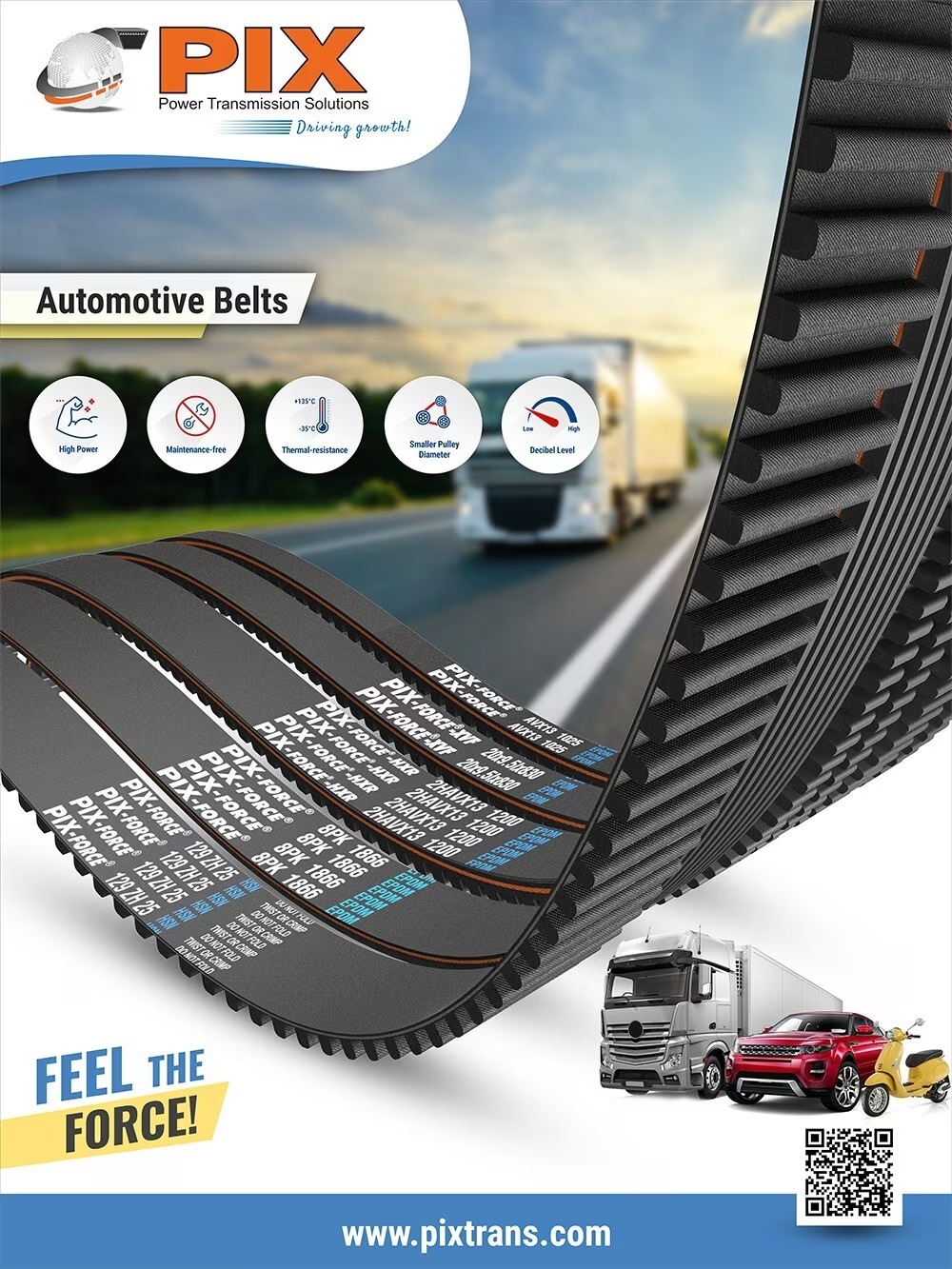
Pix Transmission isn’t just selling belts. They’re in the business of transmitting power — from engines to machines, from motion to money. The company manufactures industrial, agricultural, automotive, and special-purpose belts, and even accessories like powerware products.
Their belts find their way into:
- Cement plants that never sleep.
- Automotive factories where robots need rubber.
- Agriculture equipment that needs to keep moving.
- Cold storages and food processing units that can’t afford breakdowns.
More than 80% of products are sold under their own brand, and that’s rare in Indian manufacturing where OEMs usually call the shots. They’ve built two world-class manufacturing units in Hingna and Nagalwadi, both running with the precision of a Swiss clock — except it’s made in Nagpur.
Export is the crown jewel — 60% of revenue now comes from Europe, the U.S., and the Middle East. They’ve got subsidiaries in the UK, Germany, and UAE, and over 250 channel partners in 100+ countries. In short: a Made-in-Nagpur product running in machines from Manchester to Munich.
And the cherry on top? They divested their non-core Hose Division back in 2012 for a neat profit, exiting before it could become a capital drain. Smart move – fewer hoses, more cash flow.
4. Financials Overview – Let’s