Pix Transmission March 2026: Working Capital Expanded to 228 Days While Topline Takes an Export Rest
Spotted a factual error — a wrong number, date, or fact? Tell us and we will check the source.
Section 1 — At a Glance
A subtle shift in global demand patterns has brought a multi-year expansion to a temporary halt at Pix Transmission Limited. The company closed the financial year ending March 31, 2026, with a consolidated revenue of ₹582.31 crore, marking a mild contraction of 1.21% compared to the ₹589.00 crore reported in the preceding fiscal year. More notably, the final quarter of the year witnessed a sharp divergence in profitability, with net profit for the March 2026 quarter plunging 10.73% year-on-year to ₹20.22 crore, down from the ₹24.00 crore recorded in the corresponding period of the previous year. This quarterly decompression reflects structural shifts in input costs and a localized margin squeeze, even as full-year profit after tax moderated to ₹107.00 crore.
While the headline profitability contraction commands immediate attention, a deeper liquidity development is unfolding within the balance sheet framework. The company’s total working capital cycle has expanded significantly, escalating from 152 days to an elongated 228 days, primarily driven by inventory management requirements across a vast stock-keeping unit portfolio and expanding debtor timelines. Operating cash flows, however, remained resilient, providing structural support to capital allocation strategies. Financial efficiency metrics reflect an optimization process under stress, with Return on Capital Employed stabilizing at 21.76%, while Return on Equity settled at 16.54%. Earnings quality remains highly dependent on the velocity of capital cycles. When structural asset turnover decelerates, historical operational efficiencies face severe stress, testing the underlying durability of corporate pricing power. Investors must look past historical compounding patterns to evaluate how management intends to navigate these shifting asset dynamics.
Section 2 — Introduction
Pix Transmission Limited occupies a specialized, deeply technical niche in the industrial manufacturing matrix, quietly churning out the mechanical bands that keep global factories, tractors, and automobiles humming. Based out of its industrial hubs in Nagpur, the enterprise has spent over four decades transforming raw rubber compounds into high-performance power transmission products.
The corporate narrative here is heavily anchored in international market dynamics rather than purely domestic consumption. Over the recent past, management has actively tilted its orientation toward advanced Western economies, systematically building distribution networks across Europe and the United States. However, this heavy reliance on structural export channels has transformed what used to be a steady, predictable mid-cap compounding story into an intricate study of macroeconomic macro-management, complete with foreign exchange dependencies and international supply chain variables.
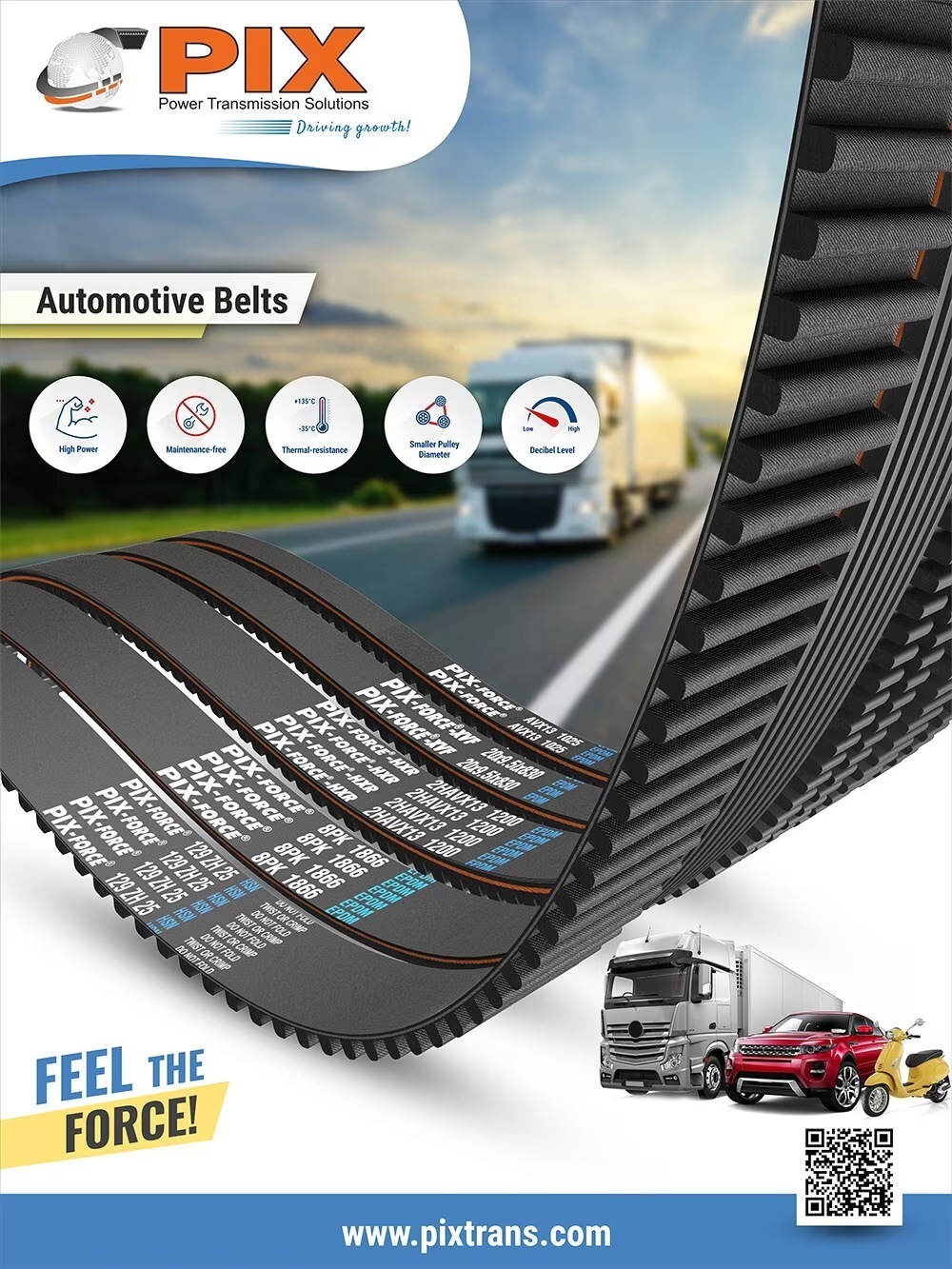
To the uninitiated, manufacturing mechanical v-belts, ribbed bands, and synchronous timing mechanisms sounds about as glamorous as watching industrial adhesive cure. Yet, Pix has managed to turn this seemingly mundane rubber-wrapping exercise into a highly branded, high-margin after-market business.
The company does not merely supply bulk components to large automobile assembly lines where margins go to die; instead, it targets the industrial and agricultural after-market. They maintain an immense repository of complex SKUs, ensuring that when a specialized harvester in Germany or a ceramic processing machine in Gujarat breaks down, a Pix-branded replacement belt is available. By controlling the formulation process via an automated rubber-mixing infrastructure, they treat chemical engineering with the kind of proprietary secrecy usually reserved for premium consumer brands. However, running a branded after-market business means you must maintain vast inventories across hundreds of distinct sizes and applications, creating a model that is inherently capital-hungry and constantly at the mercy of localized distribution partnerships.
Section 4 — Financials Overview
Figures are consolidated, in ₹ crore.
Metric
Latest Quarter (Mar 2026)
YoY
QoQ
Revenue
170.77
4.91%
13.09%
EBITDA / Operating Profit
31.00
-8.82%
-29.55%
PAT
20.22
-10.73%
-42.23%
EPS
14.84
-10.73%
-42.66%
The numbers show a classic squeeze play. While the top line for the March 2026 quarter managed a mild 4.91% positive crawl to ₹170.77 crore, the operating profit decided to take an abrupt elevator