01 — At a Glance
The Gas Gatekeeper That Nobody Talks About
- 52-Week High / Low₹326 / ₹264
- Q3 FY26 Revenue₹11,164 Cr
- Q3 FY26 PAT₹870 Cr
- Q3 FY26 EPS₹5.80
- Annualised EPS (Q1+Q2+Q3 avg ×4)₹22.60
- Book Value₹141
- Price to Book1.99x
- Dividend Yield3.57%
- Debt / Equity0.12x
- EV / EBITDA5.65x
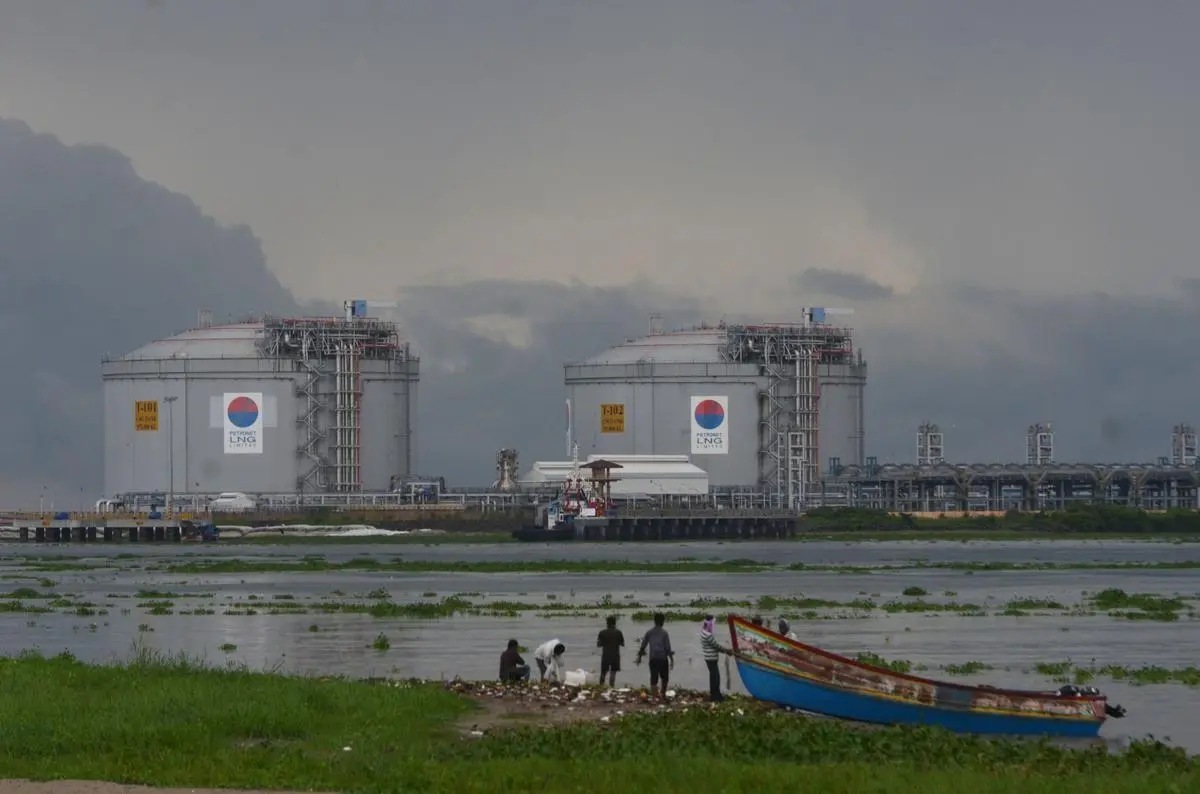
Opening Dispatch: Petronet LNG runs two of the country’s most critical pieces of energy infrastructure — at Dahej and Kochi — handles 75% of India’s LNG imports, posted ₹870 Cr PAT in Q3 FY26, sits at a 25.4% ROCE, and still manages to be the most underappreciated stock in the energy sector. Revenue fell 8.7% YoY and PAT dropped 3.6% — but the concall told a far more interesting story. Dahej expansion nearing completion. Kochi on the cusp of full pipeline connectivity. A ₹20,685 Cr petrochemicals bet locked in. And oh, the Strait of Hormuz just declared Force Majeure on three Petronet tankers on March 3, 2026. Gas infrastructure has, unexpectedly, acquired a plot twist.
02 — Introduction
India’s LNG Gatekeeper Is Having Quite the Quarter
Here’s a thought experiment: imagine a tollbooth. Now imagine that tollbooth is the only meaningful entry point for 75% of India’s liquefied natural gas supply. It sits on 22.5 million metric tons per annum (MMTPA) of combined regasification capacity. It earns a fee every time a ship pulls in and deposits frozen gas that magically gets heated up, converted back into usable fuel, and pumped into the national grid. The company doesn’t particularly care whether gas prices go up or down — it earns a regasification tariff either way.
That’s Petronet LNG. Formed in 1998 as a joint venture of GAIL, IOCL, BPCL, and ONGC — each holding 12.5% — it has quietly become one of India’s most critical energy infrastructure companies. It accounts for 33% of the country’s total gas supply. Its Dahej terminal in Gujarat is the busiest LNG terminal in India by a country mile. Kochi in Kerala has historically been the underperformer of the family — the younger sibling who was always told to “just wait for the pipeline.”
Q3 FY26 was not a spectacular growth quarter by any stretch. Revenue fell 8.7% year-on-year. PAT slipped 3.6%. But that misses the point entirely. Dahej ran at 94% utilization. Kochi hit its highest-ever utilization of 29%. The Dahej 22.5 MMTPA expansion is mechanically completing by March 2026. Kochi’s grid connectivity is expected by June 2026. And Petronet signed a ₹12,000 crore term loan in December to build a propane dehydrogenation and polypropylene plant at Dahej. The operational story is moving fast. The stock is not. Let’s dig in.
Concall Gem (Feb 2026): Management on Dahej’s structural edge — “we are one of the lowest cost operators and our charges are also one of the lowest in the industry” — while quietly noting their evacuation capacity of 35 MMTPA already massively exceeds their regas capacity. That’s the kind of understatement that takes years to fully appreciate.
03 — Business Model: WTF Do They Even Do?
Ships Come In. Gas Comes Out. Fees Get Collected. Repeat.
Explaining Petronet LNG to a smart but distracted investor: LNG is natural gas that’s been frozen to -162°C and stuffed into enormous tankers. It arrives at Petronet’s terminals, gets warmed back up into gaseous form (called regasification), and is piped out to customers — power plants, city gas distribution companies, fertiliser units, petrochemical users. Think of Petronet as a hotel check-in counter for frozen gas. Ship checks in, pays the tariff, gas checks out. The hotel doesn’t own the gas; it just processes it.
Revenue mix: about 95–96% comes from LNG sales (Petronet buys gas at source and resells post-regasification), and 3–4% from pure regasification service charges. Three customers — GAIL, IOCL, and BPCL — account for roughly 95% of revenues. Also the same entities that own 12.5% each of the company. It’s a very cozy arrangement that would look suspicious at a regular company but somehow works like clockwork in India’s PSU ecosystem.
Dahej (Gujarat) has 17.5 MMTPA capacity now being expanded to 22.5 MMTPA, and runs at 94% utilization. Kochi (Kerala) has 5 MMTPA capacity and ran at just 18% historically — until recently when softer LNG prices and improving pipeline connectivity pushed utilization to a record 29%. The entire Kochi narrative has been “pipeline is coming” for about a decade. It may actually arrive in 2026. Mark your calendars and your portfolios.
Dahej Cap.17.5→22.5MMTPA
Dahej Utiliz.94%Q3 FY26
Kochi Utiliz.29%Highest Ever
LNG Import Share~75%of India’s LNG
Revenue Structure Note: Petronet’s reported “Sales” of ₹11,164 Cr in Q3 FY26 includes the cost of LNG purchased and resold — it’s a pass-through-heavy business. The real value lies in the operating profit (₹1,198 Cr at 11% OPM) and regasification income. Don’t be alarmed by the revenue size; be impressed by the margin discipline.
💬 Tell us in the comments: Did you know Petronet handles 75% of India’s LNG imports? If yes, why isn’t this stock in every infrastructure portfolio?
04 — Financials Overview
Q3 FY26: The Numbers (Dec 2025 Quarter)
Continue reading with a premium membership.