At a Glance
Petronet LNG (PLL) isn’t just a company; it is the fundamental infrastructure upon which India’s gas aspirations rest. Handling roughly 75% of the nation’s LNG imports, PLL operates with a near-monopolistic grip on the entry points of energy. The narrative for FY26 is one of massive scale and strategic evolution. While the market often views it as a “boring” utility, the numbers tell a story of a beast awakening.
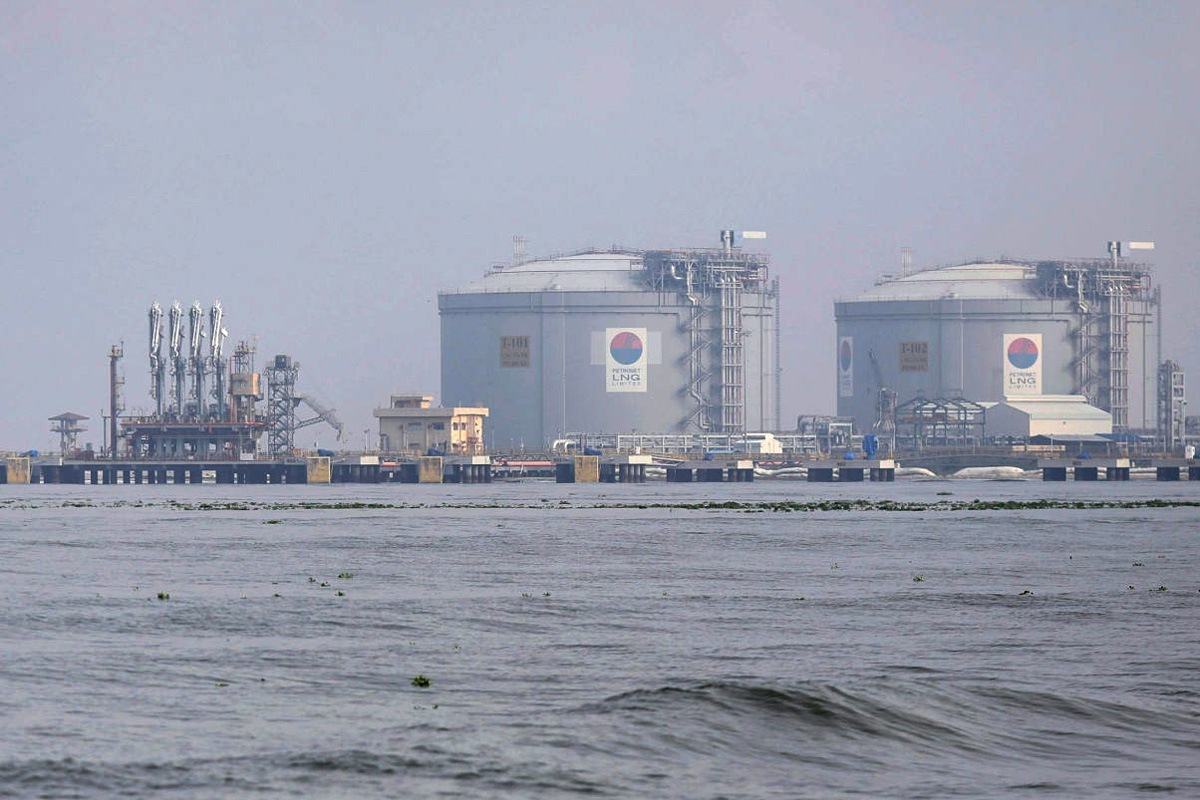
The crown jewel, the Dahej Terminal, has officially hit its 22.5 MMTPA expansion milestone as of March 31, 2026. This isn’t just a 5 MMTPA addition; it is a statement of dominance in an industry where evacuation and storage capacity are the real currencies of power. While competitors struggle with terminal logistics, PLL is sitting on an evacuation headroom of 35 million metric tons, backed by a fortress-like storage infrastructure of 8 tanks that no other player can currently match.
However, the “Detective” in us notices a shift in the wind. The company is pivoting from being a pure-play regasification utility to a petrochemical powerhouse. With a massive INR 20,685 Cr investment in PDH and PP plants, PLL is betting that the future of gas isn’t just in pipes, but in polymers. This is a high-stakes transition that will test its balance sheet, which, until now, has been as clean as a whistle.
Financially, FY26 ended with a bang. Q4 (March 2026) Net Profit surged to INR 1,371 Cr, a massive jump from the previous quarter’s INR 870 Cr. The cash machines are humming, and despite a heavy capex cycle, the management remains surprisingly committed to its dividend-paying persona. Is this a value trap or a transition to a “Super-Major”? Let’s look at the evidence.
Introduction
Petronet LNG was born from a high-profile marriage of India’s PSU oil titans—GAIL, IOCL, BPCL, and ONGC. Each holds a 12.5% stake, giving the company a “too big to fail” safety net and a guaranteed customer base. For years, the business model was simple: buy gas, turn it back into a vapor, and collect a fee.
In FY26, that simplicity is being challenged by two major forces: Geopolitical drama and Aggressive Expansion. The company had to navigate Force Majeure notices from QatarEnergy due to the West Asia crisis, proving that even energy giants aren’t immune to global chaos. Yet, the operational performance remained resilient.
The Kochi Terminal, long the “underperforming sibling” with utilization rates stuck in the teens, finally showed signs of life, hitting a record 29% utilization in Q3 FY26. With the long-awaited pipeline connectivity to Bangalore and Mangalore expected by June 2026, the Kochi asset might finally stop being a drag and start being a driver.
This article deconstructs the FY26 audited results, the management’s “walk the talk” record on expansions, and the multi-billion dollar bet on the petrochemical sector. We dive deep into the cash flows—because in the gas business, if you aren’t generating cash, you’re just blowing air.
Business Model – WTF Do They Even Do?
Imagine you want to buy a massive amount of ice cream from overseas, but it has to stay frozen until it reaches your doorstep. Petronet is the guy who owns the specialized freezer-warehouse at the port. They take Liquefied Natural Gas (LNG)—which is cooled to a shivering -162°C to shrink its volume—and “regasify” it (warm it up) so it can be sent through India’s pipelines.
The Revenue Engine
- LNG Sales (95-96%): They buy the molecules and sell them to promoters like GAIL and IOCL. It’s a high-volume, low-margin game of passing through costs.
- Regasification Services (3-4%): This is the high-margin “toll booth.” You bring the gas; they charge you to warm it up.
The Moat: Dahej
The Dahej terminal is the undisputed heavyweight champion of LNG in India. Why? Because it’s not just about the terminal; it’s about the exit. Management often brags that they have 35 MMTPA of evacuation capacity. This means even if they expand further, the “pipes” leading out of the terminal won’t get choked. It’s like having a 10-lane highway leading out of a parking lot while your competitors have a dirt road.
“We are one of the lowest cost operators and our charges are also