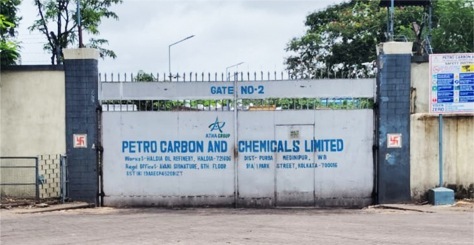
Petro Carbon & Chemicals Ltd Mar 2026 : Revenue Scales 95% But Working Capital Locks Cash
Section 1 — At a Glance
Petro Carbon & Chemicals Ltd has reported an intense expansion in its top-line performance for the fiscal year ended March 31, 2026, with consolidated revenue scaling by 94.8% to reach ₹576.65 crore compared to ₹295.97 crore in the prior fiscal year. Consolidated Net Profit witnessed a surge of 171.7% to arrive at ₹25.70 crore, up from ₹9.46 crore. While this blistering headline growth is capturing aggressive investor attention, a forensic dive into the structural liquidity reveals immediate operational pressure. The company’s cash flow from operating activities decelerated from ₹12.44 crore to just ₹4.40 crore, highlighting an acute divergence between accounting profits and real cash generation.
The primary catalyst for this cash containment is a severe expansion in receivables, which ballooned from ₹26.21 crore to ₹84.02 crore within twelve months. Concurrently, debtor velocity slowed as debtor days climbed from 32 days to 53 days, locking up vital liquidity precisely when operations scaled. Profits are highly cyclical and remain heavily exposed to raw petroleum coke price volatility and deep client concentration risks. When working capital expansions outpace revenue scaling, a business can easily starve itself of liquidity while looking spectacularly profitable on paper. This divergence forms the core investigative lens for evaluating whether this carbon converter can turn structural capacity additions into sustainable economic value or if it is simply building a larger house on a foundation of uncollected bills.
Section 2 — Introduction
Petro Carbon & Chemicals Ltd (PCCL), an established member of the Atha Group, has historically operated quietly within the heavy industrial corridors of West Bengal. The company’s public market journey is relatively fresh, having listed on the National Stock Exchange SME platform on July 2, 2024, through a book-built initial public offering of ₹113.6 crore. This issue was structurally designed entirely as an offer for sale by the promoting group, meaning the primary capital did not enter the corporate treasury but remained within the promoters’ financial ecosystem.
This analysis exists now because PCCL has reached a vital operational inflection point. The financial year 2026 results represent the first full fiscal year of post-listing operations, capturing both a massive revenue recovery and major structural investments. With new subsidiaries being rapidly incorporated and heavy capital expenditures ongoing at their primary manufacturing base, the company is attempting to transition from a single-product converter into a diversified specialty carbon house. This publication deconstructs the mechanics behind their volume scaling, their aggressive capital allocation choices, and the underlying balance-sheet stresses that public markets are currently pricing at a premium.
Section 3 — Business Model: WTF Do They Even Do?
PCCL operates a pure business-to-business industrial conversion model. Stripped of corporate jargon, the company buys Raw Petroleum Coke (RPC)—a heavy byproduct of crude oil refining—and subjects it to high-temperature thermal treatment to drive off moisture and volatile matter. The output is Calcined Petroleum Coke (CPC), an exceptionally pure form of carbon.
If you are a smart but lazy investor, think of them as a giant industrial bakery. They take refinery waste, bake it at extreme temperatures, and sell the premium crust to heavy metal giants. CPC is a non-substitutable input for the metallurgical sector, primarily utilized in manufacturing carbon anodes required for aluminum smelting and as a recarburizer in steel foundries.
The company operates its primary manufacturing facility directly at the Haldia Oil Refinery cluster in West Bengal, spread across approximately 30 acres with an established capacity of 93,744 metric tonnes per annum (MTPA). PCCL has recently expanded this asset base by commissioning a 10 MW captive waste-heat-recovery power plant designed to capture exit gases from the calcining kilns and convert them into free internal electricity. However, the commercial vulnerability here is stark: the business model features extreme customer concentration, historically depending on just two industrial titans—Hindalco Industries and National Aluminium Co. Ltd (NALCO)—to consume over 90% of its output.
Section 4 — Financials Overview
Figures are consolidated, in ₹ crore.
Financial Performance Comparison
Metric
Latest Year (FY26)
Previous Year (FY25)
YoY Growth (%)
Revenue from Operations
576.65
295.97
94.83%
EBITDA
56.39
17.27
226.52%
PAT
25.70
9.46
171.67%
Reported EPS (₹)
10.40
3.83
171.54%
The top-line velocity looks spectacular primarily because FY25 served as a depressed base. In the prior year, the Haldia plant was entirely choked, enduring a 108-day maintenance shutdown to integrate the captive power infrastructure. In FY26, the plant was down for only 47 days, allowing volume dispatches to normalize. EBITDA margins expanded significantly as the captive power plant began offsetting external energy purchases.
Earnings quality must always be evaluated by the velocity of cash collection relative to revenue booking; a failure to match them indicates that a company is lending its way to growth.
What is Management Promising in the Coming Quarters?
Management has officially confirmed the expansion path via board disclosures. The company has secured environmental clearances from the Ministry of Environment,