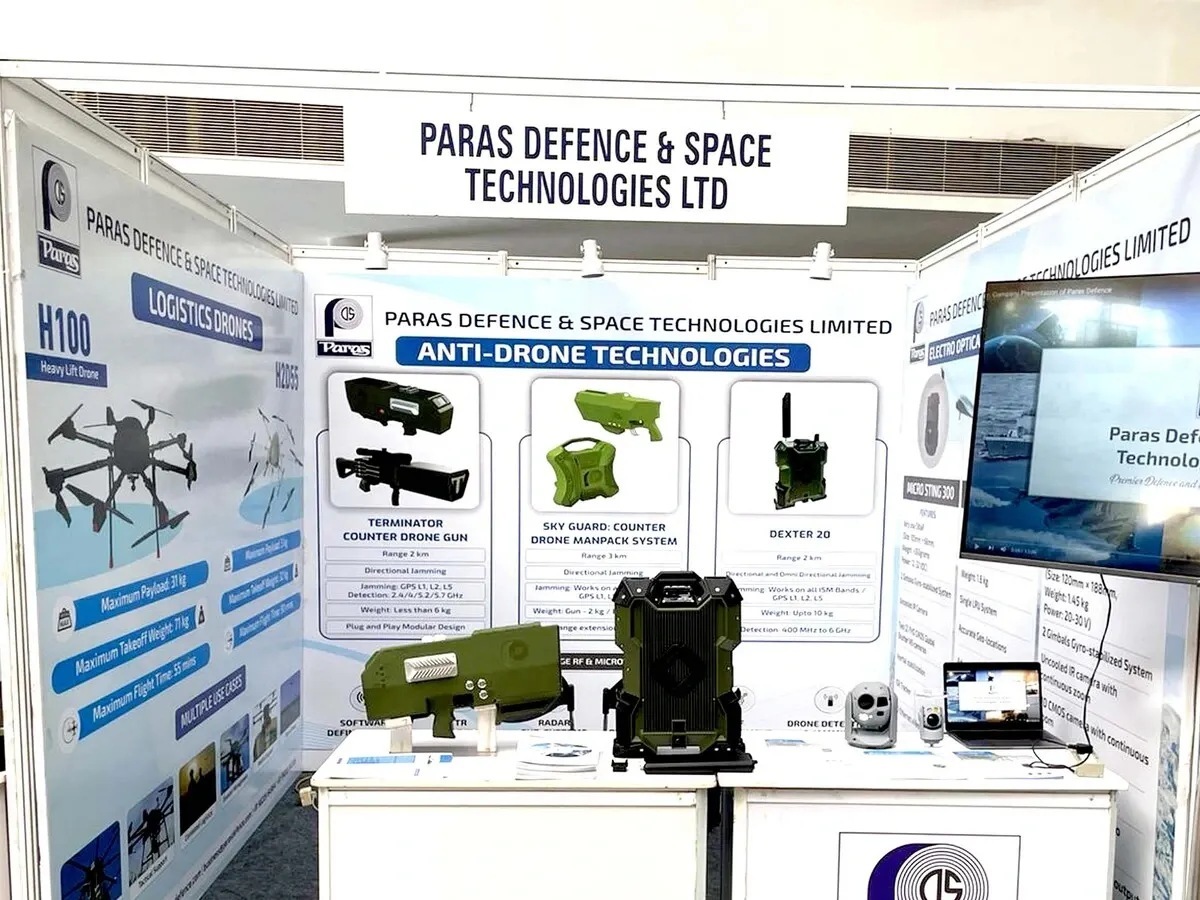
The Indian defence sector is currently the darling of the markets, and Paras Defence and Space Technologies Ltd (PDST) is positioning itself as the high-tech heart of this movement. With the latest financial results for the quarter and year ended March 31, 2026, the company has thrown down a quantitative gauntlet that demands a serious, cold-blooded look at the numbers. While the topline is screaming growth, the balance sheet is whispering a cautionary tale about cash cycles.
1. At a Glance
Paras Defence is currently riding a wave of massive industrial tailwinds, but don’t let the “Defence” tag blind you to the underlying financial mechanics. The company has reported a 58.3% YoY jump in quarterly sales and a staggering 64.3% spike in quarterly profit. On the surface, this looks like a rocket ship. However, every veteran investigator knows that speed without control leads to a crash.
The Investor Attention is firmly fixed on their order book, which has swelled to ₹928 crore as of March 2025, and continued to gain momentum into FY26. They aren’t just making nuts and bolts; they are the sole Indian supplier of critical imaging components for space applications. If ISRO or DRDO needs high-end optics, they are likely knocking on Paras’s door.
But here is where the intrigue turns into a cold sweat: The Debtor Days. The company is currently sitting on a debtor cycle of 278 days. In plain English, they are shipping goods today but waiting nearly nine months to see the actual cash. This creates a massive “paper profit” scenario where the P&L looks like a king, but the cash flow statement looks like a pauper.
Furthermore, while the ROE (Return on Equity) stands at a modest 12.6%, the stock is trading at a Price to Book (P/B) ratio of 8.37. You are paying a premium price for a company that is still struggling to turn its high-tech brilliance into high-velocity equity returns.
- Revenue Growth: Exploding.
- Profitability: Surging.
- Cash Realization: Glacial.
The company recently completed a QIP of ₹135 crore at ₹1,045 per share, providing a much-needed equity cushion. But as they scale toward their goal of being a top-5 drone player by FY27, the question remains: Can they manage the working capital monster, or will the growth consume all their liquidity?
2. Introduction
Paras Defence and Space Technologies Ltd is a private sector powerhouse operating in the high-stakes world of aerospace and elite defence engineering. This isn’t just a manufacturing unit; it’s a specialized laboratory that has scaled into an industrial giant. They operate out of Navi Mumbai and Ambernath, catering to four distinct, high-entry-barrier segments.
The company’s DNA is built on Optics, Electronics, and Heavy Engineering. These aren’t commodities. These are “sole-supplier” territories. When you are the only one in India capable of making large-size diffractive gratings for space, you don’t just have a moat; you have a fortress.
In the fiscal year 2026, the company has shown a clear shift. They are diversifying away from being just a component supplier to becoming a systems provider. The recent licenses for light machine guns (LMGs) and naval gun cannons indicate a move toward heavy-duty firepower.
However, being a government contractor in India is a double-edged sword. You get high-margin, long-term contracts, but you also get the infamous “government payment cycle.” Paras is currently living this reality. Their growth is undeniable, but it is being funded by an increasing amount of “receivables” on the balance sheet.
Investors are currently paying a 70.6 P/E multiple for this story. In the sections that follow, we will dissect whether the “story” is backed by enough “substance” to justify these valuations, or if the market is simply high on the “Make in India” fumes.
3. Business Model – WTF Do They Even Do?
If you think Paras Defence just makes “parts,” you’ve been sleeping. They are effectively the eyes and ears of Indian defence. Their business is split into two massive pillars that sound like something out of a Tom Clancy novel.
The Optics & Optronic Fortress (46% of Revenue)
They make the lenses that allow submarines to see through periscopes and night-vision devices to see through pitch-black jungles. They are the sole Indian supplier for certain space optics. This is a high-margin business because the precision required is insane. If you mess up a mirror for a satellite, you don’t just lose a client; you lose a national mission.
The Defence Engineering & Electronics Muscle (54% of Revenue)
This is the growth engine. They build rocket motor tubes, missile components, and EMP (Electromagnetic Pulse) protection solutions. If a nuclear blast goes off, EMP protection is what keeps the electronics from frying. They also recently entered the LMG (Light Machine Gun) space, with a license to produce 12,000 units annually.
The Strategy: They operate on a “High Complexity, High Entry Barrier” model. They don’t compete with local workshops; they compete with global giants. By partnering with international firms like Controp (Israel) and CerbAir (France), they are bringing global tech to Indian soil under the “Make in India” banner.
Financial Wisdom: A company with a “sole supplier” status has incredible pricing power, but that power is useless if the customer (the government) dictates the payment terms. A moat protects your margins, but only cash flow protects your existence.
Question for the reader: Do you value a company more for its technical “sole supplier” status or for its ability to collect cash on time?
4. Financials Overview
The results for Q4 FY26 (Quarter ended March 31, 2026) show a massive scale-up. We are looking at consolidated figures to get the full picture of their subsidiaries (Drones, Aerospace, etc.).
Quarterly Performance Comparison (₹ in Crores)
| Metric | Latest Qtr (Mar ’26) | Same Qtr Last Year (YoY) | Previous Qtr (Dec ’25) |
|---|---|---|---|
| Revenue | 171.31 | 108.23 | 106.35 |
| EBITDA | 42.83 | 24.00 | 26.50 |
| PAT | 38.88 | 20.83 | 16.85 |
| EPS (Restated) | 4.27 | 2.45 | 2.26 |
Management Walk the Talk: In previous years, management anticipated 20%-30% revenue growth. Looking at the TTM (Trailing Twelve Months) sales growth of 31%, they have essentially hit the upper end of their guidance. The recent board meeting also recommended a dividend of ₹1 per share, showing a slight attempt to reward shareholders despite the heavy reinvestment phase.
Annualised EPS Calculation: Since these are Q4 results, we use the full-year EPS as per the rules.
- FY26 Consolidated EPS: ₹10.93.
The jump from Q3 to Q4 is massive (₹106 cr to ₹171 cr). This is typical for defence companies that see a “March rush” for billing and deliveries.
5. Valuation Discussion – Fair Value Range
Let’s get clinical. A stock trading at 70x P/E needs to justify itself through either insane growth or a rock-solid DCF.
Method 1: P/E Ratio
- Current EPS: ₹10.93
- Sector Median PE: ~65.8x
- Implied Value: 10.93×65.8=₹719
Method 2: EV/EBITDA
- FY26 EBITDA: ₹120 Cr
- Enterprise Value (EV): ₹5,969 Cr
- Current EV/EBITDA: ~49.7x
- At a more conservative 35x multiple, the value would be significantly lower.
Method 3: DCF (Discounted Cash Flow)
Given the negative Free Cash Flow in recent periods (CMP/FCF is -253), a DCF is highly sensitive to the “terminal growth” and “working capital improvement” assumptions. If we assume a 15% growth for 10 years and a massive improvement in debtor days, the intrinsic value hovers around the ₹650-₹780 range.
Fair Value Range: ₹680 — ₹820
Disclaimer: This fair value range is for educational purposes only and is not investment advice.
6. What’s Cooking – News, Triggers, Drama
Paras Defence is currently a headline magnet. If it’s not drones, it’s machine guns. If it’s not guns, it’s submarine periscopes.
- The Gun License: In Jan 2025, they got the green light to make 12,000 LMGs per year. This is a massive shift into the “lethal” category.
- The Drone War: Their subsidiary is aiming to be a top-5 drone player by FY27. They recently signed a deal with CerbAir (France) to export anti-drone systems.
- The “Ayatti” Exit: On March 30, 2026, Paras sold its entire 58.02% stake in Ayyati Innovative for ₹6.99 crore. They are trimming the fat and focusing on the core.
- DRDO Orders: They just bagged an ₹80.28 Cr order for high-precision optical systems for air defence.
The drama here is the execution risk. Winning an order is a party; executing it within 18 months (the current deadline) while managing a 278-day payment cycle is a battle.
7. Balance Sheet
The Balance Sheet is where the “Auditor” in us starts to squint. The company is virtually debt-free, which is fantastic, but the “Other Assets” (Receivables) are ballooning.
Latest Consolidated Balance Sheet (₹ in Crores)
| Row | Mar 2024 | Mar 2025 | Mar 2026 |
|---|---|---|---|
| Total Assets | 640 | 852 | 965 |
| Net Worth | 445 | 640 | 725 |
| Borrowings | 66 | 24 | 27 |
| Other Liabilities | 129 | 188 | 212 |
| Total Liabilities | 640 | 852 | 965 |
Observations:
- The Net Worth jumped by nearly ₹200 Cr in two years, thanks to the QIP and profit retention.
- Borrowings are negligible at ₹27 Cr. They are basically running on their own money.
- The Catch: “Other Assets” (mostly debtors) are ₹725 Cr out of ₹965 Cr total assets. Roughly 75% of the company’s assets are just promises of future cash.
8. Cash Flow – Sab Number Game Hai
This is the “reality check” section. You can’t pay salaries with “Accounting Profit.”
| Year | Operating Cash Flow (CFO) | Investing Cash Flow (CFI) | Financing Cash Flow (CFF) |
|---|---|---|---|
| Mar 2024 | 45 | -87 | 74 |
| Mar 2025 | 25 | -17 | -17 |
| Mar 2026 | 31 | -17 | -17 |
Where did the money go?
- Operations: They generated ₹31 Cr from operations in FY26, but their profit was ₹89 Cr. This means a huge chunk of profit is stuck in Working Capital.
- Investing: They are consistently spending ~₹17-35 Cr on fixed assets (Capex) to build that new Optical Systems Development Park.
- Financing: They used the QIP money to stay afloat and are now paying out small dividends.
Financial Wisdom: Cash is a fact, profit is an opinion. When CFO is consistently lower than PAT, the “quality of earnings” is under question.
9. Ratios – Sexy or Stressy?
| Ratio | Value | Commentary |
|---|---|---|
| ROE | 12.6% | Average. Needs to be 18%+ for these valuations. |
| ROCE | 16.9% | Decent. Shows they use their capital okay-ish. |
| P/E | 70.6 | Very Stressy. Priced for perfection. |
| Debt/Equity | 0.04 | Sexy. They owe nobody. |
| Debtor Days | 278 | Absolute Horror. This is the Achilles’ heel. |
Judgment: The debt profile is beautiful, but the working capital efficiency is a disaster. It’s like having a Ferrari with no fuel.
10. P&L Breakdown – Show Me the Money
| Year | Revenue (₹ Cr) | EBITDA (₹ Cr) | PAT (₹ Cr) |
|---|---|---|---|
| Mar 2024 | 254 | 53 | 30 |
| Mar 2025 | 365 | 100 | 61 |
| Mar 2026 | 477 | 120 | 89 |
Comedy Commentary: The revenue grew by ₹112 Cr last year. Management must be high-fiving in the boardroom. But the Operating Profit Margin (OPM) dropped from 27% to 25%. It’s like selling more samosas but realizing the potatoes got more expensive. They are growing fast, but the “cost of growth” is eating into the margins.
Question for the reader: Would you prefer 20% growth with 30% margins or 30% growth with 20% margins?
11. Peer Comparison
| Company | Revenue (Qtr) | PAT (Qtr) | P/E Ratio |
|---|---|---|---|
| Bharat Electronics | 15,353 | 1,579 | 52.2 |
| Data Patterns | 344 | 138 | 79.1 |
| Zen Tech | 178 | 47 | 72.4 |
| Paras Defence | 171 | 39 | 70.6 |
Sarcastic Notes:
- BEL is the giant that eats everyone’s lunch.
- Zen Tech and Data Patterns are Paras’s gym buddies—all of them are trading at “sky-high” P/E ratios because investors think every Indian soldier will eventually carry a drone-swiping laser.
- Paras is the “middle child”—not as big as BEL, but not as expensive as MTAR (P/E 224!).
12. Miscellaneous – Shareholding and Promoters
Shareholding (Mar 2026):
- Promoters: 53.20% (Solid, no pledges).
- FIIs: 5.06% (Increasing slightly—foreigners are sniffing around).
- Public: 40.52% (A lot of retail hope is packed in here).
Promoter Roast: The Shah family (Sharad and Munjal) have been at this since 1979. They have managed to keep the company “almost debt-free” while scaling. However, the Promoter holding has dropped from 58.9% to 53.2% over the last few years. It seems they are happy to let the public fund the growth while they sit on their 53% fortress.
13. Corporate Governance – Angels or Devils?
Paras has a clean slate so far. No massive pledges, no major forensic red flags. The auditors, Chaturvedi & Shah LLP, have given an “unmodified opinion” for FY26.
However, the resignation of the Company Secretary in Feb 2026 and the constant “extension of due diligence” for the Ayatti sale suggest some internal administrative friction. Also, with 54% of revenue coming from the top 5 clients, the company is heavily dependent on the whims of a few government bureaucrats.
The board meeting held on May 13, 2026, was quite busy—reappointing internal and cost auditors. They are keeping the compliance machinery running, but the “Retention Money” stuck with clients needs better governance and follow-up.
14. Industry Roast and Macro Context
The Indian Defence Industry is currently in a “Gold Rush.” The government wants everything “Atmanirbhar” (Self-reliant). This is great for Paras, but the entire sector is starting to look like a crowded party where everyone is shouting.
The Macro Joke: Every smallcap company with a lathe machine is now a “Defence Play.” The sector P/E is ~65x. If the government decides to cut the defence budget even by 5% in the next union budget, these P/E ratios will melt faster than an ice cream in Mumbai. Paras is a “pure play,” but it’s part of a sector that is currently “over-loved.”
15. EduInvesting Verdict
Paras Defence is a high-quality engineering firm caught in a high-valuation market. Its technical capabilities are undeniable—being a sole supplier for space optics is no small feat. The TTM Profit growth of 38% is impressive.
The Bull Case: If they successfully scale the Anti-Drone and LMG businesses, the revenue could double again in 3 years. The ₹135 Cr QIP has given them the runway to build their “Optical Systems Development Park.”
The Bear Case: The 278-day debtor cycle is a ticking time bomb. If they hit a liquidity crunch, the growth will stall. At 70x P/E, there is zero margin for error. If one quarter misses expectations, the stock could see a massive correction.
SWOT Analysis
- Strengths: Sole supplier status, Debt-free, Strong R&D.
- Weaknesses: Terrible working capital, high customer concentration.
- Opportunities: Drone exports, Naval gun systems, Space mission ramp-up.
- Threats: Tender-based volatility, payment delays from govt bodies.
Final Thought: Paras is a brilliant engineer with a very slow-paying boss. You are buying the brilliance, but you must keep a very close eye on the boss’s wallet.
Disclaimer: This fair value range and analysis are for educational purposes only and are not investment advice.