1. At a Glance
Paradeep Phosphates Limited (PPL) just dropped its Q2FY26 numbers, and oh boy, they’re juicier than a monsoon tomato. Revenue clocked in at ₹6,872 crore — a whopping 48.8% YoY jump, while PAT bloomed 33.9% higher to ₹342 crore. The company’s operating profit margin (OPM) sits at a healthy 10%, and with a market cap of ₹14,197 crore, PPL is currently trading around ₹174 a share. Its P/E of 14.5x is modest compared to the industry average of 22.7x, which means the fertilizer fairy hasn’t sprinkled her full magic yet.
The company boasts an ROE of 14.1%, ROCE of 13.7%, and an enterprise value (EV) of ₹19,651 crore — not bad for a business that literally grows from dirt. Despite debt climbing to ₹5,603 crore, the balance sheet doesn’t smell of ammonia yet. PPL’s promoter shareholding rose slightly to 57.2%, showing Zuari and OCP aren’t dumping stock to buy Moroccan beach houses just yet.
In short — Paradeep is a rare case of a fertilizer stock that’s growing faster than the crops it feeds. The question is, can it keep fertilizing those profits without subsidy rains?
2. Introduction
Paradeep Phosphates has been around since 1981, but 2025 has turned out to be its glow-up year — the kind of midlife comeback story Bollywood scriptwriters dream about. With fertilizer prices stabilizing, subsidies flowing like irrigation water, and a merger with Mangalore Chemicals (MCFL) now official, the company is strutting into FY26 like it owns the entire agri-supply chain.
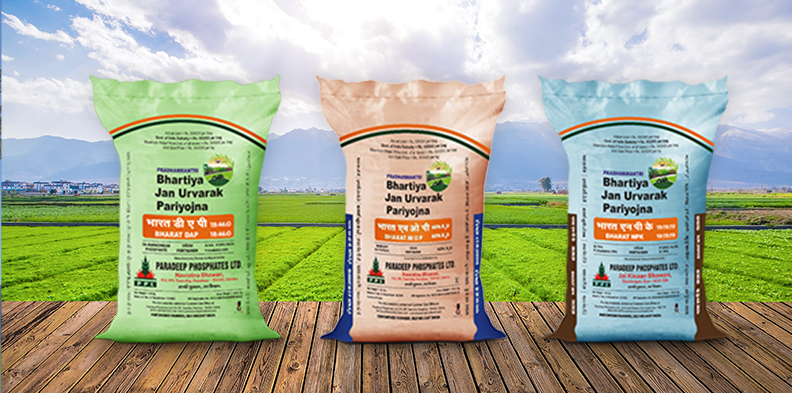
For the uninitiated, Paradeep is India’s second-largest private phosphatic fertilizer manufacturer, producing DAP, NPK, and a bunch of chemical cousins whose names you’d forget by the end of this sentence — Zypmite, Phospho-gypsum, Hydrofluorosilicic Acid (say that five times fast). It’s the silent enabler behind the Indian farmer’s green revolution 2.0, except now it’s also trying to go “nano” — selling bottles of nano DAP and urea like a FMCG startup.
The company’s recent quarters read like a redemption arc. From negative profits in 2022 to a net profit of ₹977 crore in FY25, Paradeep has gone from fertilizer fatigue to phosphate finesse. With capacity utilization at 92%, a capex spree of over ₹3,600 crore in motion, and land bank of 2,282 acres (only 33% used), this is one company that’s fertilizing its way into the future — quite literally.
3. Business Model – WTF Do They Even Do?
Let’s decode this manure marvel. Paradeep Phosphates manufactures non-urea fertilizers — mainly DAP and complex NPK variants. Think of DAP (Diammonium Phosphate) as the power protein shake of Indian soil. Add a dash of nitrogen, phosphorus, potassium, and you’ve got the agricultural version of Red Bull — gives your crops wings.
They sell through a network that covers over 9 million farmers, serviced by 22 regional offices, 529 stock points, 5,000 dealers, and 75,000 retailers. The brand “Jai Kisaan Navratna” has become a household name in rural India — the kind that farmers swear by and subsidy officers fear.
The company’s two main manufacturing hubs are strategically parked near ports:
- Paradeep, Odisha: Backward-integrated with a captive berth and 3.4 km conveyor pipeline — zero inbound logistics cost, baby!
- Goa Plant: Near Mormugao Port, with a captive power plant and ammonia production.
Add the OCP Group of Morocco (which controls 70% of the world’s phosphate reserves) as co-promoter, and you realize