Panchmahal Steel Q4 FY26: A ₹2.12 Crore Quarterly Loss and a 405% Tax Shock
Section 1 — At a Glance
An acute divergence between market performance and operational reality characterizes the structural posture of Panchmahal Steel Limited. Over the trailing twelve months, the equity has recorded a capital appreciation of 99%, nearly doubling investor capital. However, this price trajectory moves in direct opposition to the deteriorating fundamental architecture of the underlying business.
The fourth quarter of FY26 concluded with a net loss of ₹2.12 crore, bringing the full-year performance into negative territory with an annual net loss of ₹2.00 crore. Total annual revenue stagnated at ₹384.00 crore, maintaining a flat profile relative to FY25, while the three-year compounded sales growth rate has compressed to negative 8%. Operating profit margins remain highly volatile, concluding the year at a modest 2.86%.
The primary operational constraint is a severe underutilization of production assets. Out of an installed manufacturing capacity of 72,000 metric tonnes per annum for bars, rods, coils, and wires, the asset base operates at an average utilization rate of just 28%. This idle capacity restricts the absorption of fixed overheads, exposing the enterprise to structural vulnerabilities during cyclical downturns.
Compounding these operating pressures is an escalation in non-operational risk factors, highlighted by an unexpected tax expense rate of 405% in the final quarter and pending structural litigation. While the balance sheet retains a lean profile with zero long-term debt obligations, the expanding working capital cycle presents an immediate liquidity hurdle.
Structural profitability cannot be sustained by market enthusiasm when industrial assets operate at less than one-third of their engineered capacity.
Section 2 — Introduction
Panchmahal Steel Limited entered the domestic industrial landscape in 1972, positioning itself as a specialist in the long products segment of the stainless steel industry. Operating out of its primary manufacturing facility in Kalol, Gujarat, the company has spent over five decades refining specialized metallurgic chemistries tailored for client-specific applications.
The historical continuity of the enterprise offers a degree of operational stability, but long track records do not grant immunity from macroeconomic pressures. In recent periods, the company’s strategic orientation has shifted from domestic market expansion toward defensive cost management. With cheaper imports flooding the local market and shifting global trade routes squeezing historical margins, the operational playbooks that served the company during the commodity upcycles are facing structural resistance.
Recent management shifts, including the sudden departure of the veteran financial leadership and the induction of new executive personnel, indicate an organization attempting to recalibrate its internal governance and strategic direction amidst a prolonged downcycle.
Section 3 — Business Model: WTF Do They Even Do?
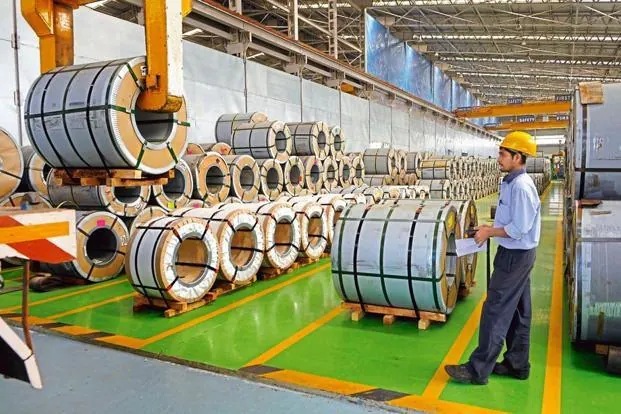
Panchmahal Steel operates an integrated, heavy-industrial manufacturing framework designed to transform raw scrap and metal alloys into high-grade stainless steel products. The facility is split into two primary industrial modules: a stainless steel melting shop with an engineered capacity of 1,50,000 metric tonnes per annum for steel billets, and a cold-finishing and rolling block with an installed capacity of 72,000 metric tonnes per annum.
The product hierarchy spans five core material families: Austenitic, Martensitic, Ferritic, Duplex, and low-nickel/high-manganese 200-series steel. These grades are fashioned into wire rods, hot-rolled bars, welding wires, and fine wires. These items are sold to engineering firms, automotive component manufacturers, railway suppliers, and consumer durable brands.
The geographical mix features an 80% domestic and 20% export split. The primary operational bottleneck is the deployment efficiency of this asset base. Operating a massive melting shop and rolling mill at a 28.12% utilization rate is the industrial equivalent of renting a 100-room hotel and turning the lights on every night for just 28 paying guests. The remaining 72 rooms gather dust while the electricity bill arrives regular as clockwork.
Section 4 — Financials Overview
Figures are consolidated, in ₹ crore.
Quarterly Performance Trend
Metric
Latest Quarter (Mar ’26)
YoY
QoQ
Revenue
105.96
16.17%
8.00%
EBITDA / Operating Profit
3.76
-33.10%
-14.74%
PAT
-2.12
-4.43%
-272.36%
Reported EPS (₹)
-1.11
-4.72%
-273.44%
The top-line metrics point toward a moderate volume recovery, with quarterly sales advancing 16.17% year-on-year to ₹105.96 crore. However, the operational translation of this revenue into profit is where the machinery breaks down. EBITDA contracted by 33.10% over the same period, signaling an inability to pass raw material price fluctuations on to industrial buyers.
The bottom-line contraction was exacerbated by an extraordinary tax charge of ₹3.05 crore against a pre-tax profit of ₹0.92 crore, leading to a net quarterly loss of ₹2.12 crore.
Did Management Walk the Talk?
Given the absence of an active investor concall framework or forward guidance data within the corporate disclosures, a historical assessment of management’s operational execution against credit rating benchmarks is necessary.
During the prior review cycles, management highlighted that the reduction in total bank facility utilization from ₹127.00 crore to ₹97.00 crore would optimize finance costs. The annual interest expenditure did compress from ₹6.45 crore to ₹5.30 crore. However, management’s expectations of a balanced demand-supply dynamic in the domestic market have been delayed by persistent pricing pressures.