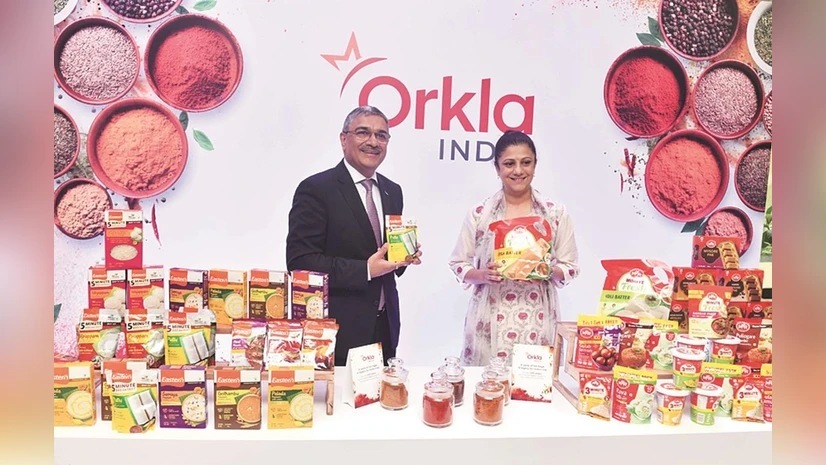
Orkla India Ltd IPO Q2FY26 – ₹10,000 Cr Spice Symphony: How MTR, Eastern & Rasoi Magic cooked an IPO curry richer than their masala packets
1. At a Glance
Ladies and gentlemen, presenting Orkla India Ltd, a ₹10,000 crore masala mammoth that thinks “offer for sale” is a polite way of saying, “We’re cashing out, but we still love you.” The IPO is a ₹1,667.54 crore pure OFS buffet, no fresh issue, no capex dreams—just promoters lightening their spice jars.
The IPO opened on Oct 29, 2025, closes Oct 31, and will list on Nov 6, assuming SEBI’s servers don’t lag. Priced between ₹695–₹730 per share, this issue demands retail investors bring ₹14,600 just to smell the curry.
As of Day 1, retail had subscribed 0.90x, QIBs were still figuring out how to pronounce “Orkla,” and HNIs had already sprinkled 1.53x enthusiasm. Market cap? A meaty ₹10,000 crore. P/E? Spicy at 31.68x post-issue. ROCE? Hot 32.7%—that’s higher than most startups’ caffeine levels.
This IPO isn’t here to raise money—it’s here to raise eyebrows. Because when your brands are MTR, Eastern Condiments, and Rasoi Magic, the only thing left to IPO is your confidence.
2. Introduction – The Great Curry Capitalism Story
If there were a NIFTY index for Indian kitchens, Orkla India would be a blue-chip stock. From idli mixes in Bengaluru to fish masala in Kochi, and paneer butter masala in Delhi—this company is basically India’s spice rack with a corporate filing.
The company, a subsidiary of Norwegian giant Orkla ASA, runs with Nordic discipline but cooks with desi emotion. And now, after years of dominating kitchen shelves, they want to dominate Dalal Street too.
Let’s be clear—this is not a “growth capital” issue. It’s a “let’s list our Indian child” issue. The parent already controls 90.01% and will reduce it to 75%. Classic global playbook: make the Indian arm profitable, list it, enjoy valuations richer than a Diwali buffet.
In FY25, revenue touched ₹2,455 crore, growing just 3%. PAT rose by 13% to ₹255.69 crore. Nothing to make Ambani nervous, but solid enough to make mutual fund managers quietly salivate.
The brands? Legendary. MTR dominates the ready-to-eat, masala, and breakfast segment. Eastern Condiments owns the spice shelves of Kerala. Rasoi Magic sneaks into North Indian kitchens like that one cousin who never leaves after dinner.
So the IPO isn’t about expansion—it’s about valuation seasoning.
3. Business Model – WTF Do They Even Do?
Think of Orkla India as your mom’s pantry but corporatized.
They sell food products across the entire Indian meal cycle—from breakfast to dessert. The business splits into three flavorful brands:
MTR Foods – Ready mixes, RTE meals, spices, snacks, and beverages. The brand that made “2-minute rava idli” a breakfast religion.
Eastern Condiments – Traditional masalas, pastes, and condiments that power every Malayali mother’s temper.
Rasoi Magic – Magic packets for people who can’t cook but still want to impress Tinder dates with “homemade” paneer.
They operate 9 manufacturing plants in India, plus contract units in UAE, Thailand, and Malaysia, producing 182,270 TPA. The supply chain looks like a DTC startup’s dream—834 distributors, 1,888 sub-distributors, spanning 28 states and 6 UTs.
Exports? 42 countries, including GCC, US, and Canada—because Indians abroad also want their dal to taste like home (and not like oat milk).
In short: they make, they pack, they sell, they profit. A classic FMCG flywheel where branding is stronger than margins, and distribution is mightier than innovation.
Witty takeaway? The profit margin is as stable as your mother’s recipe card—no reinvention, just consistency. At ₹10,000 crore valuation, you’re paying a premium for a brand that’s literally in every grocery list.
5. Valuation Discussion – Fair Value Range Only
Let’s whip up the numbers:
Method 1: P/E Method
FY25 EPS = ₹23.04
FMCG peers (Dabur, Marico, Tata Consumer) trade around 35–50x P/E.
Applying a conservative 28–35x → Fair Value = ₹645–₹806 per share.
Method 2: EV/EBITDA Method
FY25 EBITDA = ₹396.44 Cr
EV = ₹10,000 Cr
EV/EBITDA = 25.2x (rich but justified by brand power).
Fair Value (using peer average 20–25x) = ₹8,000–₹9,900 Cr → ₹640–₹790/share.
Method 3: DCF (Masala-flavored) Assuming PAT grows at 10% CAGR for 5 years, WACC at 10%, terminal growth 4%, Fair Value ≈ ₹680–₹800/share.
🎯 Fair Value Range: ₹640 – ₹800 per share
Disclaimer: This fair value range is for educational purposes only and is not investment advice.
6. What’s Cooking – News, Triggers, Drama
Anchor Investors: Dropped ₹499.6 Cr on Oct 28, 2025. Half of it gets unlocked on Dec 3, so brace for a small masala sell-off before Christmas.
Employee Discount: ₹69 off—because even HR likes a good deal.
OFS Drama: Parent Orkla ASA reducing stake from 90.01% to 75%. Translation: “We love India, but not enough to skip partial profit booking.”
Profit Trends: FY23 saw a PAT of ₹339 Cr, FY25 dropped to ₹255 Cr—a 25% fall in absolute profit despite steady sales. Cost inflation and brand integration seem to have spiced margins down.
Global Moves: Orkla has been consolidating food businesses globally; listing the Indian arm aligns with their “regional value unlocking” play.
Question for you—if your parent was Norwegian and your child made sambhar powder, wouldn’t you list it too?
7. Balance Sheet
(₹ Cr)
Jun 2025
Mar 2025
Mar 2024
Total Assets
3,158.2
3,171.3
3,375.2
Net Worth
1,931.1
1,853.5
2,201.5
Borrowings
2.33
0.00
3.77
Other Liabilities
1,224.8
1,317.8
1,169.7
Total Liabilities
3,158.2
3,171.3
3,375.2
Balance Sheet Roast:
Debt = ₹2.33 Cr → basically pocket change for the CFO.
Net Worth dipped due to dividend payouts & intercompany settlements—classic FMCG housekeeping.