Ola Electric Mobility Ltd Q4 FY26: A ₹1,833 Crore Crash Course in Gravity
Section 1 — At a Glance
A sobering structural contraction has gripped India’s flagship electric two-wheeler market leader. Ola Electric Mobility Ltd’s full-year FY26 results reveal a sharp, painful unwinding of top-line velocity, with annual revenue crashing by 50.09% to ₹2,253 crore from ₹4,514 crore in FY25 . The deceleration looks even more severe on a quarterly basis; Q4 FY26 revenue plummeted to ₹265 crore, a staggering 56.63% contraction compared to the preceding quarters, leaving the company operating at a fraction of its past scale . Net losses for the full year remained deeply entrenched at ₹1,833 crore, following a ₹2,276 crore deficit in the previous fiscal year, as massive structural overheads outpaced the company’s shrinking operational base .
While investors parse through the wreckage of the top line, a distinct and troubling mismatch has emerged between the company’s physical infrastructure and its commercial utility. Ola has aggressively expanded its fixed asset base, driving its Net Block up to ₹3,352 crore . Yet, this massive capacity is now staring at severe underutilisation as domestic market share collapsed from approximately 50% down to 19.6%. A company’s true value is determined by the cash generated from its assets, not by the sheer size of the factories housing them. Although management has highlighted structural improvements in unit product margins and a dramatic reduction in warranty claims, the fundamental burden of fixed factory overheads, soaring depreciation of ₹684 crore, and ₹380 crore in annual interest costs continue to drain the balance sheet . The primary task now is a massive volume recovery to prevent this industrial footprint from becoming a structural drag.
Section 2 — Introduction
Ola Electric entered public markets with the swagger of a tech disruptor intent on making internal combustion engines obsolete. Fast forward to today, and the narrative has shifted from a triumphant march to a gritty corporate rescue mission. FY26 has been officially designated by management as a “fundamentals reset” year—corporate phrasing for fixing things that should not have been broken in the first place.
The past year was a painful lesson in consumer reality. The company’s direct-to-customer model faced a severe bottleneck as widespread service backlogs, parts shortages, and thousands of formal customer complaints severely strained consumer trust. This operational friction allowed traditional legacy automotive players to step into the vacuum, aggressively reclaiming market share with established dealer networks. In response, Ola spent the last twelve months executing an intense internal cleanup: rewriting its service procedures, implementing an in-house automated AI stack to manage customer lifecycles, and reallocating its capital away from experimental research directly into basic debt repayment and retail growth.
Section 3 — Business Model: WTF Do They Even Do?
At its core, Ola Electric builds battery-powered two-wheelers and attempts to manufacture the lithium-ion cells that run them. It is an ambitious bid for total vertical integration, executed out of its massive Futurefactory and newly built Gigafactory in Krishnagiri, Tamil Nadu. The strategy is simple: control the battery cell, control the vehicle components, and you control the entire financial stack.
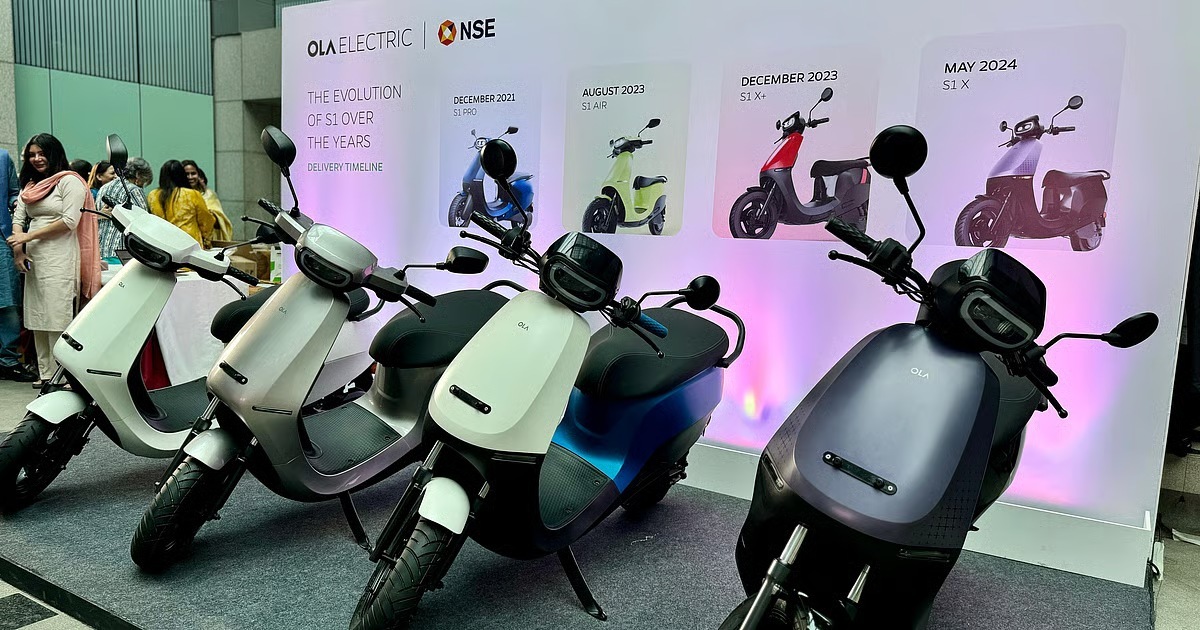
That is the theory. In practice, the business model currently functions as an elaborate corporate balancing act. The company sells a multi-tier scooter portfolio—ranging from the high-end S1 Pro to the entry-level S1 X—and has recently introduced the “Roadster” electric motorcycle series to capture the traditional bike segment. The primary twist is that the vehicles are designed to act as a captive consumption engine for the Gigafactory. The company is attempting to run three distinct commercial engines off a single battery cell platform: building their own EVs, selling loose cells to external automotive peers, and deploying modular energy blocks under the “Shakti” and “Mahashakti” brands for commercial and grid-scale power backup. It is a grand industrial design that requires every single moving part to operate flawlessly. If vehicle volumes stumble, the cell factory loses its primary customer; if cell manufacturing yields falter, the vehicle lines grind to a halt.
Section 4 — Financials Overview
Figures are consolidated, in ₹ crore.
Quarterly Performance Trend
Metric
Q4 FY26
Q3 FY26
Q2 FY26
YoY Change (%)
QoQ Change (%)
Revenue from Operations
265
470
690
-56.63%
-43.62%
Operating Profit (EBITDA)
-281
-271
-203
-9.94%
-3.69%
Net Profit (PAT)
-500
-487
-418
-42.53%
-2.67%
Reported EPS (₹)
-1.13
-1.10
-0.95
-1.13%
-2.73%
The income statement shows a clear picture of top-line stress . Quarterly revenue has contracted sequentially for multiple periods, culminating in a lean ₹265 crore in Q4 . Despite the collapsing revenue base, operating losses stayed stable, with an EBITDA deficit of ₹281 crore for the quarter . This performance was heavily insulated by structural cost-cutting, as management aggressively halved its absolute quarterly operating expense base from its historical highs.
When revenue falls faster than expenses can be cut, accounting margins decay into deep negative percentages, signaling a pure race against fixed costs. Management addressed this reality during the post-earnings conference call. The CEO noted that