1. At a Glance
Ah, Oil Country Tubular Ltd — a name that sounds like a petroleum major but bleeds like a startup selling “eco-friendly” straws. Incorporated in 1985, this Kamineni Group baby manufactures Casing, Tubing, and Drill Pipes — basically, it makes the metallic noodles that go deep into the earth to find oil.
But here’s the spicy part — the company went through Corporate Insolvency Resolution Process (CIRP) between January 2020 and September 2022, came back from the dead in FY23, tried delisting from BSE (failed), and still manages to post losses while claiming a 36% operating margin. How? We’ll see.
With a Market Cap of ₹407 crore, Current Price ₹78.3, and Book Value ₹48.4, OCTL looks like that student who flunked for five years but now suddenly starts attending classes. ROE is at -15%, ROCE -8.4%, and debt-to-equity is a seemingly “healthy” 0.19. Promoters hold 56.7%, but here’s the plot twist — 61% of that is pledged. So technically, lenders own more of the company than promoters do.
Quarterly sales stand at ₹24.6 crore with a ₹8.8 crore loss, meaning every rupee earned drags a few more into the abyss. Over the last one year, the stock is up 46.8% — which proves once again, the market loves a redemption arc, even if the script is still tragic.
2. Introduction
Remember that one friend who hits rock bottom, then posts “comeback season” stories every six months? That’s Oil Country Tubular. Once a steady supplier to the oil and gas drilling world, the company hit the perfect storm — debt, global oil slowdown, and the small detail of insolvency.
Between FY17 and FY22, sales went from ₹359 crore to practically zero. Then, like a soap opera twist, the company re-emerged post-CIRP, wiped off some liabilities, and started showing life signs — from ₹0 in FY22 to ₹122 crore in FY24.
Now, OCTL wants to prove it can make drill pipes again, this time without drilling a hole in its own balance sheet. They even registered on GeM (Government e-Marketplace) to bid for domestic and export orders. The order book currently stands at ₹20 crore. For context, that’s half the budget of a mid-tier Telugu movie.
So, is this a phoenix rising or just an oil-stained pigeon flapping too hard? Let’s dig deeper — literally.
3. Business Model – WTF Do They Even Do?
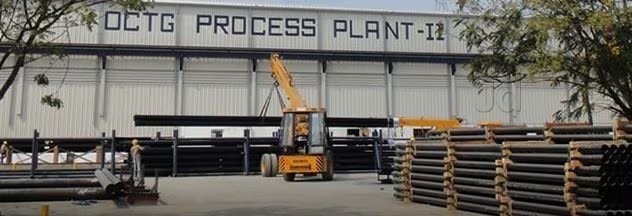
Oil Country Tubular Ltd manufactures and processes Oil Country Tubular Goods (OCTG) — that’s the stuff oil and gas drillers shove into the earth to extract black gold. Their product lineup sounds like a gym bro’s inventory:
- Drill Pipes & Tool Joints – the backbone of drilling rigs.
- Casing & Tubing – the protective pipes preventing well collapse.
- Heavy Weight Drill Pipes / Collars – because apparently, even pipes need protein shakes.
- Couplings, Subs, Cross-overs, Pup Joints – accessories for the drilling world, basically the iPhone chargers of the oil industry.
- Reconditioning and API Threading Services – because new pipes are expensive, so OCTL refurbishes used ones.
Their clients? Oil & Gas exploration and production companies, both in India and overseas.
In FY23, 63% of revenue came from product sales and 37% from job works — a fancy way of saying “we rent out our machines to other people who actually have orders.”
Their biggest achievement though: “Other Income” in FY23 was 525 times operational income. When