Northern Spirits FY26: ₹2,309 Cr of Liquor Moved, ₹27 Cr Kept, and a Pledge That Won’t Leave the Room
Spotted a factual error — a wrong number, date, or fact? Tell us and we will check the source.
General information and entertainment, not investment advice. The author is not a SEBI-registered adviser or research analyst. No recommendation, no promised returns. Markets carry risk including loss of capital. Figures may not be current. Consult a registered adviser before acting.
1 — At a Glance
Northern Spirits closed FY26 with ₹2,309 crore of revenue and ₹27.1 crore of net profit. Put those two numbers side by side and the entire business comes into focus: for every ₹100 of liquor that passed through the company’s warehouses, a little over ₹1 stayed behind as profit. Operating margin sat at 2% — the figure the company has carried for four straight years now.
Revenue grew 18.9% over FY25; profit grew 18.2%. The two moved almost in lockstep, which is what happens when margins refuse to budge and the only lever is volume. Borrowings climbed to ₹209 crore, matched almost rupee-for-rupee by a market cap of ₹209 crore — a symmetry that is either poetic or uncomfortable depending on where you sit.
Two facts sit under everything else. Promoters hold 66.97%, and 44.8% of that holding is pledged. Operating cash flow turned positive at ₹7.5 crore in FY26 after years in the red. The company distributes single malts and premium gin across six states, yet keeps roughly a rupee on every hundred it touches.
A distributor is a machine for turning working capital into more working capital. The question that follows is whether the machine is finally paying rent.
2 — Introduction
Incorporated in 2012, Northern Spirits imports and distributes alcoholic beverage brands across North, East and North East India. The operation runs on relationships — the company is an authorised distributor for Pernod Ricard, Bacardi, Carlsberg, United Breweries, William Grant and Campari, holding exclusive rights for several of them in West Bengal.
The last few years have been about scale. Revenue went from ₹268 crore in FY22 to ₹2,309 crore in FY26 — an eightfold climb in four years, built by adding geographies and stepping deeper into West Bengal, which became the dominant revenue state. In West Bengal, the company took over three government liquor depots to supply roughly 1,000 retail outlets.
FY26 also brought the ordinary housekeeping of a listed company. The board approved audited results in May 2026 with an unmodified auditor’s opinion, recommended a final dividend of Re 0.35 per share, and in June accepted the resignation of Company Secretary Pankaj Khanna, who left to pursue an opportunity elsewhere.
The company migrated from the BSE SME platform toward the main board, a step up in visibility for a business that spent its early years importing foreign liquor under a proprietorship called United Wines.
3 — Business Model: WTF Do They Even Do?
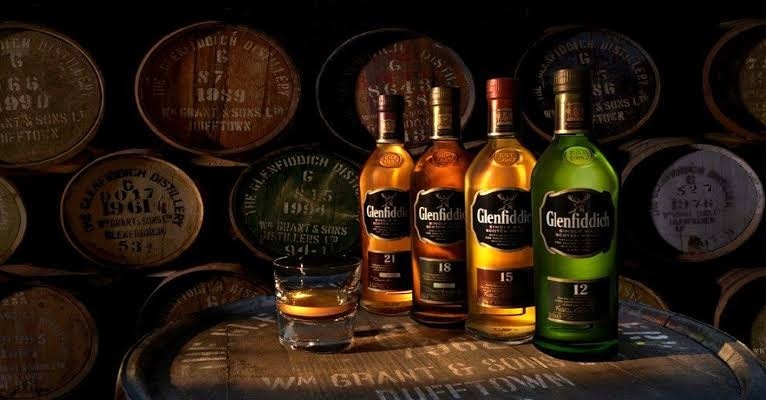
They buy liquor and sell liquor. That is the whole thing, and the elegance of it is that Northern Spirits never has to guess whether Glenfiddich will sell — Glenfiddich sells itself. The company’s job is logistics, licences and warehouse space.
The brand roster reads like a well-stocked bar: Glenfiddich and Balvenie single malts, Hendrick’s and Bombay Sapphire gin, Monkey Shoulder whisky, Grey Goose vodka, Camino tequila. The clientele is equally glossy — the Oberoi Group, Taj, ITC Hotels, Hyatt, Leela Palace, Spencer’s. Impressive names attached to a 2% margin, because in distribution the prestige belongs to the brand and the cents belong to the middleman.
The catch lives in the margin structure. This is low-value-addition work in one of India’s most heavily regulated industries, where state licences govern who may move a bottle and where. The company earns higher margins on imported liquor in UP, Delhi and the North East, but those volumes stay small. West Bengal delivers the bulk of revenue at the thinnest slice — high volume, low margin, the classic distributor’s bargain.
Two ultra-luxury retail stores round out the model: The Liquor Exchange in Noida and Emporio in Kolkata. Rounding errors on ₹2,309 crore of revenue, but they signal ambition upward from pure wholesale.
Does a portfolio of the world’s most desirable spirits mean much when the business keeps 2% of the sale? The brands are the draw; the balance sheet is the price of carrying them.