1. At a Glance – The Iron Foundry That Suddenly Found Its Mojo
If you thought iron casting is a boring, low-margin, “bhai melt that damn iron” type business, Nelcast just threw molten metal on that assumption. One quarter — just ONE — and suddenly PAT jumps 166% YoY, EBITDA per kg climbs to ₹15.9/kg, and management starts talking like they’ve discovered financial enlightenment somewhere between Gudur and Pedapariya.
This is the same company that has spent years hovering in the “meh” category — low ROE, average margins, cyclical exposure — basically the kind of stock that shows up in portfolios like that one friend who never pays for chai but still shows up daily.
And now? Suddenly:
- Margins improving
- Export pipeline strengthening
- Product mix shifting to high-value castings
- Ratings outlook upgraded to Positive
So the big question is:
Is Nelcast finally becoming a premium auto ancillary… or just enjoying a temporary “Q3 glow-up”?
Let’s investigate like a detective who suspects even a saint of tax fraud.
2. Introduction – From “Stable but Boring” to “Wait, What Just Happened?”
Nelcast has been around since 1982. That’s older than liberalization, IPL, and most startup founders’ attention span.
Their core job?
Make ductile and grey iron castings — the kind of components nobody notices but every vehicle depends on.
Think:
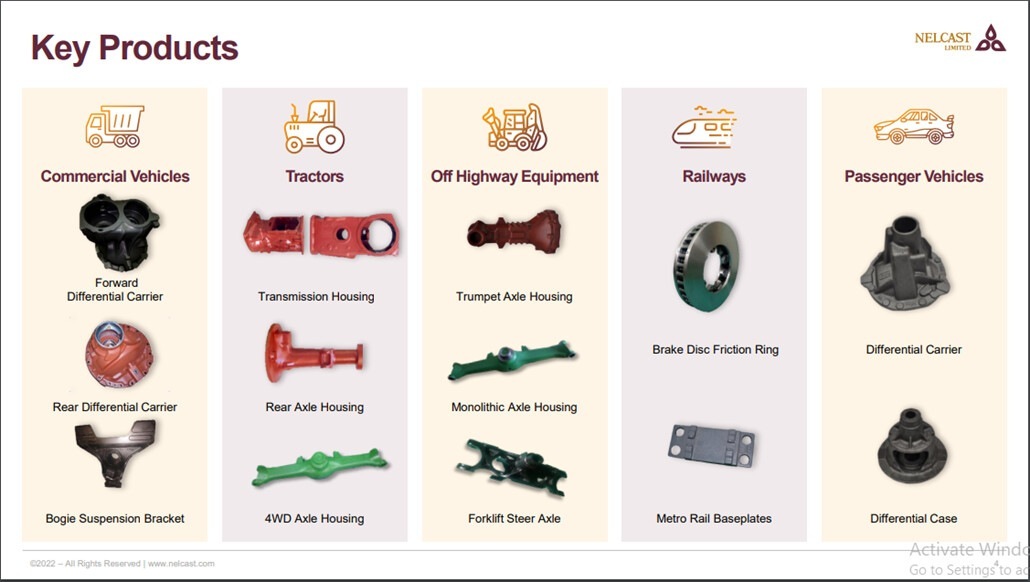
- Axle housings
- Differential carriers
- Tractor parts
- Railway components
Basically, if India’s logistics system is the body, Nelcast makes the bones.
Now here’s the problem:
For years, Nelcast has been:
- Decently growing revenue
- Struggling with margins
- Stuck with low ROE (~6–7%)
So investors treated it like a “thik hai” company — not bad, not exciting.
Then Q3 FY26 happened.
Management claims:
“Improvement is structural… not a one-off.”
Ah yes. The three most dangerous words in corporate India:
“This time it’s different.”
So let’s break it down.
3. Business Model – WTF Do They Even Do?
Nelcast is basically a jobbing foundry — meaning:
They don’t sell branded products.
They manufacture components for OEMs like:
- Tata Motors
- Ashok Leyland
- TAFE
So their business depends on:
- Vehicle demand
- OEM order flow
- Raw material prices
- Operational efficiency
Translation:
👉 They are at the mercy of the entire auto cycle.
Segment mix:
- M&HCV: 35%
- Exports: 35%
- Tractors: 23%
- Others: small
Which means:
Truck demand sneezes → Nelcast catches fever
Now here’s the twist:
They’re shifting towards:
- Export-heavy business
- Large complex castings
- Higher margin products
Because:
- Domestic EBITDA: ~₹10/kg
- Export EBITDA: ~₹18–20/kg
And large castings?
👉 Potentially ₹25/kg+
So basically:
Same iron… but smarter margins.
Question for you:
Would you rather sell 1 kg at ₹10 or ₹25?
Exactly. Management finally asked the same question after 40 years.
4. Financials Overview – Numbers Don’t Lie (But They Do Mislead)
Quarterly