General information and entertainment, not investment advice. The author is not a SEBI-registered adviser or research analyst. No recommendation, no promised returns. Markets carry risk including loss of capital. Figures may not be current. Consult a registered adviser before acting.
1. Opening Hook
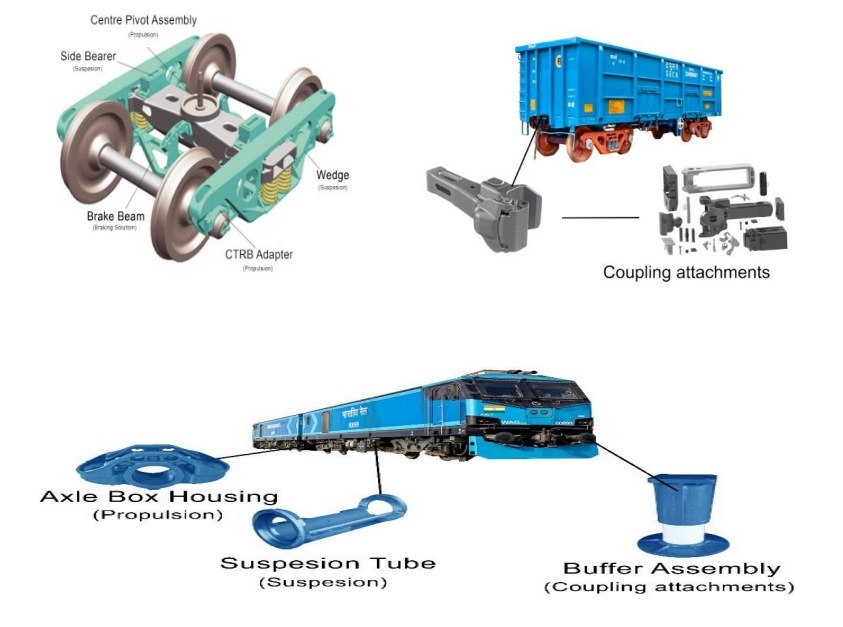
Neetu Yoshi just posted 44% revenue growth to ₹101 crore and a 53% jump in PAT to ₹25 crore—numbers that would make most SME foundries blush. But listen carefully to what’s not happening: the new ₹50-crore bogie plant, fired up in June 2026, isn’t yet pulling its weight. Management is guiding H1 FY27 flat, betting the entire ₹210–220 crore target lands in H2. The real story isn’t what’s done; it’s what they’ve promised to do by FY28 and whether the math holds up when three factories are supposedly running at full tilt.
2. At a Glance
| Metric | Punchline |
|---|---|
| FY26 Revenue | ₹101 Cr, 44% YoY. Two-plant era hasn’t begun. |
| FY26 PAT | ₹25 Cr, 53% YoY. Tax benefit at 17.5% (vs 25% peer rate) doing heavy lifting. |
| FY27 Guidance | ₹210–220 Cr. New plant ramps H2 only; H1 expected flat. |
| PAT Margin | 25% target, same as FY26. Input costs rising; price-variation clauses holding the line. |
| Order Book | ₹140–150 Cr, executable in FY27. 40% from govt, 60% private/track. |
| Peak Revenue (FY28) | ₹350 Cr claimed. Old plant ₹110 Cr, new plant ₹200 Cr, track ₹60–70 Cr. |
| Receivables | Jumped to ₹32 Cr (FY25: ₹15 Cr). Rails paying late in Feb–Mar; half cleared by mid-April. |
| RDSO Approvals | 25 products live; 15–20 in pipeline. H1 FY27 target for next batch. |
3. Management’s Key Commentary
“Total income ₹101 crores, 44% up from last year.”
→ (Looks impressive until you realise the bogie plant wasn’t even live for most of it. FY27 will be the first full yeast-rise test.)
“PAT 25%, which we have committed to investors.”
→ (Translation: it’s a promise, not a law of physics. Raw material spikes are hitting EBITDA; 25% PAT survives only because price-variation clauses kick in post-tender. There’s a lag.)
“Plant is ready already. First invoices would be raised in the month of June.”
→ (The bogie facility opened June 2026. But RDSO sign-off is still pending. They can produce non-certified products this month; certified ones hit in July.)
“Revenue guidance for this current financial year around ₹210 crores, PAT margins of 25%.”
→ (Same guidance since the IPO prospectus. No revision despite a new ₹50-crore plant. Management is claiming H2 will make up for a flat H1—a bet on volume ramp-up in seven months.)
“Peak revenue from both plants approximately ₹340 crores, ₹350 crores. Next financial year.”
→ (This is FY28. Assumes new plant runs at full tilt, track section contributes ₹60–70 Cr, old plant holds ₹110 Cr. No headroom for delays or market wobbles.)
“There is a difference in private and government sector receivables. Many would ask the receivable cycle has increased. It is not the receivable cycle for us the company have increased.”
→ (Deflect and blame the calendar. Rails freeze funds late Feb–Mar, thaw in April. By mid-April, half of the March spike is gone. Fair point, but headline debtors ₹32 Cr is real until cash hits.)
“We are very positive about [demand]. Wagon industry would again go into hike now.”
→ (1 lakh wagon order is live. Bogie makers win. But margins on complete bogies slid from ₹3.25L to ₹2.70–2.80L per unit. “Hike” doesn’t mean price recovery—just order velocity.)

4. Numbers Decoded
| Line Item (FY26, Consolidated) | FY25 | FY26 | Change | Note |
|---|---|---|---|---|
| Sales | ₹71 Cr | ₹98 Cr | +38% | Old plant, no new facility yet. |
| Operating Profit | ₹23 Cr | ₹31 Cr | +35% | OPM fell from 33% to 31% (input creep). |
| Other Income | ₹0 Cr | ₹3 Cr | – | IPO FDR interest (₹77 Cr raised; ₹50 Cr spent on capex). |
| PBT | ₹20 Cr | ₹30 Cr | +50% | Interest flat at ₹2 Cr. |
| Tax | ₹4 Cr | ₹5 Cr | +25% | Effective rate 17.5% (govt scheme, lifetime, no sunset). |
| PAT | ₹16 Cr | ₹25 Cr | +53% | Core story. Tax shield powering profit growth. |
| EPS (₹5 FV) | ₹5.75 | ₹6.45 | +12% | Modest vs PAT jump; secondary issuances diluting. |
| Receivables | ₹15 Cr | ₹32 Cr | +113% | March spike from rail payment trough. |
| Inventory | ₹6 Cr | ₹9 Cr | +50% | New product lines, track materials (higher SKU count). |
| CWIP | ₹0 Cr | ₹38 Cr | – | Bogie plant capex, not yet capitalised (still commissioning). |
| Debt | ₹14 Cr | ₹4 Cr | -71% | IPO proceeds paid down borrowings. Near debt-free now. |
Receivables jumped 113% because (a) sales spike in Q4, (b) rail payment freeze Feb–Mar. By mid-April, ₹16 Cr cleared; ₹20 Cr still pending. Historical cycle: 54 days (FY25); 118 days (FY26 end). Management expects reversion to ~50–55 days in FY27 if supply patterns hold.
5. Analyst Questions: The Dance
Q: “Revenue guidance for FY27—revised now that the new plant is live?”
A: “Still ₹210–220 crores.”
→ (Unchanged. The plant opened June; H1 already lost to ramp-up. FY27 now riding on H2 acceleration. No room for a hiccup.)
Q: “Peak revenue from both plants—when achieved?”
A: “FY28, approximately ₹350 crores.”
→ (One year away. Assumes (1) bogie RDSO approval lands, (2) track section hits ₹60–70 Cr, (3) old plant holds ₹110 Cr, (4) zero market softness. No margin of safety.)
Q: “Raw material costs spiking—how are margins staying at 25%?”
A: “Price-variation clauses. Once we quote, the tender resets price per market.”
→ (True for govt contracts. But lag exists. Private players also adjust. Competitors face the same inflation. The claim assumes perfect pass-through; the data shows OPM fell 2 points FY25–26.)
Q: “Order book ₹140–150 crores—when executed?”
A: “Within this financial year (FY27).”
→ (₹140 Cr pipeline, ₹98 Cr FY26 sales, ₹220 Cr FY27 target. Order-to-sales ratio tightens. No cushion; every order must convert.)
Q: “Warrants for track working capital—₹29 crores. When deployed?”
A: “One-and-a-half to two years. Rail cost is ₹65–70/kg vs scrap ₹37–39/kg. Holding two months’ inventory.”
→ (Logic sound. But working-capital dilation is real: ₹29 Cr for ₹60–70 Cr peak revenue means 40% of revenue locked up in stock. Tight margin for error.)
6. Guidance & Outlook
FY27: ₹210–220 crores revenue, 25% PAT margin.
Management says: bogie plant ramping H2; H1 expected flat (no RDSO approval yet, but other product lines running). Old plant ₹110 Cr contribution. New plant targeting ₹100 Cr. The gap: track section still sub-assembly only; full turnout assembly deferred to FY28.
FY28: ₹350 crores peak.
Assumes: new plant ₹200 Cr, old plant ₹110 Cr, track ₹60–70 Cr, mining/power diversification negligible. PAT margin not re-guided, but management hinting “higher” once wagon order-book tightens. Current assumption: holds 25%. If margins expand, upside. If competitive pressure hits, downside.
Next capex: Spring and rubber assembly line (currently sourced). Management flagging future brownfield expansion on surplus land. Funding: internal accruals (debt-free posture + lifetime tax benefit generating high FCF).
Exports: FY28 target. Precision engineering capability still ramping; US/UK quality standards not yet met.
7. Risks & Red Flags
- RDSO approval delay: Bogie plant needs sign-off to supply Railways directly. Pending. If June slip to Aug/Sept, FY27 momentum bleeds into FY28. No announced fallback.
- Receivables normalisation stall: If rail payment cycles don’t reset in April (political/budgetary friction), cash flow tightens. ₹20 Cr still pending post-call. Actual realisation risk.
- Margin lag in raw-material pass-through: OPM fell 2 points despite price-variation clauses. Competitors also invoking them. If supply-chain inflation outpaces tender reset cycles, 25% PAT becomes aspirational.
- New-plant ramp failure: H1 FY27 assumed flat; all growth H2. If bogie assembly runs into quality gates or order delays, FY27 target misses and FY28 peak looks naive.
- Wagon order absorption by incumbents: 1 lakh wagon tender is real; bogie sub-suppliers compete fiercely. Frontera, Atul, Roys (unlisted, higher-margin shops) may grab tier-1 slots, pushing Neetu Yoshi to tier-2 sub-assembly roles at tighter margins.
- Track section leverage: ₹29 Cr warrants, ₹65–70/kg rail cost, two-month inventory hold. Cash conversion cycle balloons. If demand stutters, inventory writedown risk.
8. Badi Badi Baatein Vadapao Khate, Will Management Walk the Talk?
Neetu Yoshi has a three-year track record of beating guidance. IPO prospectus (Nov 2025) guided ₹180–190 Cr for FY26; delivered ₹101 Cr. IPO guidance for FY27: ₹210–220 Cr. Same promise, now repeated on the call. No revision upward despite a new ₹50-crore plant going live. Why no uplift?
Answer: H1 is a writeoff. Bogie plant closed FY26; June commissioning means zero contribution until H2. Management is implicitly admitting new-plant ramp is slower than prospectus assumed. That’s honest. But the FY27 guidance trades on H2 beating historical run-rates hard. Old plant (₹110 Cr capacity, ₹71 Cr FY25, ₹~75 Cr FY26 implied) must stay stable. New plant must hit ₹100 Cr in five months. Doable if RDSO clears and order funnel holds. Risky if either slips.
On receivables, the boilerplate excuse (“Rail funds reset April”) checks out to ₹16 Cr cleared in two weeks. But ₹20 Cr lag is acknowledged, and “historical average 50–55 days” assumes the same Feb–Mar trough repeats. If rail budget discipline tightens (larger capex frontloading), late-year payment cycles may not revert. That’s a working-capital drag on FY27 cash.
On margins, the 25% PAT target has held for three quarters. OPM compression (33%→31%) is real and attributed to input inflation. Management banking on price-variation clauses. Reasonable, but—competitors invoke the same levers. If Neetu Yoshi is holding 25% while peers slip, either (a) they have cost-structure advantage (tax shield, debt-free, location benefit claimed) or (b) they’re not passing through the full input hit yet and margins compress in H2. Call the first camp’s bet credible; the second is a coiled spring.
9. EduInvesting Take
Strengths:
- RDSO-certified foundry with 25 approved products and a moat: entry barriers (approvals, safety specs, Class A criticality) mean 4–7 suppliers per product. Margins reflect scarcity.
- Tax break (lifetime, 17.5% vs 25% peer rate) is structural, not transient. Adds ~150 bps to net margin vs unsubsidised peers.
- Debt-free balance sheet and 31% ROCE (with leverage capacity if needed) mean a runway for capex without dilution.
- Order book ₹140–150 Cr executable in one year; wagon mega-tender (1 lakh units) tailwind beginning.
- Management has beaten guidance three times. Credibility earned.
Weaknesses:
- New ₹50-crore bogie plant is unproven at scale. RDSO approval pending. If delayed, FY27 target slips.
- Receivables jumped to 118 days; normalisation to 50–55 days is assumed, not guaranteed. If rail budgets remain tight, cash conversion stalls.
- OPM compression (33%→31%) despite price-variation clauses suggests competitive pressure or lag in pass-through. Cost inflation may not reverse.
- FY27 guidance unchanged despite a new facility. Suggests management sees H1 as a wash and is under-promising H2 (prudent) or underselling capex ROI.
- Track section (₹20 Cr current, ₹60–70 Cr by FY28) is unproven. Rail inventory model (₹65–70/kg, 2-month hold) is capital-intensive. ₹29 Cr warrant covers it, but execution risk is high.
What to Watch Next Quarter:
- Bogie plant utilisation: Is RDSO approval live? What % capacity in use? (Target: ₹25+ Cr in Q1 FY27 for H2 to work.)
- Receivables realisation: How much of the ₹20 Cr pending post-30 June cleared by 31 July? (Target: <₹15 Cr outstanding by Aug.)
- Raw-material pass-through: Is OPM stabilising or compressing further? (Target: OPM stays >30%.)
- Order inflow for wagon mega-tender: Any formal order wins announced? Sub-assembly or tier-1 role? (Target: >₹20 Cr incremental order this half.)
- Track section assembly: Sub-assembly revenue in Q1; full turnout contribution in Q2? (Target: ₹5+ Cr Q1 FY27.)
10. Conclusion
Neetu Yoshi Limited is a mid-scale foundry riding three tailwinds: RDSO approvals, a 1-lakh-wagon tender, and a newly commissioned bogie plant. The numbers are strong—53% PAT growth, 31% ROCE, a debt-free sheet. But the story hinges on a bet: H2 FY27 acceleration. Management has guided ₹210–220 crore, unchanged from IPO, implying a flat H1 and a heroic H2 ramp. If that lands, FY28 ₹350 crore is credible. If it doesn’t, we’re looking at a 2–3 year recalibration. The bogie plant is the load-bearing wall; RDSO approval is the keystone. Everything else scales from there.
Written by EduInvesting Team
Sources: Concall transcript (June 4, 2026); Screener data extract (P&L, balance sheet, ratios as of March 31, 2026).