Neelamalai Agro FY26: A Tea Company Where the Tea Is the Side Business
Spotted a factual error — a wrong number, date, or fact? Tell us and we will check the source.
General information and entertainment, not investment advice. The author is not a SEBI-registered adviser or research analyst. No recommendation, no promised returns. Markets carry risk including loss of capital. Figures may not be current. Consult a registered adviser before acting.
1 — At a Glance
Neelamalai Agro closed FY26 with sales of ₹25.45 crore and a net profit of ₹29.12 crore — a company that earned more than it sold. That inversion is the whole story. The tea operation ran an operating loss of roughly ₹1.78 crore, an operating margin of about -7%, while ₹34.15 crore of other income carried the profit line on its back. Revenue over five years has drifted lower, not higher. Yet the balance sheet shows zero borrowings, reserves of ₹326.64 crore, and an investment book the size of a mid-cap.
The market prices this at about 6.5x earnings and 0.58 times book value, against a peer median near 26x. A ₹190 crore company sitting on investments the record values above its own market capitalisation. Two tea estates in the Nilgiris, 622,062 shares outstanding, and a promoter holding locked at 72.45% for years.
The tension worth watching: the operating business shrinks quietly while the investment portfolio does the earning. Whether a plantation that loses money on plantation still counts as a plantation is a question the financials keep raising and never answer.
2 — Introduction
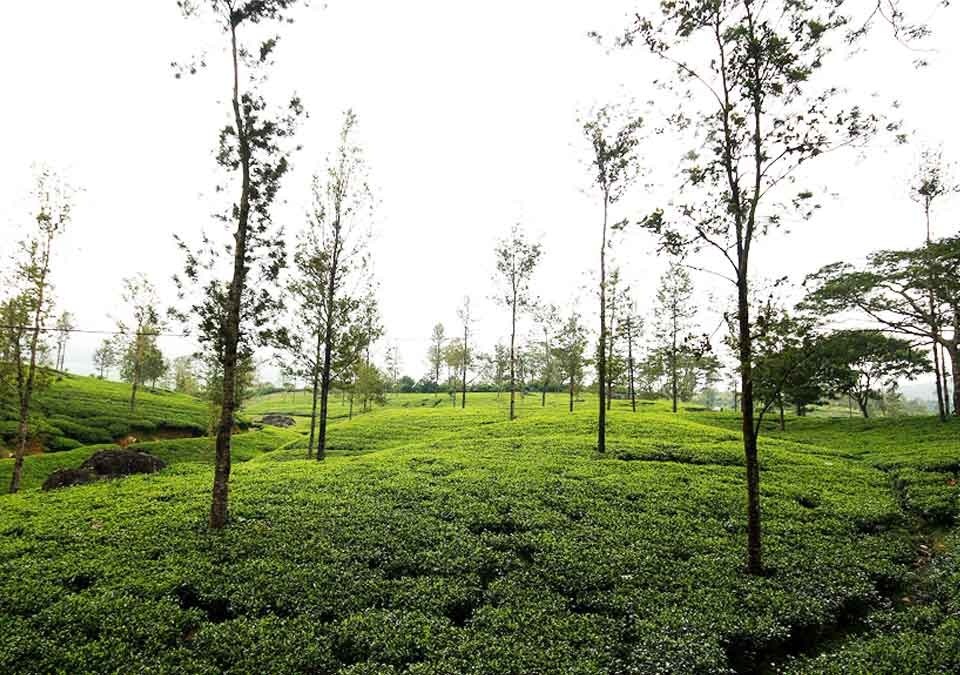
Neelamalai Agro Industries was incorporated in 1943, which makes it older than the Republic it files with. It cultivates, manufactures, and sells tea from two estates — Katary and Sutton — in the Nilgiris District of Tamil Nadu, spanning 635.56 hectares, producing 100% Orthodox Tea.
That is the official identity. The financial identity is different. The company holds associate stakes in AVT Natural Products Limited and Midland Corporate Advisory Services, plus a joint venture in AVT McCormick Ingredients. On a consolidated basis, the share of profits from those holdings — routed through other income and equity-method accounting — is what fills the bottom line. The tea estates supply the address; the investments supply the earnings.
FY26’s headline events are modest and real: audited results approved on 29 May 2026, a recommended dividend of ₹20 per share (₹124.41 lakh total, down from ₹30 the prior year), and an 83rd AGM fixed for 19 August 2026. One older item still sits on the record — an income-tax assessment order disallowing an exemption on a ₹17.70 crore land sale, carrying a potential demand of ₹4.97 crore for AY 2024-25.
3 — Business Model: WTF Do They Even Do?
On paper, Neelamalai does three things: it grows tea, it processes tea, and it sells tea. Revenue splits roughly 89% sale of tea, small slices for tea waste and other operating income, with the remainder historically from profits on sale of investments and property.
Here is where the model gets interesting. The estates yielded around 2,308 kg per hectare in recent standalone data, average sale prices hovered near ₹150 per kg, and exports made up about a third of revenue. Respectable numbers for a tea garden. The problem is that a well-run tea garden this size still can’t cover its own costs — employee cost alone ran ₹16.13 crore in FY26 against ₹25.45 crore of sales. When the wage bill eats two-thirds of revenue before you buy a single leaf of bought tea, the operating loss isn’t a surprise; it’s arithmetic.
So the real model is a plantation wrapped around an investment portfolio. The tea keeps 876 employees busy and the brand alive; the ₹316 crore of book investments keep the lights on. It is a holding company that happens to smell of Orthodox tea. Whether that’s a hedge or a costume depends on how you feel about a factory that runs to justify the vault behind it.
Does a business that loses money on its actual product but earns handsomely on its stakes count as one company or two wearing the same PAN?