Namo eWaste Management Ltd Q2 FY26 – India’s Tech Trash King Turns Goldsmith with 94% Profit Surge, Lithium-Ion Battery Dreams
1. At a Glance
Namo eWaste Management Ltd has become the face of India’s circular economy — and perhaps the nightmare of every hoarder still clinging to their old Nokia 1100. Founded in 2014, this Faridabad-based recycler is now worth ₹423 crore, trading at ₹185 per share, and rocking a P/E of 41.9x, proving that even garbage can be glam. In H1 FY26, the company reported a 31% YoY revenue growth and a 94% jump in profit before tax, thanks to its shiny new 12,400 MTPA lithium-ion recycling plant in Nashik, operational since July 2025.
Its PAT for H1 FY26 clocked in at ₹6.99 crore on ₹87.3 crore sales, up 30.9% YoY, with an EBITDA surge of 66%. Meanwhile, management is teasing the next big move: a 25,000 MTPA Hyderabad plant ready by H2 FY26, expanding total recycling capacity to 68,000 MTPA — because why stop at cleaning India when you can also recycle Tesla dreams?
And here’s the kicker: all this growth comes with almost no debt (Debt/Equity 0.06), ROCE of 19.1%, and ROE of 13.8%. A small-cap stock, yes, but one that’s chewing on discarded laptops and spitting out margin expansion like a veteran industrialist.
2. Introduction – Turning Junk into Juggernaut
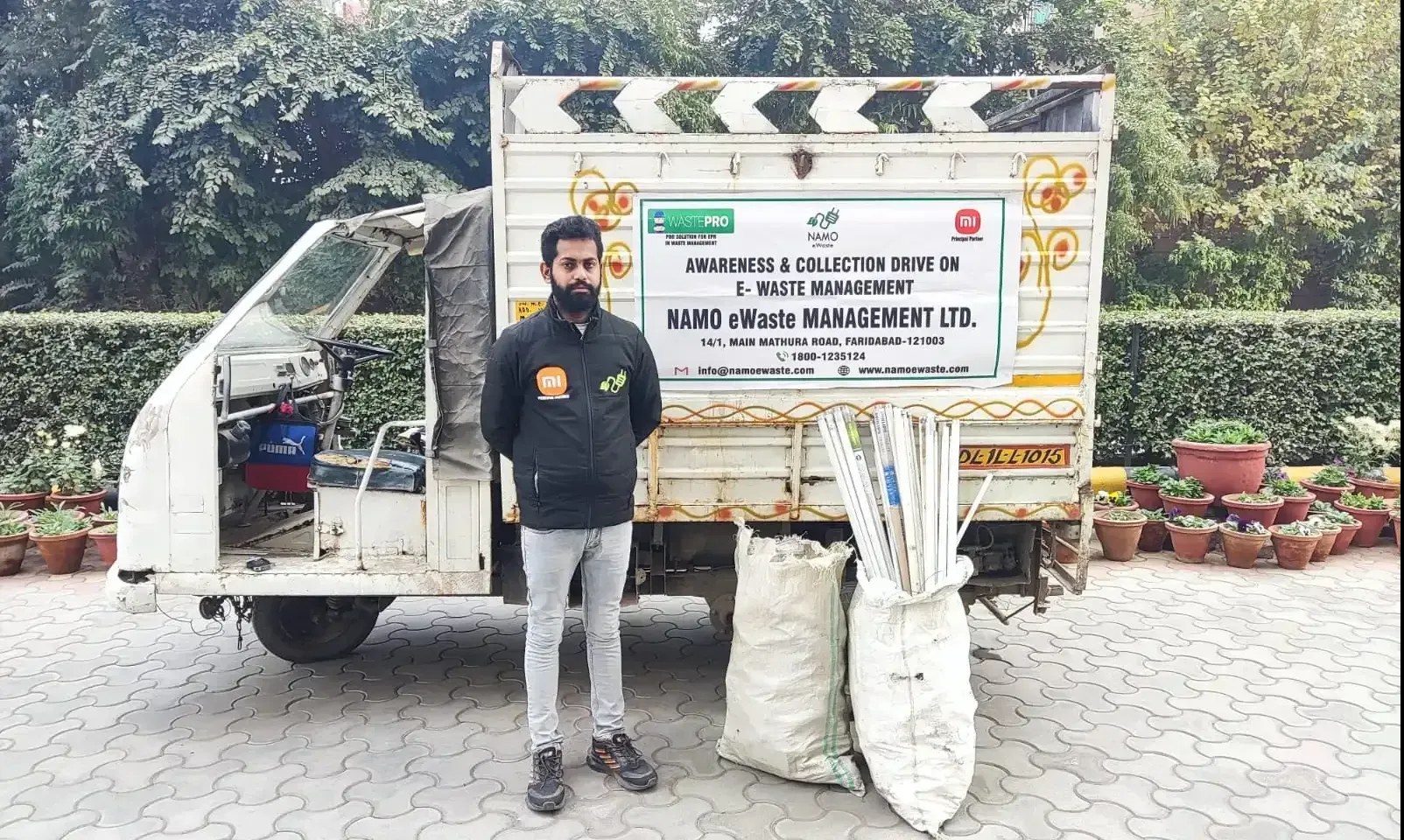
Remember when throwing away an old mobile meant stuffing it into that mysterious “electronics drawer” that never opens again? Namo eWaste decided to make a business out of it. Founded in 2014, the company jumped into e-waste management long before sustainability became a LinkedIn flex. Today, as India drowns under millions of discarded gadgets, Namo stands tall with a recycling empire spread across 335,145 sq. ft., three operational facilities, and two more in the pipeline.
From reverse logistics to data destruction and IT asset disposal, Namo’s business model is basically a 360° detox plan for our gadget addiction. Its ISO-certified operations handle everything — air conditioners, laptops, washing machines, phones, and more. Think of it as the “Sarv Shuddhikaran Yojana” of your electronic sins.
The company also manages Extended Producer Responsibility (EPR) compliance for big tech producers, ensuring that manufacturers don’t just make gadgets, but also clean up after them — like the responsible adults they pretend to be. With clients across 30+ states, collection centres in 26 cities, and a rapidly scaling capacity, Namo eWaste is turning India’s digital dumpyard into a goldmine of opportunity.
And yes, they just pulled off an IPO of ₹51 crore — fully subscribed, cleanly executed, and verified by auditors who found zero deviations. Not bad for a team of just 48 employees (proof that you can run a ₹400 crore company with fewer people than a typical WhatsApp family group).
3. Business Model – WTF Do They Even Do?
At its core, Namo eWaste is India’s organized face of an otherwise chaotic e-waste recycling sector. While informal kabadiwalas dominate the streets, Namo has built an industrial-scale recycling system compliant with the E-Waste (Management) Rules, 2022.
Here’s the breakdown (and the roast):
EPR Compliance Services: Big brands don’t want to deal with the messy part of waste collection — so Namo does it for them. They handle documentation, reporting, collection drives, and audits. In short, they’re the environmental wingman for every laptop maker trying to look woke.
EEE Recycling: Their plants in Faridabad (5,200 MTPA), Palwal (16,000 MTPA), and Nashik (9,300 MTPA) process everything from microwaves to MacBooks. Total capacity: 30,500 MTPA.
Reverse Logistics: Trucks full of broken electronics travel across India, all to end up in Namo’s eco-friendly shredders. Somewhere, Greta Thunberg just smiled.
Data Destruction & ITAD: For corporates terrified of data leaks, Namo offers shredding, degaussing, and software destruction. Think of it as therapy for old servers.
Refurbishment: Old gadgets get a second life after a spa day — repaired, cleaned, and resold. Sustainable capitalism at its finest.
In short, Namo eWaste doesn’t just manage waste — it monetizes guilt, compliance, and tech nostalgia. Genius.
4. Financials Overview
Let’s cut through the junkyard of numbers and see what’s shiny.
Metric
Latest Qtr (Sep’25)
YoY Qtr (Sep’24)
Prev Qtr (Mar’25)
YoY %
QoQ %
Revenue
₹87.3 Cr
₹66.8 Cr
₹83.0 Cr
30.7%
5.2%
EBITDA
₹11.0 Cr
₹6.6 Cr
₹7.0 Cr
66.7%
57.1%
PAT
₹6.99 Cr
₹5.34 Cr
₹3.00 Cr
30.9%
133%
EPS (₹)
3.06
2.34
1.36
30.8%
125%
Annualised EPS = ₹3.06 × 4 = ₹12.24 per share.
That means an annualized P/E of ~15x based on current price, compared to 42x trailing — which screams “valuation catch-up incoming.”
Witty note: When your EBITDA grows faster than your iPhone app size, you know business is scaling right.
5. Valuation Discussion – Fair Value Range Only
Let’s get the auditor’s calculator smoking:
Method 1: P/E Based Range
TTM EPS: ₹4.42
Industry P/E: 21.9
Current P/E: 41.9
Fair value = ₹4.42 × 21.9 = ₹96.8/share (lower band) If we apply 30x (growth premium) → ₹4.42 × 30 = ₹133/share (upper band)
Method 2: EV/EBITDA
EV = ₹427 Cr, EBITDA = ₹18 Cr → EV/EBITDA = 22.2x Peers average = ~18x Fair EV = 18 × ₹18 = ₹324 Cr → Fair price ≈ ₹140/share
Method 3: DCF (simplified) Assume 25% growth for next 3 years, 15% after, discount rate 12%. Fair value range = ₹130–₹160/share.
📜 Disclaimer: This fair value range is purely for educational purposes and not investment advice. If you buy or sell, it’s your wallet’s karma.
6. What’s Cooking – News, Triggers, Drama
If you thought recycling was boring, welcome to Namo eWaste’s press room — it’s pure masala:
July 2025: Nashik lithium-ion plant goes live (12,240 MTPA). Management calls it “a game-changer.” Investors call it “finally some spark.”
Nov 2025: Hyderabad plant (25,000 MTPA) scheduled for H2 FY26 — part of the “Project Double Trouble” expansion that’ll push total capacity to 68,000 MTPA.
Nov 2025 Concall: “EBITDA up 66%, PBT up 94%.” CFO probably smiling harder than ChatGPT after a successful compile.
Nov 2025: NSE slapped a minor ₹11,800 fine for a late filing. Classic SME drama — barely a footnote.
IPO Utilization Check: Auditor says no deviation, ₹0.32 lakh excess covered internally. That’s cleaner than your favorite politician’s affidavit.