1. At a Glance – Small NBFC, Big Margins, Even Bigger Attitude
Nalin Lease Finance Ltd is that quiet Gujarati NBFC that doesn’t scream on TV ads, doesn’t sponsor IPL teams, but still manages to print money like a disciplined baniya running a kirana store with Excel sheets. Market cap sits at ₹29.9 Cr, stock price around ₹45.6, and yet this micro-cap lender reports OPM north of 60%, which frankly makes many mid-sized NBFCs sweat nervously.
Latest quarter (Q3 FY26 – Dec 2025) revenue came in at ₹1.89 Cr, up 16.7% YoY, while PAT slipped 25% YoY to ₹0.75 Cr. Margins remain absurdly high at 65%, debt-to-equity is a conservative 0.16, and ROCE stands at 13.4%. Promoters own 73.3% and recently increased stake by 1.24%—because nothing says confidence like buying more of your own stock when nobody is watching.
But don’t get carried away. Sales growth over 5 years is just 7.56%, ROE is a modest 10–11%, and dividends? Zero. Nada. Not even a Diwali box. So the big question: is this a disciplined slow-burn compounder, or a business stuck in second gear?
Ready to dig deeper, detective? 🕵️♂️
2. Introduction – Welcome to Gujarat’s Gold-Backed Lending Lab
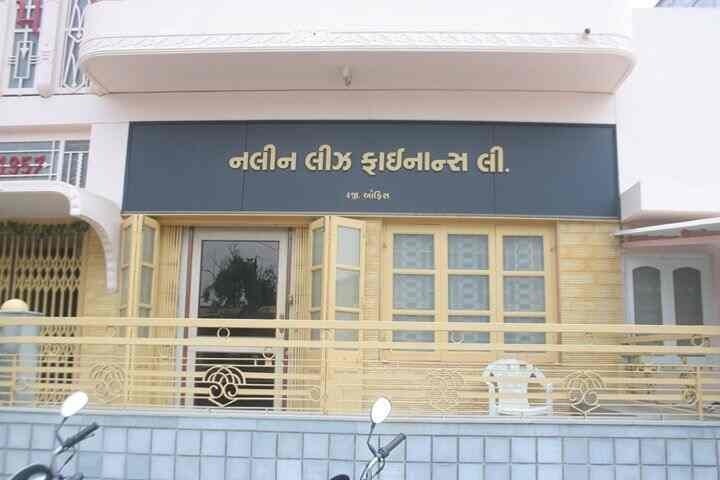
Founded in 1990, Nalin Lease Finance is a Non-Systemically Important, Non-Deposit Taking NBFC, registered with the RBI. Translation: small enough to avoid systemic panic, regulated enough to keep auditors happy, and local enough to know exactly which village jeweller has how much gold locked in a steel cupboard.
The company focuses on gold loans, vehicle loans (mainly 2-wheelers), and small business loans, serving 3,074 customers across rural and semi-urban Gujarat. No fancy fintech jargon here. This is old-school lending with a new-school digital wrapper.
What stands out is not explosive growth but consistency. Revenues inch forward, profits mostly follow, and balance sheet leverage is kept on a tight leash. In an industry where many NBFCs treat leverage like free sugar syrup, Nalin behaves like a diabetic on strict diet control.
But consistency without ambition can also mean stagnation. So is this a cautious marathon runner—or someone afraid of increasing speed? Keep reading.
3. Business Model – WTF Do They Even Do? (Explained Without MBA Jargon)
Imagine a small-town businessman walks in with gold bangles. Nalin gives him a loan. Gold stays locked. Interest flows. Repeat this 3,000 times. That’s nearly 57% of the loan book.
Then there’s vehicle loans (~34%), mostly two-wheelers in districts like Sabarkantha, Arvalli, and Mehsana. Why two-wheelers? Because in rural India, that’s not a luxury—it’s survival equipment.
The remaining ~9% comes from small business loans. No rocket science. No unsecured consumer madness. Mostly collateral-backed lending.
Revenue mix (FY22):
Gold loans: ~46%
Vehicle loans: ~41%
Business loans: ~5%
Other operational income: ~6%
Other income: ~2%
Margins are fat because:
Gold loans = lower credit risk
Operating costs are low
Geographic focus keeps marketing and admin tight
They’ve also digitised operations—loan origination, credit checks, gold data management, and internal audits are handled via in-house IT systems. No, it’s not a flashy app. But it works.
Question for you: would you prefer boring profitability or exciting losses?
4. Financials Overview – The Quarter That Was (Q3 FY26 Locked)
Result Type Detected:Quarterly Results EPS Annualisation Rule Applied: Q3 → Average of Q1, Q2, Q3 EPS × 4