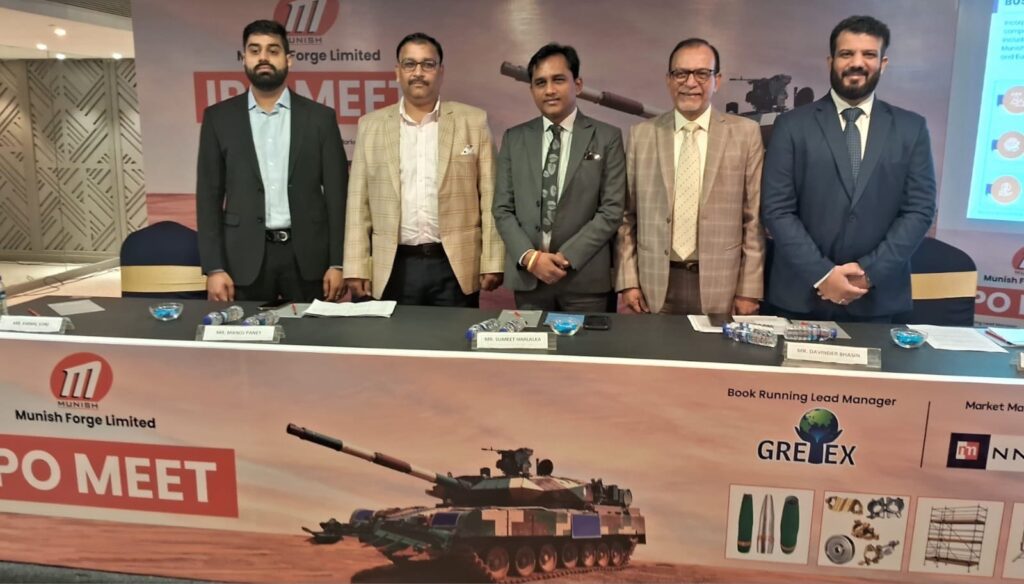
Ludhiana-based Munish Forge Ltd, incorporated in 1986, is storming into the NSE SME with a ₹73.92 crore IPO (₹61.02 Cr fresh + ₹12.9 Cr OFS). The IPO opens Sep 30 – Oct 3, 2025, listing on Oct 8, 2025. Price band? ₹91–96. Retail entry ticket? A stomach-churning ₹2.3 lakh (minimum 2,400 shares).
Market cap at upper band = ₹231 Cr, with post-issue P/E = 16.45x (pre-issue P/E = 38.7x). Borrowings? ₹60.8 Cr. ROE? 10.8%. PAT margin? 2.75%. In short, this is not SaaS margins – this is factory-floor, steel-banging reality.
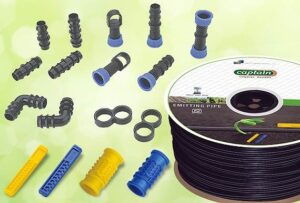
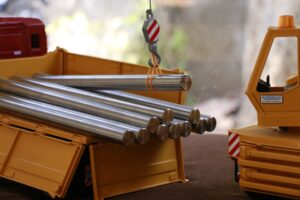
Their products include tank track chains and bomb shells for the Indian Army, plus scaffolding, flanges, auto parts, and fence posts. Basically, if you want to build a house, a car, or blow up a tank – Munish Forge is in business.
2. Introduction
What happens when a Ludhiana steel unit that started in the 80s decides to flirt with Dalal Street in 2025? You get Munish Forge IPO – half defence contractor, half infrastructure supplier, full-on old-school engineering vibes.
They’re not pitching you AI, cloud, or “as-a-service” nonsense. No sir. They’re selling you flanges, bomb shells, and tank tracks – the kind of products that don’t go out of style because war and construction never go out of business.
Financials tell a dramatic story: revenue peaked in FY24 at ₹161 Cr, but nine months of FY25 already show ₹131 Cr, which annualized looks stable. PAT, however, remains thin – single digits in crores, with margins flatter than a Ludhiana paratha. Debt is heavy, at 1.16x equity, but at least IPO proceeds are earmarked for repayment and working capital.
Question to readers: If you had to choose between investing in a Rajkot SaaS company (Infinity Infoway) or a Ludhiana bomb-shell maker (Munish Forge), which side of India Inc’s barbell would you pick?
3. Business Model – WTF Do They Even Do?
Munish Forge operates in a space most retail investors don’t think about until Republic Day parades: forged components for defence and industry.
Here’s their production buffet:
Defence – Battle tank track chains, bomb shells (yes, literal shells), and other army-grade components.
Oil & Gas + Infra – Flanges, scaffolding, fence posts.
Automobile – Engine and transmission parts, exported to OEMs.
Exports – Europe, North America, Middle East, where their parts meet global compliance standards.
What makes them tick:
Fully integrated manufacturing – die design, forging, machining, heat treatment, plating, all in-house.
Certifications galore: ISO 9001, ISO 14001, IATF-16949, PED.
If you explain Munish Forge to your cousin, say: “They don’t make cars or tanks. They make the parts that make cars and tanks move or blow up.”
4. Financials Overview
Metric
Dec 2024 (9M FY25)
FY24
FY23
YoY %
9M vs FY24 %
Revenue
₹130.9 Cr
₹161.6 Cr
₹161.2 Cr
+0.3%
81% in 9M
EBITDA
~₹18 Cr (est)
₹20 Cr (est)
₹15 Cr (est)
+33%
90% run-rate
PAT
₹10.53 Cr
₹4.39 Cr
₹1.97 Cr
+123%
already > FY24
EPS (₹)
5.84 (Post IPO)
2.48 (Pre IPO)
1.11
+123%
–
Commentary: Topline flat, but bottom-line finally waking up. From ₹1.9 Cr in FY23 to ₹10.5 Cr in 9M FY25, Munish went from “chai-paani profit” to something more respectable.
5. Valuation Discussion – Fair Value Range Only
Method 1: P/E Multiple
EPS (post IPO) = ₹5.84
Industry range (forging/auto ancillary SMEs) = 12–18x
Fair Value Range = ₹70–₹105
Method 2: EV/EBITDA
EBITDA (FY25 est) ≈ ₹24 Cr
EV (post issue) ≈ ₹231 Cr + ₹60 Cr debt – IPO repayment ~₹110 Cr → EV ≈ ₹181 Cr
EV/EBITDA ≈ 7.5x
Peer range = 6–9x
Fair Value = ₹80–₹115
Method 3: P/B Ratio
Book Value post issue ≈ ₹51 Cr net worth + ₹110 Cr repayment = ~₹160 Cr → BV ≈ ₹66/share