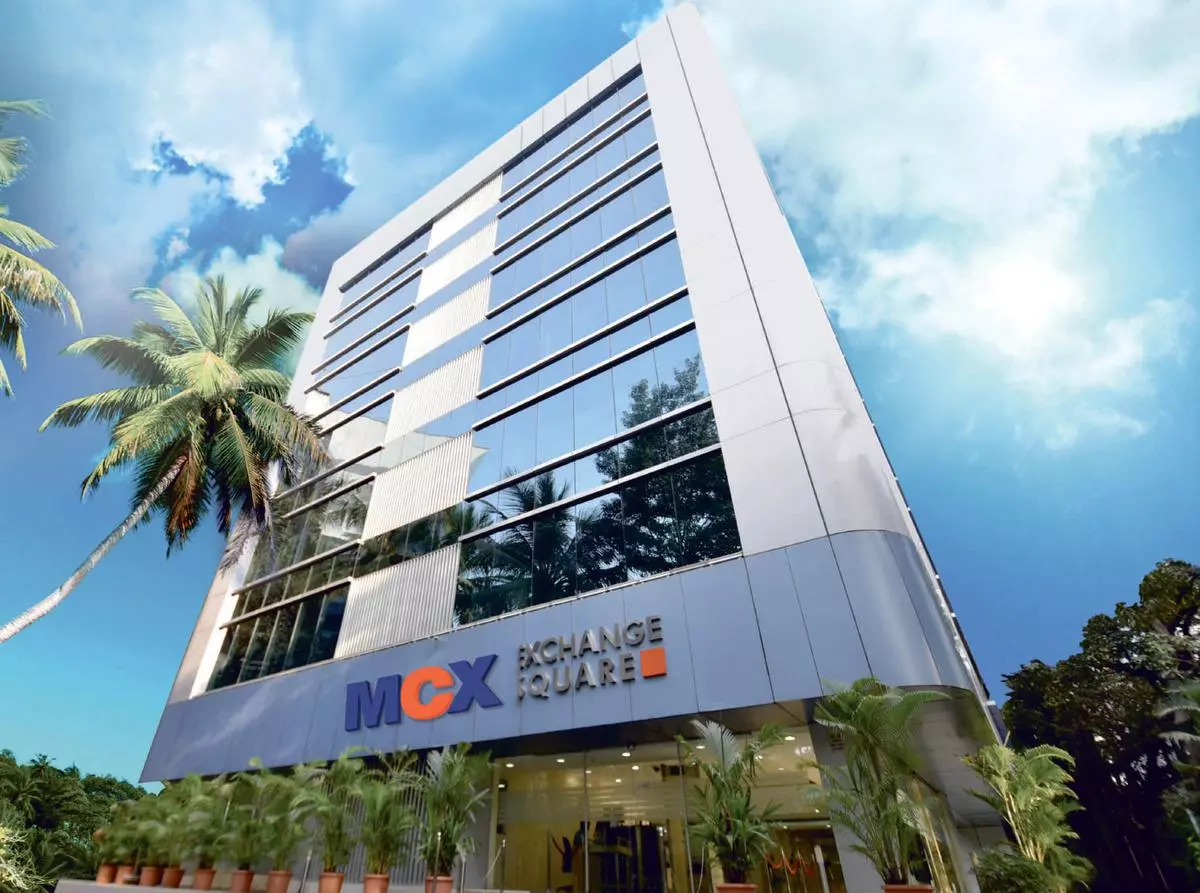
Multi Commodity Exchange of India Ltd: Monopoly Money Machine or Overpriced Options Bazaar? 274% Profit Surge!
At a Glance
Multi Commodity Exchange of India Ltd (MCX) is the Shah Rukh Khan of commodity exchanges—flashy, dominant, and a bit overpriced at ₹7,692 per share with a market cap of ₹39,248 crore. Commanding a 95.9% grip on India’s commodity futures market, MCX is the undisputed king of bullion, energy, and base metals, though it’s a bit of a nobody in agri-commodities (2.65% share). With a P/E of 60.2—higher than a Diwali rocket—and a 274% profit growth in FY24, this exchange is a glittery stage. But with SEBI fines, tech costs, and NSE sniffing around, is this a blockbuster or a flop in the making?
Introduction
Imagine a bustling mandi where gold, oil, and metals change hands faster than gossip at a chai stall—that’s MCX, India’s first listed commodity exchange, born in 2003 when flip phones were peak tech. Operating under SEBI’s watchful eye, MCX is the go-to platform for price discovery and risk hedging, handling a staggering ₹1,08,880 crore in average daily turnover (ADT) in FY24. With a 95.9% market share in futures and a client base spanning 687 cities, they’re the 800-pound gorilla of commodity derivatives. But a P/E of 60.2, regulatory slaps (₹1.77 crore SEBI fee in April 2024), and rising tech costs from their new TCS platform make this a spicy case. Is MCX’s monopoly a golden ticket, or are cracks forming in this glittering empire?
Their 62% sales growth and 274% profit surge in FY24 are eye-popping, but the stock’s trading at 20.8 times book value—pricier than a South Mumbai penthouse. With NSE entering the commodity game and key management changes (new CEO, CTO, and resignations), this detective’s got a hunch there’s more drama behind the numbers. Let’s dive into this financial masala like it’s a murder mystery.
Business Model – WTF Do They Even Do?
MCX is like the digital dalal of commodities, running an electronic exchange where traders hedge bets on everything from gold to crude oil. Their business is split into transaction revenue (82% of FY24 income), with futures (37%) and options (63%) driving the show. Precious metals (62.38% of turnover) are the crown jewels, followed by energy (27.71%) and base metals (9.63%). Agri-commodities? A measly 0.11%—MCX clearly prefers shiny stuff over soybeans. Their subsidiary, MCXCCL, handles warehousing (think gold vaults in Thane), delivering 7.4 tonnes of gold and 94,036 tonnes of base metals in FY24. They’ve also got a 24% stake in CDSL’s repository arm and a fledgling SME exchange, but those are side gigs.
With 36,312 authorized persons and 2.3 crore unique client codes, MCX’s reach is wider than a politician’s promises. Their new TCS platform (launched October 2023) aims to keep them ahead, but fixed depreciation costs are replacing volume-linked fees, which could pinch margins. They’re also cozying up globally with MoUs like the one with Jakarta Futures Exchange. But with NSE lurking and SEBI breathing down their neck, is MCX’s monopoly as unbreakable as it seems? What’s your take on their business model—rock-solid or resting on shaky ground?
Financials Overview
Metric
Latest Qtr (Jun 2025)
YoY Qtr (Jun 2024)
Prev Qtr (Mar 2025)
YoY %
QoQ %
Revenue
₹373 Cr
₹234 Cr
₹291 Cr
59.2%
28.2%
EBITDA
₹241 Cr
₹133 Cr
₹160 Cr
81.2%
50.6%
PAT
₹203 Cr
₹111 Cr
₹135 Cr
83.2%
50.4%
EPS (₹)
₹39.84
₹21.75
₹26.56
83.2%
50.0%
Commentary: MCX’s latest quarter is like a box-office hit—59.2% YoY revenue growth and 83.2% PAT surge. EBITDA margins at 65% are juicier than a mango in May, and the QoQ jump (28.2% revenue, 50.4% PAT) shows momentum. Annualized EPS (₹39.84 x 4 = ₹159.36) gives a P/E of 7692 / 159.36 = ~48.3, a tad better than the TTM P/E of 60.2 but still spicier than a Hyderabadi biryani. The catch? FY24’s EBITDA dip (due to tech vendor payments and SGF contributions) and a 33-day debtor cycle hint at operational hiccups. Are these numbers a sign of strength or a one-quarter wonder?
Valuation – Fair Value Range Only
Let’s crack this valuation case with three methods: P/E, EV/EBITDA, and DCF.
P/E Method: Industry median P/E is 56.7. MCX’s TTM EPS is ₹127.90, so fair value = 56.7 x 127.90 = ₹7,251.93. Close to the current ₹7,692, but the market’s betting on more growth.
EV/EBITDA Method: MCX’s EV is ₹37,347 crore, TTM EBITDA is ₹774 crore, giving an EV/EBITDA of 48.2. Industry median EV/EBITDA (assuming ~15 for exchanges) suggests fair EV = 15 x 774 = ₹11,610 crore. Adjusting for net debt (₹1.01 crore), fair market cap = ₹11,608.99 crore, or ₹2,276 per share (5.1 crore shares).
DCF Method: Assume 5-year revenue growth at 30% (below 3-year CAGR of 45%), terminal growth 3%, WACC 10%. TTM FCF is ₹950 crore. Discounting FCF growing at 30% for 5 years, then 3% perpetuity, gives NPV ~₹20,000 crore, or ₹3,921 per share.
Fair Value Range: ₹2,276–₹7,252. Disclaimer: This fair value range is for educational purposes only and is not investment advice.
The current price (₹7,692) is kissing the high end, suggesting the market’s sipping some premium optimism. Is MCX worth this premium, or are investors overpaying for the monopoly?
What’s Cooking – News, Triggers, Drama
MCX’s been stirring the pot like a master chef. In July 2025, they launched electricity futures, a bold move to hedge power price risks. October 2024 saw Praveena Rai take the MD & CEO helm, but the resignation of key execs (Chief Digital Officer, CISO, and others) smells like backstage drama. A ₹3.1 crore GST penalty in January 2025 and a ₹1.77 crore SEBI fee in April 2024 add regulatory spice. Their ₹20 crore investment in India International Bullion Holding and a new TCS platform (October 2023) show ambition, but rising depreciation costs could crimp margins. With NSE launching commodity derivatives, is MCX’s 95.9% market share under siege? What’s the juiciest plot twist here?
Balance Sheet
Metric
Mar 2023
Mar 2024
Mar 2025
Assets
₹3,023 Cr
₹3,409 Cr
₹4,325 Cr
Liabilities
₹1,542 Cr
₹2,029 Cr
₹2,440 Cr
Net Worth
₹1,479 Cr
₹1,378 Cr
₹1,884 Cr
Borrowings
₹2 Cr
₹2 Cr
₹1 Cr
Commentary: MCX’s balance sheet is cleaner than a five-star hotel room. Assets grew 27% to ₹4,325 crore, driven by a ₹950 crore operating cash flow surge. Net worth at ₹1,884 crore is solid, and borrowings at ₹1 crore are basically pocket change (debt-to-equity 0.00). But other liabilities climbing to ₹2,440 crore and a 390-day working capital cycle (down from 540) suggest they’re juggling client funds like a circus act. Is this a lean operation or a house of cards waiting for a breeze?
Cash Flow – Sab Number Game Hai
Metric
Mar 2023
Mar 2024
Mar 2025
Operating Cash Flow
₹141 Cr
₹442 Cr
₹950 Cr
Investing Cash Flow
₹-8 Cr
₹-346 Cr
₹-751 Cr
Financing Cash Flow
₹-89 Cr
₹-98 Cr
₹-40 Cr
Net Cash Flow
₹44 Cr
₹-2 Cr
₹159 Cr
Commentary: MCX’s cash flow is like a Bollywood dance number—flashy and full of energy. Operating cash flow soared to ₹950 crore in FY25, thanks to booming transaction volumes. Investing cash flow (₹-751 crore) reflects heavy tech spending (TCS platform) and investments like the ₹20 crore in IIBH. Financing outflows (₹-40 crore) are mostly dividends, showing they’re sharing some love. Net cash flow of ₹159 crore is solid, but are they spending too much on tech to fend off NSE? Thoughts on their cash game?