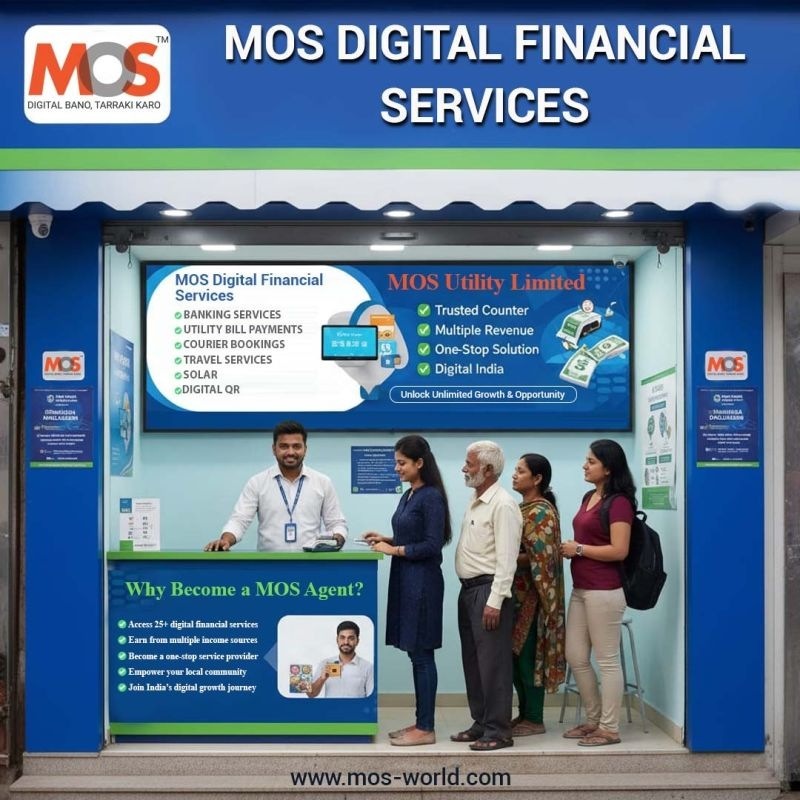
MOS Utility Ltd Q2FY26 – The Fintech With More Services Than a Government Office Queue, Yet Running Like a Startup on Caffeine
1. At a Glance
Welcome to the circus called MOS Utility Ltd, a ₹609 crore market cap fintech that’s doing everything short of launching a rocket. With a current price of ₹23.6 and a P/E of 39x, this one’s not shy about being expensive for a company that sells everything from AEPS transactions to aqua park tours. The last quarter (Sep’25) saw sales of ₹316 crore and profit after tax of ₹8.38 crore — that’s a 54.3% YoY profit jump, because clearly someone found where the fintech goldmine was buried.
ROE stands at 13.8%, ROCE a healthy 19.2%, and the debt-to-equity ratio of 0.53 keeps bankers calm. The company’s return over 3 months is down just 1.05%, which, for a fintech SME in India, is basically a standing ovation.
And yet, behind the digital smiles and glossy fintech buzzwords, MOS just went through a bonus issue, CFO resignation, and a digital lending tie-up — all in the same quarter. Who said fintech was boring?
2. Introduction
If Reliance does “Jio Everything,” MOS Utility does “Everything Jio Didn’t Think Of.”
Founded in 2009, MOS Utility Ltd started out as a Unified Open API and Wallet platform. Fast-forward to 2025, and it’s now into money transfers, flight bookings, insurance, courier logistics, online lotto distribution, and probably by next year — planetary ticketing to Mars.
Their core offering is a super app for agents, who use it to perform digital transfers, AEPS transactions, bill payments, and recharges. But MOS didn’t stop there. They turned their fintech infrastructure into a lifestyle ecosystem — from booking your train ticket to selling you travel insurance, to helping your neighborhood shopkeeper set up an ATM machine.
They’ve built an empire of 1.81 lakh agents, 13,850 distributors, and 1,500 master distributors. Think of it as the Swiggy of financial services, except instead of food, they deliver everything from payments to paperwork.
In FY25, they even decided to distribute lottery tickets through their subsidiary MOS Logconnect. Because why just help people transfer money when you can also help them gamble it responsibly?
But it’s not all fun and fintech. Behind the digital expansion lies a company juggling acquisitions, new partnerships, and bold 2030 goals — including 1,000 Seva Kendras and ₹1,000 crore in revenue. The ambition is big, the execution is daring, and the spreadsheet is glowing green (mostly).
3. Business Model – WTF Do They Even Do?
The short answer: They do everything that has a digital payment or a QR code attached to it.
The long answer — well, buckle up:
Banking Services: MOS acts as a digital bridge for rural and urban customers via AEPS, Micro ATMs, and kiosk banking. With 25,000+ daily banking transactions, they’re basically the fintech cousins of Indian Post.
Utility Services: Ever paid your light bill online? That might have passed through MOS’s Bharat Bill Payment System (BBPS). They also process 5 million+ recharge and BBPS transactions annually. Imagine a company that recharges half of India’s prepaid mobiles while its agents sip chai across 29 states.
Travel & Entertainment: Through their IRCTC partnership, they handle 20,000+ travel bookings per month. Not just trains — they book flights, buses, and even tours to Film City and amusement parks. Because why not make travel booking as easy as buying Maggi?
Insurance & Courier: Health, travel, vehicle — MOS sells it all. They’ve covered 90% of India geographically. Plus, with courier tie-ups with DTDC, Delhivery, and Amazon, they literally deliver everything but financial peace of mind.
Tech-Enabled Distribution: Their Seva Kendras are walk-in fintech shops. They already run 32 of them and plan to expand to 1,000 by 2030. Essentially, mini-digital service hubs for anyone from a farmer to a freelancer.
So yes — MOS Utility’s business model is a mash-up of Paytm, IRCTC, PolicyBazaar, and India Post. It’s chaotic, ambitious, and somehow still profitable.
4. Financials Overview (Quarterly Data)
Data Type: Quarterly Consolidated Results (₹ in Crores)
So yes, MOS is priced like a fancy fintech even though it’s still in the middle of its expansion arc. But credit where it’s due — the profit jump of 54% YoY is impressive. Clearly, digital lending and travel recharges are paying off.
5. Valuation Discussion – Fair Value Range
Let’s play valuation bingo using the three methods.
a) P/E Method: Current EPS (annualised): ₹0.68 Industry P/E: 36.9x Reasonable Range: 30–40x 👉 Fair Value Range = ₹20.4 – ₹27.2 per share
b) EV/EBITDA Method: EV = ₹646 Cr EBITDA (TTM) ≈ ₹31 Cr EV/EBITDA = 20.8x Industry average = 18x–22x 👉 Fair Value