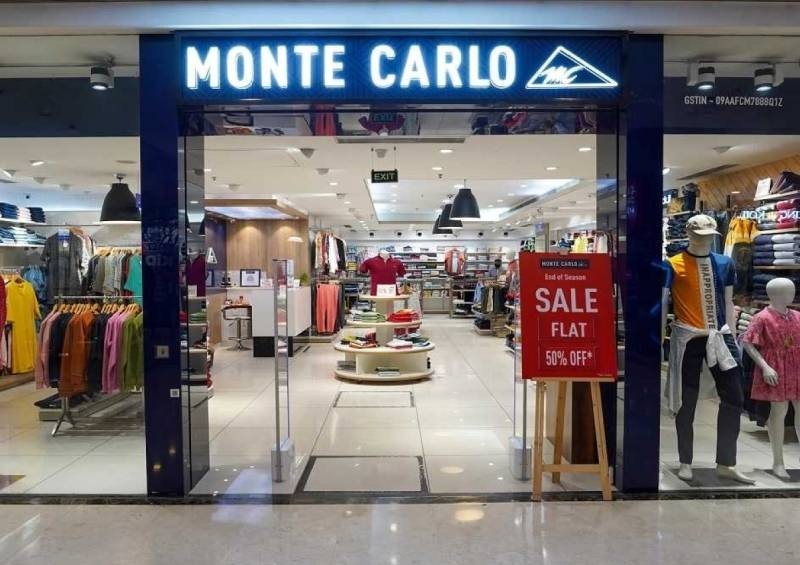
Monte Carlo Fashions Ltd Q4 FY26: The High-Stitch Solar Pivot and the ₹140 Crore Question
Section 1 — At a Glance
Monte Carlo Fashions Ltd has pulled off an energetic operational recovery in the final stretch of the fiscal year 2026, punctuated by a ₹1,275.91 crore annual top-line. The headline numbers indicate that structural optimization is beginning to take root, with full-year revenue growing 15.95% year-on-year and net profit expanding to ₹111.73 crore. Investors are focusing intently on the brand’s rapid volume gains in the non-winter and summer segments, which have effectively leveled the playing field with its legacy winterwear portfolio.
However, beneath the cozy luxury of its premium apparel, a dense architecture of balance sheet commitments is provoking analytical scrutiny. Operating borrowings have escalated sharply to ₹584.89 crore. At the same time, the working capital architecture remains profoundly gridlocked, with a cash conversion cycle sitting at a staggering 384 days. Profits that cannot find their way back to the bank account as unencumbered liquidity are simply options on future survival. A critical development is the brand’s massive, debt-financed entry into a 35 MW utility-scale solar IPP project in Madhya Pradesh. This diversification introduces infrastructure execution risk onto an already asset-heavy retail framework. The core question is whether Monte Carlo’s premium pricing power can liquefy its massive working capital pile before its non-apparel capital expenditures alter its fundamental credit profile.
Section 2 — Introduction
Monte Carlo Fashions Ltd occupies a highly specific niche within the Indian consumer discretionary basket. Long recognized as the nation’s premier organized brand for high-end woolen knitwear, the company has spent the last decade trying to shed its structural identity as a single-quarter wonder. This analysis is prompted by the closing of the fiscal year 2026 financial cycle, a period where management has explicitly aggressive store expansion targets and entered deep commercial alignments with quick-commerce providers like Blinkit and Swiggy. The company is simultaneously standing up an independent green infrastructure subsidiary. This transition from retail storefronts to tracking solar tariffs marks a dramatic turning point in its corporate lifecycle.
Section 3 — Business Model: WTF Do They Even Do?
At its core, Monte Carlo operates a premium outsourced and in-house apparel retail matrix. It leverages deep legacy roots across the northern and eastern clusters of India to sell everything from mid-premium cotton shirts to premium woolen cardigans and home mink blankets.
The structural mix is split between two primary fibers: cotton wear at 55.1% and winter woolen collections at 27.7%, supplemented by a 10.2% home textiles footprint. It scales its reach via an omni-channel apparatus spanning 497 Exclusive Brand Outlets (EBOs), 1,615 Multi-Brand Outlets (MBOs), and a vast array of Large Format Stores (LFS) and shop-in-shops. While it positions itself as a designer lifestyle house, its real operational engine acts as a credit-greased distribution channel pipeline that pumps inventory into third-party multi-brand stores across regional India.
Section 4 — Financials Overview
Figures are consolidated, in ₹ crore.
Quarterly & Annual Performance Table
Metric
Q4 FY26
YoY (Q4 FY25)
QoQ (Q3 FY26)
Full FY26
Full FY25
YoY Annual
Revenue from Operations
280.30
205.93
608.38
1,275.91
1,100.41
15.95%
EBITDA (Excl. Other Income)
25.86
5.96
165.75
227.18
186.53
21.79%
Profit After Tax (PAT)
5.04
-10.28
106.84
111.73
79.80
40.01%
Reported EPS (₹)
2.43
-4.96
51.53
53.89
38.49
40.01%
Financial Performance Commentary
The fourth quarter of any fiscal is traditionally an off-season transition phase for a winter-skewed brand. However, Q4 FY26 registered an operational bounce, turning a PAT loss of ₹10.28 crore in the base quarter into a positive net profit of ₹5.04 crore. This performance was driven by an expansion in non-winter volumes and highly optimized discount control. Annual EBITDA margins rose to 17.81%. This demonstrates that price hikes of 7% to 8% successfully counterbalanced cotton raw material inflation. The explosive quarterly volatility—where Q3 delivers the bulk of annual profits while Q4 barely skims past break-even—proves that seasonality is an operational reality that optimization can smooth out but never fully eliminate. A company’s true operational health is revealed not during its seasonal peak, but by how cleanly it handles inventory liquidations during the off-season.