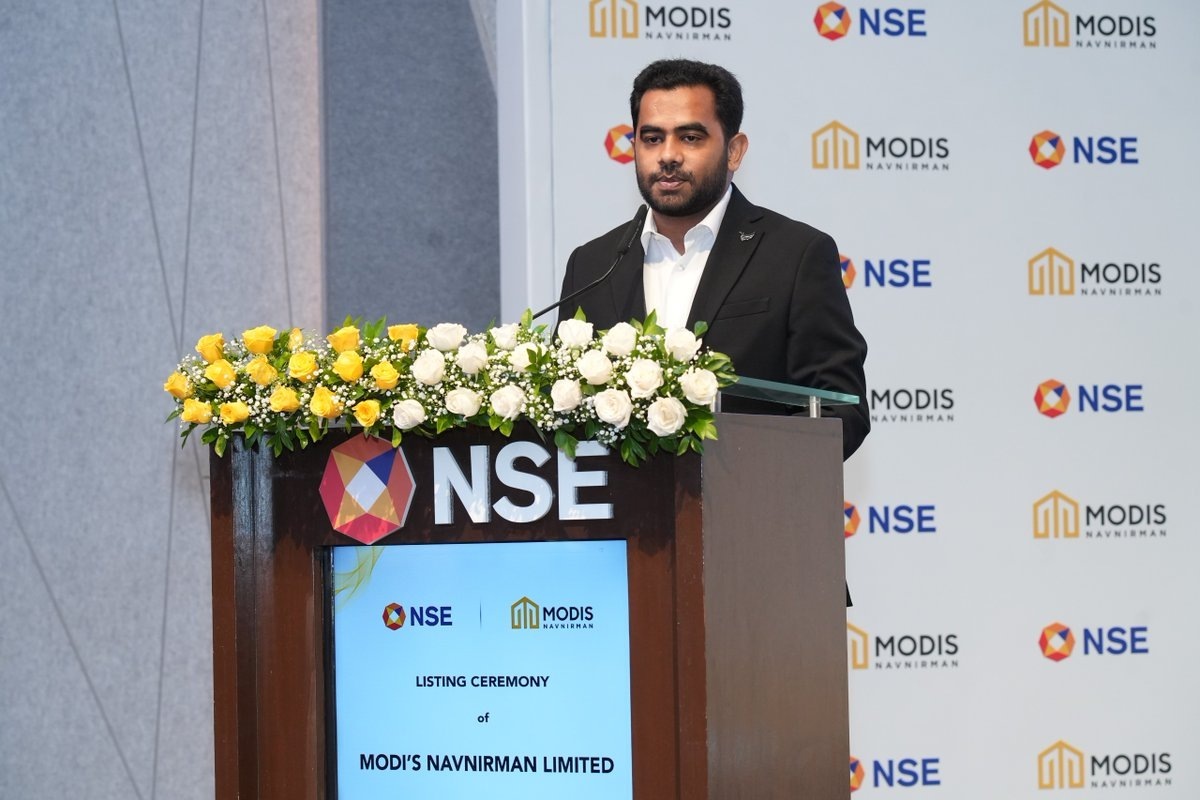
Modis Navnirman Ltd Q4 FY26: The Illusion of Massive Growth Exploded by a Silent Shift to Ind AS
1. At a Glance
Modis Navnirman Ltd is triggering serious whiplash across the micro-cap landscape. At first glance, the headline numbers look like pure real estate wizardry. The company reported a massive full-year FY26 revenue of ₹189.31 crore, up from ₹102.91 crore in the previous year, while its annual profit after tax surged to ₹29.18 crore. Dig deeper into the latest Q4 FY26 corporate filings, and the quarterly year-on-year metrics look even more spectacular: quarterly sales growth of 158% and a net profit jump of 192% over the same period last year.
But as any seasoned financial detective knows, when a small-cap real estate player suddenly supercharges its engine, you don’t just look at the speedometer—you pop the hood to check for accounting nitrous oxide.
The core financial tension brewing beneath this spectacular growth is a structural change in how the company counts its cash before it’s even hatched. Coinciding with its recent migration from the BSE SME platform to the Main Board of both the BSE and NSE, Modis Navnirman quietly abandoned its historical accounting practices. Out went the traditional Generally Accepted Accounting Principles (GAAP) project completion method. In came Indian Accounting Standards (Ind AS), introducing the highly volatile percentage of completion method.
By changing the rules of the game, revenue that would have historically been locked up until a project received its final Occupation Certificate (OC) is now being recognized on day one, including sales of additional spaces to existing members in redevelopment schemes. This means the blistering topline growth is heavily driven by a structural accounting acceleration rather than pure brick-and-mortar execution cadence.
While management chest-thumps about its pristine “debt-free” balance sheet, the cash flow statement tells a completely different story. The business generated an operating cash outflow of ₹2.33 crore for FY26, bringing its cumulative free cash flow deeply into negative territory over the past few years. How can a business boast massive profits, claim to be debt-free, and still lose cash on its core operations? We are about to strip away the glossy marketing brochures and dissect the raw financial skeleton of this Mumbai suburban developer.
2. Introduction
Modis Navnirman Ltd was incorporated in 2010 and operates in the hyper-competitive, high-stakes sandbox of residential real estate development and redevelopment, focusing almost exclusively on Mumbai’s western suburban micro-markets like Borivali, Kandivali, Malad, Goregaon, and Dahisar. In a market historically plagued by highly leveraged developers, toxic debt cycles, and delayed deliveries, Modis has spent the last few years attempting to carve out a niche as a disciplined, nimble redeveloper.
The corporate structure underwent a significant evolution over the past year. On October 16, 2025, the company completed a fast-track amalgamation, merging its wholly owned subsidiary, Shree Modis Navnirman Private Limited, into the listed parent entity after securing over 90% shareholder approval. This move was followed closely by its formal migration from the SME exchange to the Main Board on November 14, 2025. To cap off its corporate restructuring, the company established the Modis Navnirman Foundation in January 2026, ostensibly to handle its ESG and community urban transformation initiatives.
The company’s capital structure has also been heavily engineered. In FY23, it issued an aggressive 3:1 bonus share allotment, expanded its authorized capital from ₹4.50 crore to ₹17 crore, and listed on the BSE SME platform. By March 2024, the capital engine was fueled further via a preferential allotment of 5 lakh fully convertible warrants, raking in ₹10.50 crore. Today, it commands a market capitalization of ₹680.41 crore, positioning it as an ambitious micro-cap fighting for visibility among institutional investors who have recently begun climbing on board.
3. Business Model – WTF Do They Even Do?
To the smart but lazy investor, real estate seems simple: buy land, build a concrete box, sell it for a premium, repeat. But Modis Navnirman doesn’t operate in a standard greenfield market. They specialize in the absolute regulatory and emotional nightmare that is Mumbai urban redevelopment.
The model relies on taking over old, dilapidated housing society complexes (like the recently bagged New Chitra Society or the Bank of India Staff Sheetal Society), convincing anxious tenants to hand over their properties, tearing the structures down, and putting up premium multi-story residential towers. The developer gives a portion of the newly built space back to the original society members for free (or sells additional area to them) and makes its real profit by selling the remaining “free-sale component” to new affluent buyers at prevailing market rates.
Historically, the company depended heavily on specific flagship assets. In FY23, its revenue was highly concentrated: the Rashmi Jewel project single-handedly brought in 50% of the topline, followed by Rashmi Enclave at 21%, Rashmi Terrace at 17%, and Rashmi Kavita at 7%. Recognizing the danger of putting all its concrete eggs in one basket, the company has scaled its pipeline, claiming to have delivered 11 projects totaling over 4.50 lakh square feet, with an ongoing and upcoming pipeline that management states has a Gross Development Value (GDV) surpassing ₹1,000 crore.
The catch? In redevelopment, you don’t own the underlying land outright from day one; you own a development mandate. If project approvals get stuck in the municipal corridors of Mumbai, or if a single society member files a lawsuit, your capital gets locked up in an expensive waiting game.
4. Financials Overview
Let us look past the press releases and audit the performance across the key reporting periods. All raw numbers are extracted directly from the official audited consolidated financial statements, reported originally in ₹ lakhs and converted here to ₹ crores using the standard formula (₹1 Crore = ₹100 Lakhs) for structural clarity.
Consolidated Performance Matrix
Metric
Latest Quarter (Q4 FY26)
Same Quarter Last Year (Q4 FY25)
Previous Quarter (Q3 FY26)
Revenue from Operations
₹51.49 cr
₹19.94 cr
₹54.43 cr
EBITDA
₹7.56 cr
₹3.92 cr
₹14.85 cr
PAT
₹4.41 cr
₹1.51 cr
₹12.77 cr
Annualised EPS (₹)
₹9.00
₹3.08
₹26.08
Recalculated P/E Ratio
38.56x
112.66x
13.31x
Note: In accordance with results locking rules, the March 2026 quarter represents the balancing figures of the full audited fiscal year. Annualised EPS for Q4 and individual quarters are processed dynamically via behind-the-scenes algorithms to ensure trailing valuation comparisons remain robust.
The numbers indicate a massive sequence of volatility.