1. At a Glance
If corporate real estate were a cricket match, Mindspace Business Parks REIT is that consistent No. 3 batsman who never swings wildly but keeps hitting classy boundaries. At ₹ 469 a unit and a market cap of ₹ 28,566 crore, Mindspace has quietly compounded investor smiles with a 23.4 % one-year return and an 11.7 % 3-month sprint. The latest quarter (Q2 FY26) saw revenue at ₹ 7,778 million, Net Operating Income (NOI) of ₹ 6,339 million, and a cool ₹ 3,551.54 million distribution — translating to ₹ 5.83 per unit.
The portfolio keeps expanding faster than a LinkedIn “We’re Hiring” post — now spanning 31 million sq ft across Mumbai, Pune, Hyderabad, and Chennai. It’s also winning more British Safety Council awards (11 swords of honour this year) than some companies have functioning elevators.
Despite a serene dividend yield of 1.71 %, a P/E of 55, and an EV/EBITDA of 17.9×, the REIT’s calm hides a debt pile of ₹ 11,259 crore — roughly the GDP of a small Indian district. But hey, that’s the price of owning skylines.
2. Introduction – The Real-Estate Monk with a Dividend Habit
Once upon a lease, India’s office parks were dusty spaces with bad coffee. Then came K Raheja Corp Group, the sponsor behind Mindspace REIT, who decided that cubicles deserved landscaping and fountains. The result? Glass towers with more square footage than small nations, leased to IT royalty from Amazon to Accenture.
Mindspace REIT was among the first few to bring the REIT party to Dalal Street under SEBI’s 2014 regulations. Since listing, it’s been the quiet, rent-collecting neighbour to flashier cousins like Embassy REIT or Nexus Select Trust — the kind that doesn’t gossip but keeps paying dividends like clockwork.
What makes Mindspace a curious creature is its dual identity: part real-estate landlord, part yield instrument, and lately, part sustainability crusader, having approved up to 35 MW of solar investment. And if you think REITs are boring, this one’s been flirting with debt markets harder than a fintech startup — issuing multiple non-convertible debentures (NCDs) and sustainability-linked bonds (SLBs) worth thousands of crores.
So yes, while your fixed deposit sulks at 6 %, Mindspace keeps distributing cash every quarter with the calm of a monk and the precision of an auditor.
3. Business Model – WTF Do They Even Do?
Mindspace REIT owns, manages, and leases out Grade-A office parks — the kind where every parking space looks like a tech CEO’s résumé. Tenants sign long-term leases (5–10 years typical) that produce predictable rent streams, making it the Netflix subscription of real estate — auto-renewing and cash-flowing.
Its five integrated business parks and five standalone office assets span 31.3 million sq ft, out of which 23.9 million sq ft is completed and 1.8 million sq ft is under construction. The remaining 5.6 million sq ft sits in the “future development” folder — corporate for “we’ll build it when the CFO stops frowning.”
The geographical mix is a four-city orchestra:
- Mumbai Region: 39–41 % of revenue (Mindspace Airoli East & West, Paradigm Malad, Avenue 61 BKC)
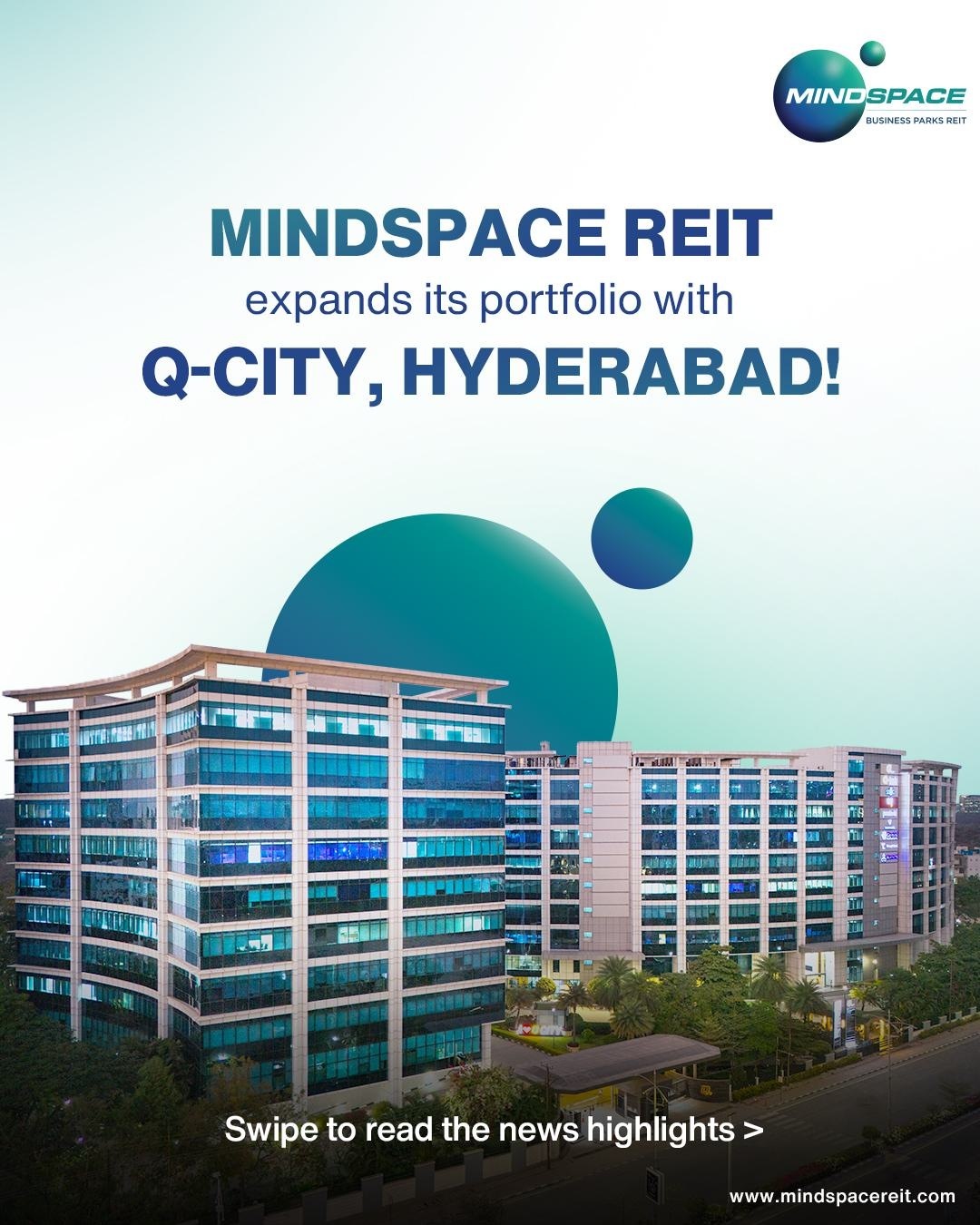
- Hyderabad: ~40 % (Mindspace Madhapur, Pocharam, and freshly acquired Q City IT Park)
- Pune: ~16 % (Commerzone Yerwada & Kharadi)
- Chennai: ~3 % (Commerzone Porur)
Revenue streams hum from rentals, common-area income, and parking, with