01 — At a Glance
The Footwear Frenzy: Growth, Expansion, Chaos
- 52-Week High / Low₹1,340 / ₹890
- Q3 FY26 Revenue₹811 Cr
- Q3 FY26 PAT₹128 Cr (Q3 unaudited)
- Q3 EPS (₹)₹4.71 (annualised: ₹18.84)
- 9M FY26 Revenue (Cumulative)₹1,864.62 Cr
- Book Value₹66.7
- Price to Book14.3x
- Dividend Yield0.58%
- Debt / Equity0.79x
- Interim Dividend (Jan 2026)₹3/share
Auditor’s Opening Thought: Metro Brands just posted its highest-ever quarterly revenue—₹811 crore in Q3 FY26, up 15.4% YoY. PAT crossed ₹128 crore (Q3 unaudited), up 35.7% YoY. EBITDA margin held firm at ~33%. The company just started paying dividends seriously again (₹3/share interim) and announced CEO reappointment through June 2031. Sounds great. Until you look at the P/E: 66.7x. That’s not a valuation. That’s a hope factory. Markets are betting on forever growth from a company selling shoes.
02 — Introduction
Welcome to Footwear Retail, Where Everything Costs 14x Book Value
Metro Brands is India’s largest footwear retailer by market capitalisation. That sounds impressive until you realise the footwear market itself is fragmented, competitive, and full of unbranded players who frankly don’t care about your investor thesis. Yet Metro has managed something remarkable: a 71.8% promoter-owned, 966-store network across 211 cities with in-house brands generating 71% of revenues and third-party partnerships (Crocs, Clarks, FILA, Foot Locker, New Era) doing the rest.
The company has delivered three consecutive quarters of double-digit revenue growth. PAT is up 35.7% YoY in Q3. EBITDA margins are holding at 33%. Cash on the balance sheet sits at ₹882 crore. The business model is asset-light—they don’t manufacture anything, just design, retail, and sell. What could possibly be wrong? Everything. Nothing. Depends on your faith in footwear.
Q3 FY26 was described by management as “a quarter without any unusual events”—which is corporate speak for “we sold a lot of shoes and nothing broke.” The concall transcript is gold: management explicitly said they don’t want to grow e-commerce mix at the cost of profitability, they’re being measured on format expansion due to supply chain headwinds, and they’re fundamentally bullish on premiumisation (55% of sales now >₹3,000). This is a company that knows exactly what it’s doing, even if the market has priced in 10 years of perfection upfront.
Management Quote (Feb 2026 Concall): “We see no reason for these numbers not to stay in the range that we’ve always guided to.” Translation: We expect double-digit growth forever. Good luck auditing that claim.
03 — Business Model: Sell Shoes. Own Nothing.
The Asset-Light Dream That Actually Works
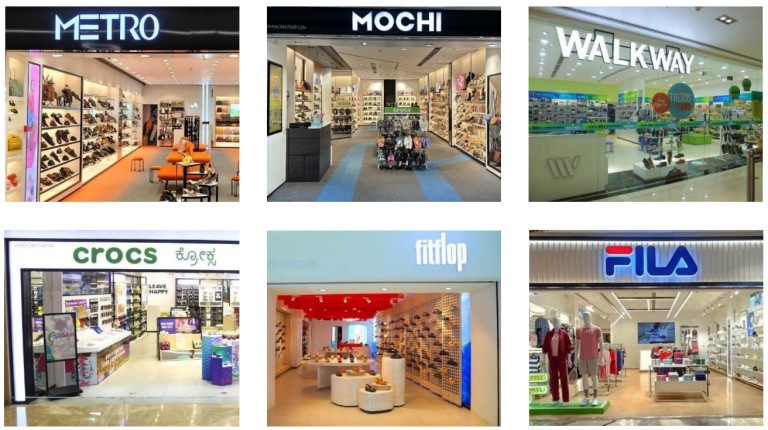
Metro Brands operates 966 stores (as of Dec 2025, Q2 FY26 data) across 8 distinct formats. The flagship “Metro” brand targets family customers. “Mochi” targets youth. “Walkway” targets price-conscious buyers. Then come the EBOs (Exclusive Brand Outlets) for third-party partnerships: Crocs, Clarks, FILA, Foot Locker, New Era, Fitflop. Each format has different unit economics, different margins, different growth trajectories. It’s a platform strategy disguised as a footwear retailer.
In-house brands contribute 71% of revenue. Third-party brands (including the hot new format Foot Locker) contribute 29%. The company doesn’t own a single manufacturing facility. All production is outsourced to 250+ vendors, mostly in and around Mumbai metro. Pay-on-sale agreements with most third-party brands mean working capital is actually negative or near-zero. Aging inventory can be returned. This is why cash generation is so strong: the business runs on other people’s capital.
The distribution network is deep: 31 states, 211 cities (H1 FY26), 18+ million loyalty members. E-commerce is now 12% of sales (up from 10.2% in FY25). Omni-channel (click-and-collect, ship-from-store) is 4%. The rest is good old brick-and-mortar. Management explicitly said they don’t want to grow e-commerce mix “at any cost”—they want profitable digital, not vanity numbers. That maturity is rare in Indian retail.
Stores (Dec 2025)966Footprint
Cities211Geographic
In-house Brands71%Revenue Mix
Loyalty Members18+ MnEngagement
Store Economics Matter: Management hasn’t given official unit economics, but concall commentary suggests new stores are profitable by month 20–24. Closures are “routine portfolio hygiene”—about 2–3% of the base gets trimmed yearly for location/format mismatch. Philosophy: open as many stores as make sense, not as many as some fixed target demands.
💬 Quick thought: Would you trust a footwear retailer’s gross margin more than a luxury FMCG brand’s? Metro is betting you would. What’s your take?
04 — Financials Overview
Q3 FY26 by the Numbers
Result type: Quarterly Results (Q3 Unaudited) | Q3 FY26 EPS: ₹4.71 | Annualised EPS (Q3×4): ₹18.84 | 9M FY26 EPS Cumulative: ₹10.61
| Metric (₹ Cr) |
Q3 FY26
Dec 2025 |
Q3 FY25
Dec 2024 |
Q2 FY26
Sep 2025 |
YoY % |
QoQ % |
| Revenue | 811 | 703 | 651 | +15.4% | +24.6% |
| EBITDA | ~268 | ~225 | ~172 | +19.1% | +55.8% |
| EBITDA Margin % | 33% | 32% | 26% | +100 bps | +700 bps |
| PAT | 128 | 94 | 69 | +35.7% | +85.5% |
| EPS (₹) | 4.71 | 3.48 | 2.49 | +35.3% | +89.2% |
Accounting Note – What the CFO Actually Said: PAT margin at ~16% for both standalone and consolidated (Q3 unaudited). But note the Ind AS lease accounting impact (~1.2–1.3% ongoing PAT margin drag vs pre-Ind AS). Also, INR3.3 crore accrual for the new proposed Labour Code (November 2025) affected Q3 PAT. Strip these out, and “real” operating performance is even stronger. Still, the reported numbers are what they are: growth is real, QoQ improvement is dramatic, and the 800+ crore quarterly revenue milestone is genuine.
05 — Valuation: Fair Value Range
When P/E of 66.7x Looks “Reasonable” (It Doesn’t)
Join 10,000+ investors who read this every week.