Meghmani Organics Ltd Q4 FY26: The Tale of Volatile Agrochemicals, Bleeding TiO2, and the Margin Illusion
1. At a Glance
The global specialty chemical arena is not for the faint-hearted. For a company like Meghmani Organics Limited (MOL), boasting a massive footprints across 75 countries, the latest audited financial results for the quarter and fiscal year ended March 31, 2026, serve as a stark reminder that scale does not automatically guarantee structural profitability.
Investors tracking the chemical sector have watched with intense curiosity as this enterprise aggressively diversified away from its traditional copper phthalocyanine pigments and core crop protection lines into alternative segments like Titanium Dioxide and Nano Urea liquid fertilizers. Yet, beneath the narrative of building a globally competitive, comprehensive product range, a series of systemic red flags has begun to emerge.
For the full fiscal year 2026, the consolidated revenue reached ₹2,174 crore, representing a modest 4.53% expansion over the previous fiscal. However, when we look closer into the fourth quarter of the fiscal, the operational machinery shows clear signs of friction. Standing at ₹474.34 crore, the Q4 FY26 consolidated sales collapsed by 14.30% compared to the ₹553.46 crore reported in the same quarter last year.
Worse still, the bottom line is flashing deep shades of operational stress. Consolidated net profit for Q4 FY26 came in at a meager ₹8.03 crore. While this looks optically superior to some of the loss-making periods in the historical columns, it marks a devastating 59.49% decline from the ₹19.82 crore pocketed in the corresponding prior-year quarter.
The fundamental distress is anchored in an asset that was supposed to unlock massive import substitution value: Kilburn Chemicals Limited (KCL), the wholly-owned Titanium Dioxide subsidiary acquired through the corporate insolvency resolution process. Instead of acting as an engine of high-margin growth, Kilburn has transformed into a major operational drag on the consolidated entity.
Due to a bizarre procedural failure that led to the sudden withdrawal of Anti-Dumping Duties (ADD) on cheap Chinese imports, combined with an unprecedented cost explosion in critical raw materials like sulfuric acid, management was forced to make a painful decision. They completely shut down the $TiO_2$ plant to stop cash from bleeding out of the system.
With fixed overheads continuing to run empty factories and global trade barriers shifting against their primary export markets, the structural core of this business is under severe pressure. Can the company’s ambitious domestic crop nutrition pipeline and corporate restructuring actions reverse this operational decay before the debt burden becomes unsustainable? Let us take a deeper look.
2. Introduction
Meghmani Organics Limited operates as a highly integrated chemical conglomerate with an enduring journey spanning nearly four decades. Established originally in 1986 as M/s Gujarat Industries in the industrial belt of Vatva, Ahmedabad, the entity has scaled up its manufacturing footprint to encompass 9 specialized manufacturing facilities strategically positioned across the chemical hubs of Gujarat, including Dahej, Panoli, and Ankleshwar.
The structural core of the business is distributed across three primary verticals: Crop Protection (Agrochemicals), Pigments (Phthalocyanine-based blues and greens), and Crop Nutrition (Nano fertilizers). Historically, the enterprise achieved its market dominance by carving out an 8% global market share in copper phthalocyanine blue pigments, positioning itself among the top three capacity players globally, while simultaneously climbing the ranks to become one of the top ten pesticide producers in the domestic Indian landscape.
The business model is intrinsically tied to international trade cycles, with exports contributing a massive 83% to 85% of total operational revenues in recent periods. This hyper-dependence on global agricultural and industrial cycles leaves the company deeply exposed to geopolitical friction, oceanic logistical bottlenecks, and localized tariff adjustments.
The entry into the white pigment ($TiO_2$) space via the acquisition of Kilburn Chemicals was designed to create a powerful domestic hedge, given that India imports nearly 79% of its annual 4,85,000 MTPA Titanium Dioxide requirement. Similarly, the establishment of a 5-crore bottle per annum Nano Urea liquid fertilizer plant at Sanand through a technology transfer agreement with IFFCO was intended to capture a slice of the government’s massive import-substitution and subsidy-reduction initiatives.
However, executing a multi-front capital allocation strategy demands flawless operational execution. Over the past several quarters, the company has had to absorb severe macro shocks, ranging from a steep 50% tariff hike on certain exports to the United States to severe demand destruction across the European continent.
As a result, the consolidated financials reflect a business fighting hard to defend its margins while its capital is tied up in underutilized multi-purpose plants and a temporarily mothballed chemical facility. Understanding the true economic reality of this business requires analyzing exactly how these distinct manufacturing engines convert raw chemical compounds into actual free cash flow.
3. Business Model – WTF Do They Even Do?
To put it bluntly, Meghmani Organics spends its days handling toxic, highly regulated, and extremely capital-intensive chemical processes to create products that either kill bugs or make everyday items look colorful.
In their Agrochemical division, which consistently commands over 70% of the total revenue mix, they build everything from basic technical grade pesticides to advanced crop formulations. They are exceptionally good at backward integration. Instead of importing intermediate building blocks, they manufacture core components like cypermethric acid chloride, meta phenoxy benzaldehyde, and meta phenoxy benzyl alcohol in-house.
These long-named inputs are the foundational bedrock for pyrethroid insecticides and herbicides like 2,4-D, which are eventually sprayed over corn and soybean fields from Punjab to the plains of Brazil. They sell these formulations under brand names like Megacyper, Megaban, and Synergy to roughly 10 million farmers globally.
Financial Wisdom: True competitive advantage in the chemical manufacturing architecture is rarely about finding a secret formula. It is about deep physical asset integration. By manufacturing the raw intermediates that your competitors are forced to import, you create an internal margin buffer that protects the business during structural downturns. If your backward integration chain breaks or faces a utilization crash, that buffer evaporates, leaving you exposed to volatile global commodity pricing.
Then comes the Pigments division, turning out raw Alpha Blue, Beta Blue, and Pigment Green structures. If you are reading a glossy magazine, looking at a freshly painted automotive chassis, or staring at a bright blue plastic container, you are likely looking at Phthalocyanine chemistry.
The company recently layer on top of this a Titanium Dioxide ($TiO_2$) infrastructure, which is essentially the master white pigment used across the globe to give paints, plastics, and paper their opacity and brightness.
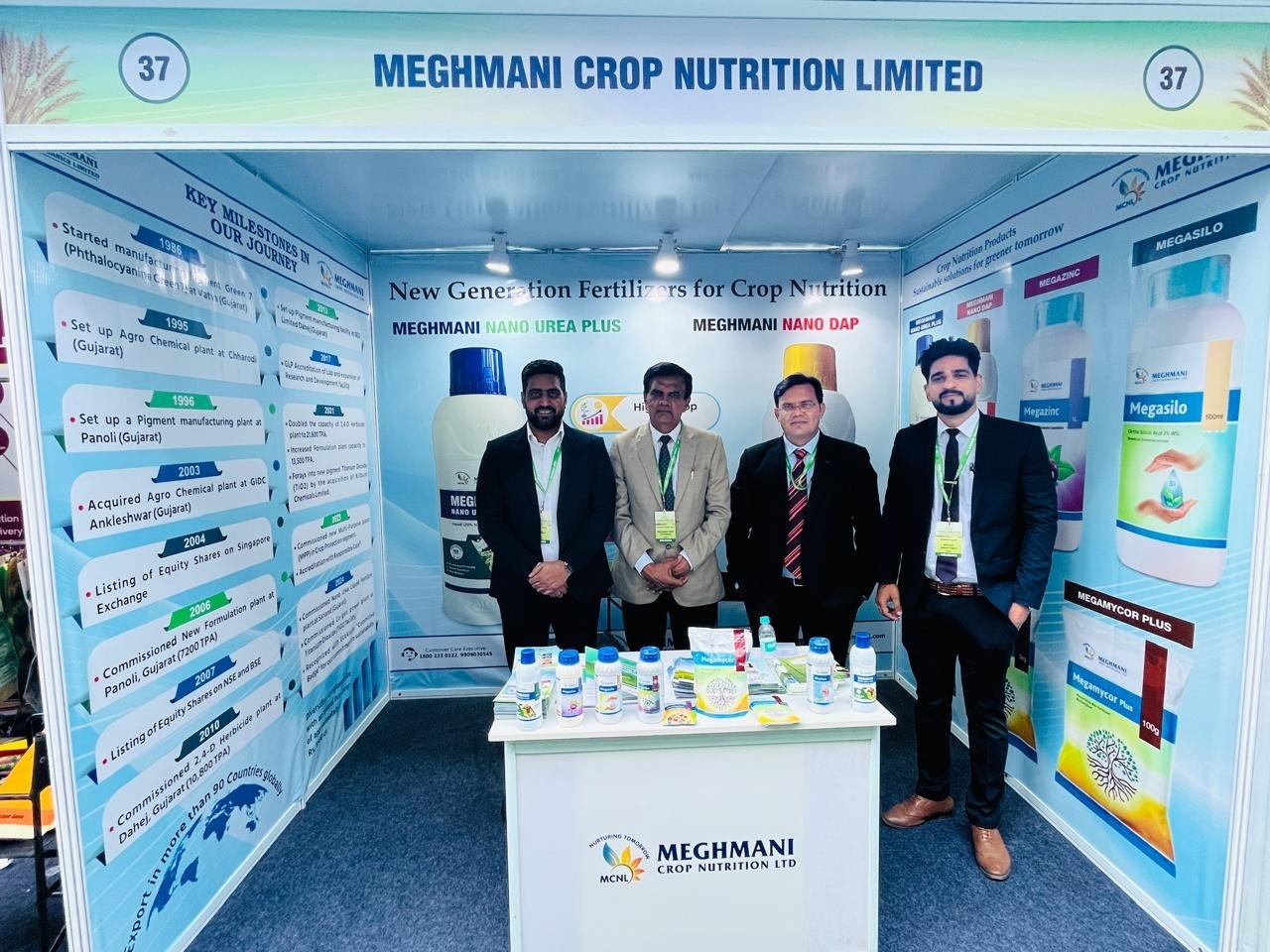
Finally, their youngest child is the Crop Nutrition division at Sanand, which manufactures Nano Urea, Nano DAP, and Nano NPK. Rather than forcing farmers to carry heavy 45 kg bags of conventional solid urea, they pack an equivalent nitrogen kick into a tiny 500 ml bottle of liquid.
It is high-tech, boasts a superb 80% nutrient delivery efficiency compared to just 30% for traditional bags, and carries massive theoretical margins. The catch? The segment currently contributes a microscopic 4% to total revenues, making it an expensive, underutilized piece of machinery waiting for global regulatory approvals to trigger volume growth.
Are these new product approvals coming fast enough to offset the structural slowdown in the core chemical lines? Let us know your thoughts in the comments section below.
4. Financials Overview
A serious look at the core numbers confirms that while the standalone operations are putting up a brave fight, the consolidated entity is bearing the scars of its non-performing subsidiaries.
To ensure complete accuracy and eliminate any reporting confusion, all metrics displayed below preserve the original reporting unit of ₹ Crores as per the official corporate statements.
Financial Performance Comparison Table
The table below tracks the absolute consolidated financial metrics of Meghmani Organics Limited across the crucial reporting periods:
Financial Metric
Latest Quarter (Mar 2026)
Same Quarter Last Year (Mar 2025) (YoY)
Previous Quarter (Dec 2025) (QoQ)
Revenue from Operations
₹474.34
₹553.46
₹508.74
EBITDA
₹19.72
₹65.48
₹37.73
OPM %
4.16%
11.83%
7.42%
Net Profit (PAT)
₹8.03
₹19.82
(₹3.53)
Earnings Per Share (EPS)
₹0.32
₹0.78
(₹0.14)
Recomputed P/E and Annualized EPS Analysis
Calculating the true valuation multiples for this business requires careful navigation of the underlying quarterly filings. Based on the official text, the company reports on a strict quarterly cadence, requiring the implementation of standard annualization protocols for the final quarter of the financial year.
For the period ending March 2026 (Q4), we utilize the actual audited full-year trailing EPS to evaluate the true price-to-earnings architecture without distorting the calculation via single-quarter multiplying shortcuts.
The standalone numbers tell us that the core business managed to scrape together a full-year net profit of ₹125.30 crore. However, when Kilburn Chemicals and Meghmani Crop Nutrition are dragged into the consolidation mix, the full-year net profit collapses down to just ₹28.70 crore.
Reviewing past management commentary reveals a significant gap between corporate guidance and operational reality. In earlier calls, the management group actively guided for strong double-digit consolidated EBITDA margins and a rapid scaling of the Multi-Purpose Plant (MPP) assets in Dahej to hit ₹1,000 crore by FY28.
Instead, the consolidated operating margin has fallen off a cliff, tumbling from 11.83% in March 2025 to a razor-thin 4.16% in March 2026. Management completely failed