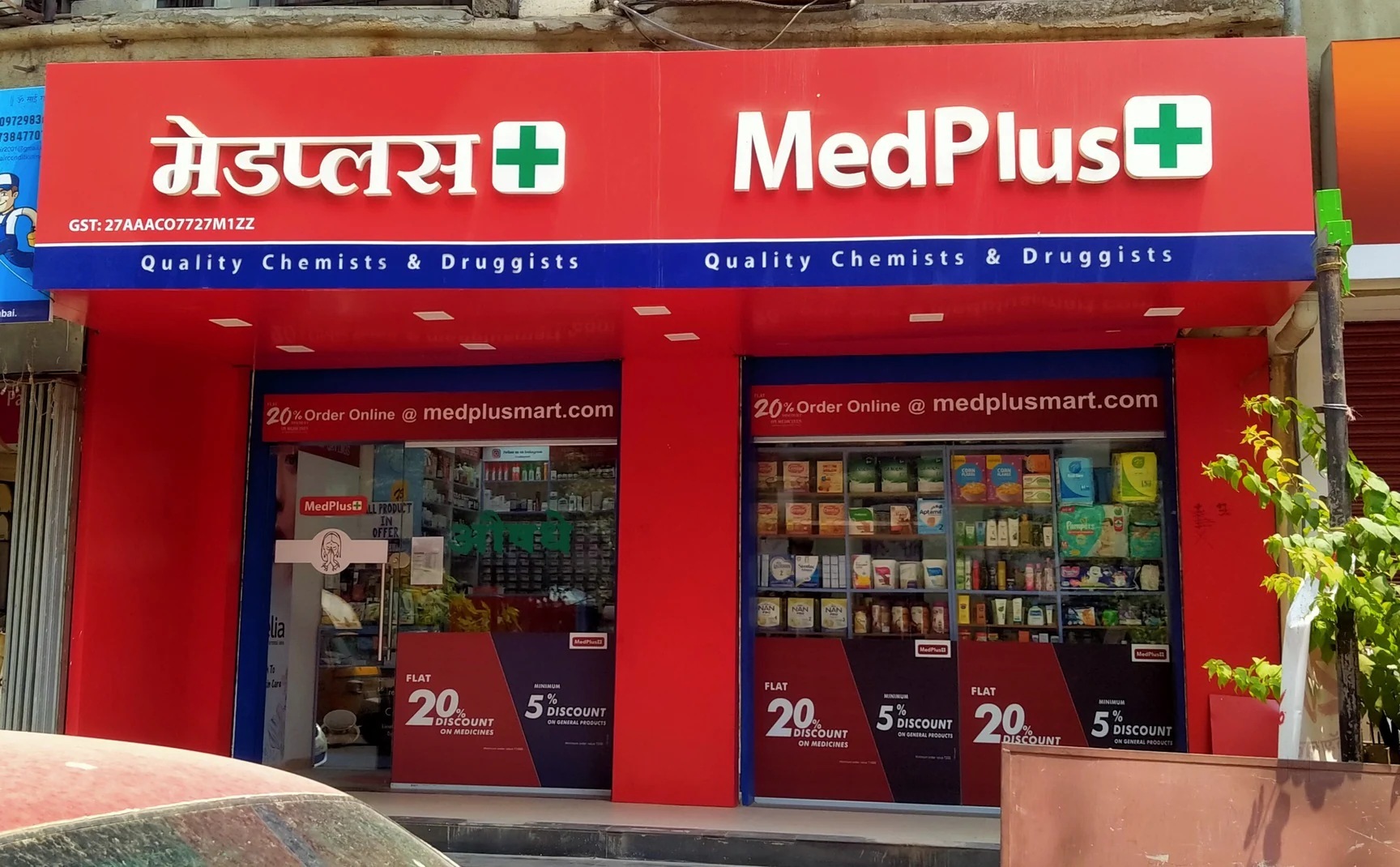
Medplus Health Q4 FY26: A ₹13,817 Million Pill That Is Hard to Swallow
Section 1 — At a Glance
The public market’s relationship with high-growth retail platforms is built on an unwritten pact: investors tolerate heavy upfront infrastructure spending, provided the underlying unit economics display an unmistakable trajectory toward premium capital efficiency. Medplus Health Services Limited presents an intense study in this operational tension. Headline revenue for the full financial year ending March 31, 2026, scaled to an impressive ₹6,892.47 crore, registering a steady 12.33% year-on-year growth from FY25’s ₹6,136.06 crore. Net profit after tax expanded to ₹219.65 crore, a superficially striking 46.12% increase compared to the previous year’s performance of ₹150.32 crore.
However, a granular evaluation of the balance sheet uncovers structural worry signals that complicate this growth narrative. The company has aggressively expanded its brick-and-mortar footprint, which has pinned a substantial amount of capital down into working capital channels. Total inventories at the end of FY26 stood at a restrictive ₹1,381.69 crore, effectively tying up vital liquidity in physical stock. Simultaneously, long-term borrowings expanded markedly from ₹1,119.80 crore to ₹1,424.38 crore inside twelve months, demonstrating an escalating reliance on leverage to grease the wheels of its multi-city expansion. When inventory accumulation outpaces natural velocity, short-term earnings growth often functions as an accounting screen for structural cash consumption. The critical milestone for public market valuation shifts from simple store counts to the immediate cash conversion of mature assets.
Section 2 — Introduction
Medplus Health Services Limited, which debuted on the bourses in late 2021 through a ₹1,398 crore initial public offering, has institutionalized a single-minded operational mantra: cluster-based density over thin geographic reach. Operating primarily as an omni-channel pharmacy retail engine, the enterprise has spent the last half-decade treating every street corner in South and West India as an existential land grab.
By pushing its physical network deep into suburban micro-markets, it attempts to insulate itself from pure-play digital discount aggregators by offering a hybrid edge—hyperlocal stores that double as micro-distribution fulfillment hubs. Yet, managing an infrastructure that spans thousands of company-owned locations introduces significant structural baggage. Every fresh pin code conquered requires non-negotiable capital outlays for long-term lease liabilities, localized inventory setups, and immediate compliance overheads. As the organization aggressively pivots toward small-town tier-two and tier-three centers to sustain its momentum, it faces a fundamental corporate challenge: ensuring that its legacy metro profits are not systematically diluted by the longer gestational horizons of rural storefronts.
Section 3 — Business Model: WTF Do They Even Do?
At its core, Medplus acts as a glorified gatekeeper to your domestic medicine cabinet, using a corporate layout designed to dominate your neighborhood’s healthcare spending. The model relies on an almost fanatical adherence to corporate ownership: approximately 95% of its network consists of company-owned, leased properties, giving it absolute command over storefront presentation, but leaving it completely exposed to fixed rental inflation.
The revenue engine is predominantly powered by branded pharmaceuticals, which account for a massive 64.4% of the sales basket. Because branded drugs have notoriously rigid margins policed by price controls and manufacturer leverage, Medplus tries to balance the scales by peddling its private label portfolio, which contributes a combined 21.7% across pharma and FMCG categories. To round out this mix, they operate three manufacturing facilities in Telangana that churn out everything from spectacles to liquid disinfectants, effectively making them part pharmacy, part retail landlord, and part chemical factory. They also run a young, full-service diagnostics business and a subscription program to capture patient data before they even walk up to the pharmacy counter. It is an integrated retail web designed to capture consumer spend from diagnosis to prescription, provided the fixed overheads do not chew through the register first.
Section 4 — Financials Overview
Figures are consolidated, in ₹ crore.
Quarterly Performance Trend
Metric
Latest Quarter (Mar 2026)
YoY Change (%)
QoQ Change (%)
Revenue
1,864.39
+25.08%
+3.23%
EBITDA / Operating Profit
169.17
+59.79%
+6.65%
PAT
63.98
+91.56%
+10.67%
Reported EPS (₹)
5.33
+91.04%
+10.58%
Medplus concluded the final stretch of the fiscal year with quarterly sales touching ₹1,864.39 crore, showing robust top-line momentum. Operating profits for the three months finished at ₹169.17 crore, a visual pop that benefits substantially from