General information and entertainment, not investment advice. The author is not a SEBI-registered adviser or research analyst. No recommendation, no promised returns. Markets carry risk including loss of capital. Figures may not be current. Consult a registered adviser before acting.
1. At a Glance
Revenue sank 2.6% to ₹1,154 Cr in FY26. Consolidated loss widened to ₹123 Cr from ₹198 Cr in FY25—a marginal improvement, but the chart still points downward. Net cash has vanished; reserves have become negative.
Yet there’s movement: debt restructuring has cleared with NARCL and JCAF, four tea estates earmarked for sale, and a board that’s finally stopped pretending.
The auditor issued an adverse opinion. Lenders assigned ₹323 Cr of exposure to asset managers. The one clean number is the direction of the wind: it’s shifted.
Does a tea company shrinking fast merit attention? Only if the restructuring actually sticks.
2. Introduction
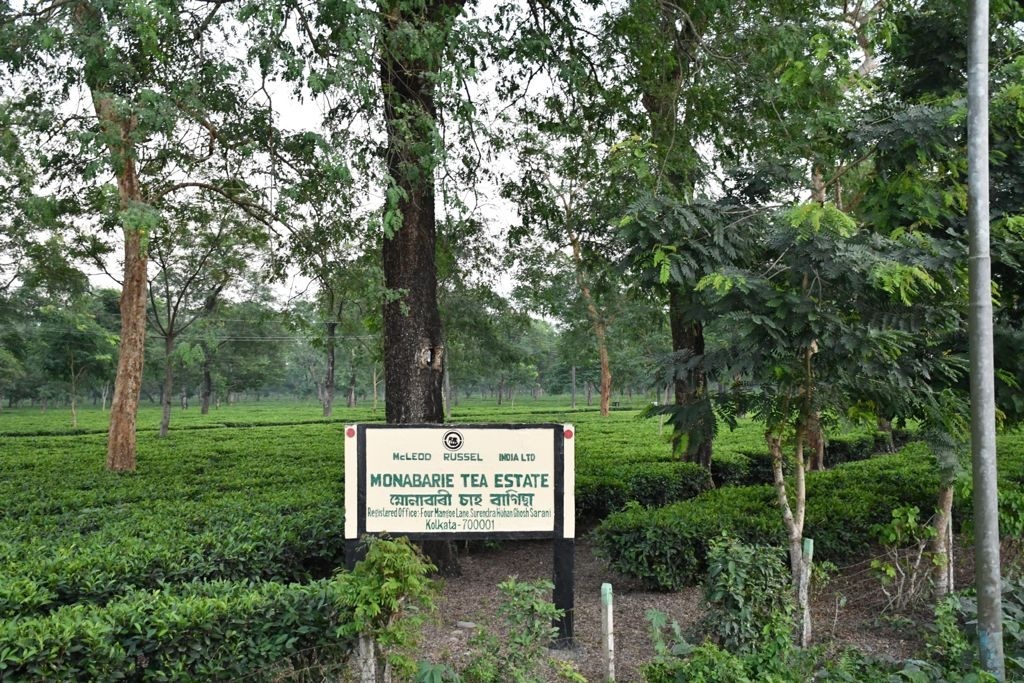
McLeod Russel cultivates, manufactures, and sells tea. It operates 31 estates in Assam, 2 in the Dooars (West Bengal), and owns or controls subsidiaries in Uganda, Vietnam, and Rwanda—though Vietnam’s stake was largely divested in 2023. The company produces mostly CTC tea (96% of output), the commodity darling of Indian blenders and exporters.
B.M. Khaitan Group owns the company. It’s part of the world’s largest tea producer by estate count, though not by volume anymore.
For a decade, the business has hemorrhaged cash. Debt ballooned while output fell. In 2019, the company began inter-corporate lending to the Khaitan group that later became non-recoverable. A NARCL/JCAF restructuring was announced in April 2026 and signed in May. As of the balance sheet date (31 March 2026), the process was incomplete—but the arithmetic had shifted.
3. Business Model: What Are They Even Doing?
The tea business works like this: plant leaves, harvest seasonally, dry and process on-site, auction or sell direct, pocket the margin.
McLeod has scale—33,000 hectares under cultivation—but not market power. The company produces 42 million kg of tea from its own leaf and buys more from other growers to blend and resell. Output is split: ~80% to India, ~15% to Uganda (now a separate operation), ~3% to others. The domestic market is fragmented, price-sensitive, and dominated by a few large players. Exports face competition from Kenya, Vietnam, and China.
The company was run as if it could pay 22% interest on debt while growing slowly. It couldn’t. That fiction ended in 2019 when lenders stopped renewing facilities.
Recent moves: The company has sold 21 estates (mostly in Assam) and marked four more for sale. Production capacity is being condensed into 32 remaining estates. Uganda is now ring-fenced as a subsidiary under Borelli Tea Holdings. Vietnam’s stake was monetized. Asset sales are meant to pay down debt, not fund growth.
4. Financials Overview
Result Type: Yearly (Annual) | Basis: Consolidated | Unit: ₹ Crore | Latest Period: FY26 (March 2026)
| Metric | FY26 | FY25 | Change |
|---|---|---|---|
| Revenue | 1,154.39 | 1,185.41 | -2.6% |
| EBITDA | 48.15 | 84.65 | -43.1% |
| PAT (Net Loss) | (123.50) | (197.87) | 37.6% |
| EPS | (11.82) | (18.94) | 37.6% |
Revenue declined 2.6% as volumes and prices both fell. EBITDA collapsed 43%, signaling margin compression even before interest and tax. The net loss shrank only because the company recorded ₹144.6 Cr in exceptional gains—the debt restructuring write-down of unpayable interest and unsustainable principal.
Strip the exceptional item: the core business lost ₹267 Cr.
Concall Notes: None conducted post-results as of the document date.
5. Market Expectations & Historical Multiples
This section describes how the market is currently pricing the company and how that compares with its own history and peer group. It is descriptive, not predictive.
| Metric | Current | Historical 5-Year Average | Peer Median |
|---|---|---|---|
| P/E | (Negative; loss-making) | Negative | 21.2 |
| EV/EBITDA | (Negative) | Negative | N/A |
| P/B | 0.96 | Negative | 0.9 |
| ROCE | (4.7%) | (1.8%) | 4.8% |
| ROE | (720%) | (90%) | 3.8% |
The market pays ₹64 for a ₹5 book value—a slight discount to the peer median. The company’s book value has collapsed from ₹197 Cr in FY24 to ₹(51) Cr in FY26 owing to cumulative losses and exceptional writedowns.
Negative returns on equity and capital reflect years of value destruction: assets are tied up in low-margin production while debt compounds at punitive rates.
What the market appears to be pricing: a restructuring play with downside risk. The valuation makes sense only if the debt resolution sticks and operations normalize. Otherwise, the equity is worth the paper it’s printed on.
6. What’s Cooking
The only news is resolution progress, announced in May 2026 (after quarter-end):
- NARCL Debt Plan: ₹1,050 Cr sustainable debt over 3 years; ₹119 Cr earmarked for equity conversion (10% dilution); unsustainable portion (₹845 Cr) written off exceptional items. MRA pending execution.
- JCAF OTS: ₹150 Cr one-time settlement on ₹75 Cr borrowed principal; remaining ₹442 Cr forgiven. Effective from April 2026.
- Estate Sales: Four estates (Boroi, Mathura, Nya Gogra, Rupajuli) approved for sale at ₹12.3 Cr expected proceeds. Due diligence ongoing.
- Bank Facility: ₹120 Cr outstanding with one lender (State Bank cluster) remains unresolved. Talks ongoing.
- Inter-Corporate Deposits: ₹276 Cr lent to group companies now written off as unrecoverable. Provision of ₹244.6 Cr already taken.
- Auditor Opinion: Adverse opinion issued on standalone and consolidated results. Eleven specific qualifications flagged, ranging from fair-value testing to labour-code impacts.
- Going Concern: The auditor expressed uncertainty but the company has prepared accounts on a going-concern basis. Dependent on MRA execution and sustained cash generation.
7. Balance Sheet
| Item | FY24 | FY25 | FY26 |
|---|---|---|---|
| Total Assets | 3,536 | 3,594 | 2,353 |
| Net Worth | (50) | 4 | (51) |
| Borrowings | 1,892 | 1,902 | 1,495 |
| Other Liabilities | 1,394 | 1,636 | 908 |
| Assets = Liabilities + Equity? | ✓ | ✓ | ✓ |
Assets halved because of exceptional write-downs on ICDs and revaluation of debt to settlement amounts. Borrowings fell ₹407 Cr, not from repayment but from the NARCL/JCAF restructuring being recorded at fair value (lower than nominal). The company is technically insolvent (negative equity of ₹51 Cr) but has regulatory forbearance because the debt restructuring is conditional.
The balance sheet is in suspension. Any breach of restructuring terms (missing a payment, failing a covenant) and the write-downs reverse, equity turns catastrophically negative, and the lenders can recall.
One wisdom line: A balance sheet that needs an asterisk isn’t a balance sheet—it’s a provisional sculpture.
8. Cash Flow: Sab Number Game Hai
| Year | Operating | Investing | Financing | Net Cash |
|---|---|---|---|---|
| FY24 | 34 | 57 | (100) | (9) |
| FY25 | 72 | (19) | (50) | 3 |
| FY26 | 53 | (14) | (33) | 7 |
Operating cash is barely positive. The business is not generating cash; it’s using working capital reductions and one-time collections to feign liquidity. Once estates are divested and working capital normalizes, burn will accelerate unless volumes and margins recover sharply.
Investing has turned near-zero because capex has been frozen. Financing shows debt repayment, but the repayment is fictitious—it’s the structural reduction in stated borrowings as restructuring rewrites the loan book.
One observation: When the biggest “positive” is that you’re not spending on assets, the game is end-stage cost control, not growth.
9. Ratios: Sexy or Stressy?
| Ratio | FY26 Value |
|---|---|
| ROE | (720%) |
| ROCE | (4.7%) |
| P/E | Negative |
| PAT Margin | (10.7%) |
| D/E | Negative (liabilities exceed equity) |
ROE of (720%) is mathematically exact but narratively useless: divide a ₹123 Cr loss by negative ₹51 Cr equity and the sign flips. The company is destroying shareholder value and has no shareholder value to destroy.
ROCE of (4.7%) means every rupee tied up in tea estates is returning negative yield. Capital is stranded in land and infrastructure that can’t earn back its cost. Depreciation is the only claw-back, and it’s not enough.
P/E is undefined. You cannot value an unprofitable company on price-to-earnings unless you forecast earnings, which the One Rule forbids.
D/E collapsed into negative because net worth is negative. But don’t read that as deleveraged—it’s insolvency. The company has liabilities of ₹2,461 Cr against assets of ₹2,353 Cr, on paper.
10. P&L Breakdown: Show Me the Money
| Metric | FY24 | FY25 | FY26 |
|---|---|---|---|
| Revenue | 1,136 | 1,185 | 1,154 |
| EBITDA | (109) | 85 | 48 |
| PAT (Loss) | (312) | (198) | (123) |
Revenue is in a slow bleed. FY24 to FY26, it fell 1.6% per year on average. Volumes are down 30% since FY17 (from 524 lakh kg to 366 lakh kg). Prices have stayed flat to declining.
EBITDA oscillates between loss and thin profit depending on one-time income items and cost cuts. FY26 shows EBITDA of ₹48 Cr, but this is after stripping ₹140 Cr of exceptional other income (likely write-back of old provisions). Strip that: operating profit is negative.
The net loss trajectory shows mild improvement because exceptional charges hit the P&L in FY26 (₹144.6 Cr debt write-down), but this is not operational recovery—it’s balance-sheet repair. The business is still losing money at the core.
11. Peer Comparison
| Company | Revenue (₹ Cr) | PAT (₹ Cr) | P/E |
|---|---|---|---|
| Tata Consumer | 20,290 | 1,536 | 71.0 |
| CCL Products | 4,457 | 388 | 38.9 |
| Goodricke Group | 801 | 18 | 21.2 |
| McLeod Russel | 1,154 | (123) | — |
| United Nilgiri | 83 | 22 | 11.6 |
McLeod is 8x smaller than Goodricke by revenue and the only peer reporting a loss. Goodricke operates 31 estates (similar count), produces 103 lakh kg (vs 366 lakh for McLeod), and makes money. The margin gap is structural: Goodricke’s PAT margin is 2.2%; McLeod’s is (10.7%).
McLeod has failed at scale where competitors have succeeded. The company’s two responses—cost cuts and asset sales—treat the symptom, not the disease. The disease is that commodity tea from India is no longer as valuable as the tea from Kenya, Indonesia, or Vietnam, and this company has chosen neither to premium-ify nor to exit.
12. Miscellaneous: Shareholding & Promoters
| Holder | % |
|---|---|
| Promoters (Khaitan Group) | 6.24% |
| Institutions | 1.84% |
| Public | 91.92% |
Promoter holding is skeletal. Kavita Khaitan holds 3.83%, other Khaitan entities 2.41%. The low stake reflects earlier dilutions and the company’s need to raise capital without further diluting the promoters.
The Khaitan group is the B.M. Khaitan Group, a Kolkata business conglomerate with interests in tea, plastics, engineering, and financial services. It owns Eveready Industries (batteries), Williamson Magor (tea estates in the group), and stakes in listed entities. The group has allowed McLeod to deteriorate rather than inject capital, suggesting the company is seen as a liability, not a jewel.
One small roast: A promoter owning 6% of a company with negative equity has more skin in the status quo than in recovery—a perverse incentive if ever there was one.
13. Corporate Governance: Angels or Devils?
Auditors: Lodha & Co LLP issued an adverse opinion. The firm flagged 11 specific audit qualifications including non-recognition of interest, fair-value testing pending, unreconciled balances, labour-code impacts, and going-concern uncertainty. This is the third consecutive year of adverse qualification.
Board: Aditya Khaitan (Managing Director, DIN 00023788) and Pradip Bhar (Whole-Time Director, CFO) are the executive directors. Aditya Khaitan was reappointed for three years via postal ballot in May 2026. Pradip Bhar was appointed in April 2026. Amritanshu Khaitan resigned in March 2026.
Pledges: Promoter pledge of equity is minimal (0.06%), reflecting weak security.
Related Party: ICDs of ₹276 Cr were given to group entities and are now non-recoverable. The company has filed suit in the Calcutta High Court for recovery.
Tax/Regulatory: ICRA rating is [ICRA]D; ISSUER NOT COOPERATING. The company did not submit required information for surveillance, and ICRA has not updated its rating since this classification was applied. One arbitration award (September 2025) determined that the company owes ₹50.9 Cr (plus foreign exchange) to claimants on letters of comfort issued for group loans; the company challenged this in Delhi High Court in January 2026, outcome pending.
Labour Code: The company has not recognized the impact of the new Labour Code notified on 21 November 2025. Adjustments are “under evaluation.”
Governance red flags are everywhere, but they are being treated as routine. The auditor’s adverse opinion is not immaterial—it signals the financials cannot be relied upon. The ICRA non-cooperation rating means lenders are locked out of updates. The lack of promoter skin-in-the-game and the group lending losses suggest internal alignment is fractured.
14. Industry Roast & Macro Context
Indian tea is in structural decline. Global tea consumption is flat; Indian tea’s share is shrinking. Darjeeling commands a premium (terroir branding works), but CTC—McLeod’s 96% output—is a commodity. Prices are set at auction in Kolkata, where they compete with Kenya, Vietnam, and Indonesia. Margin compression is not a cyclical risk; it’s the business model.
Labour is expensive and regulated. The new Labour Code will likely raise costs further. Smallholder plantations in Africa and Southeast Asia operate at lower wage floors.
Domestic market is dominated by large blenders (Tata, Unilever, ITC) who source tea from multiple suppliers and negotiate hard. Export markets are equally commoditized.
Climate risk is real: monsoons matter, and Indian weather has become erratic. Pest pressure is rising. Replanting cycles are costly.
The sector has no secular tailwinds. Companies that survive do so by consolidation, premium positioning, or cost leadership. McLeod has tried none of these convincingly.
15. EduInvesting Verdict
| Dimension | Observation |
|---|---|
| Strengths | Scale (31 estates, 33,000 hectares). Established brands in some markets. Certification (Rainforest Alliance, Trustea). Debt now structured with ARCs at lower rates. |
| Weaknesses | Commodity product with no pricing power. Decades of operating losses. Negative equity. Auditor adverse opinion. Unresolved bank facility. Promoter stake minimal. |
| Opportunities | Asset sales can reduce debt. Volume can be stabilized if costs are cut ruthlessly. Exports to niche markets (specialty tea) could command premium if the company repositioned. Consolidation in Indian tea could create M&A value. |
| Threats | Failure to execute MRA or OTS could trigger debt recall. Lenders’ forbearance may not survive a recession or crop failure. Commodity prices could fall further. Labour costs will rise under new code. Public shareholding is highly dispersed and uninformed. |
One Closing Line: A balance sheet with nothing to hide, a multiple with everything to prove—but the company has finally stopped pretending and started restructuring.
