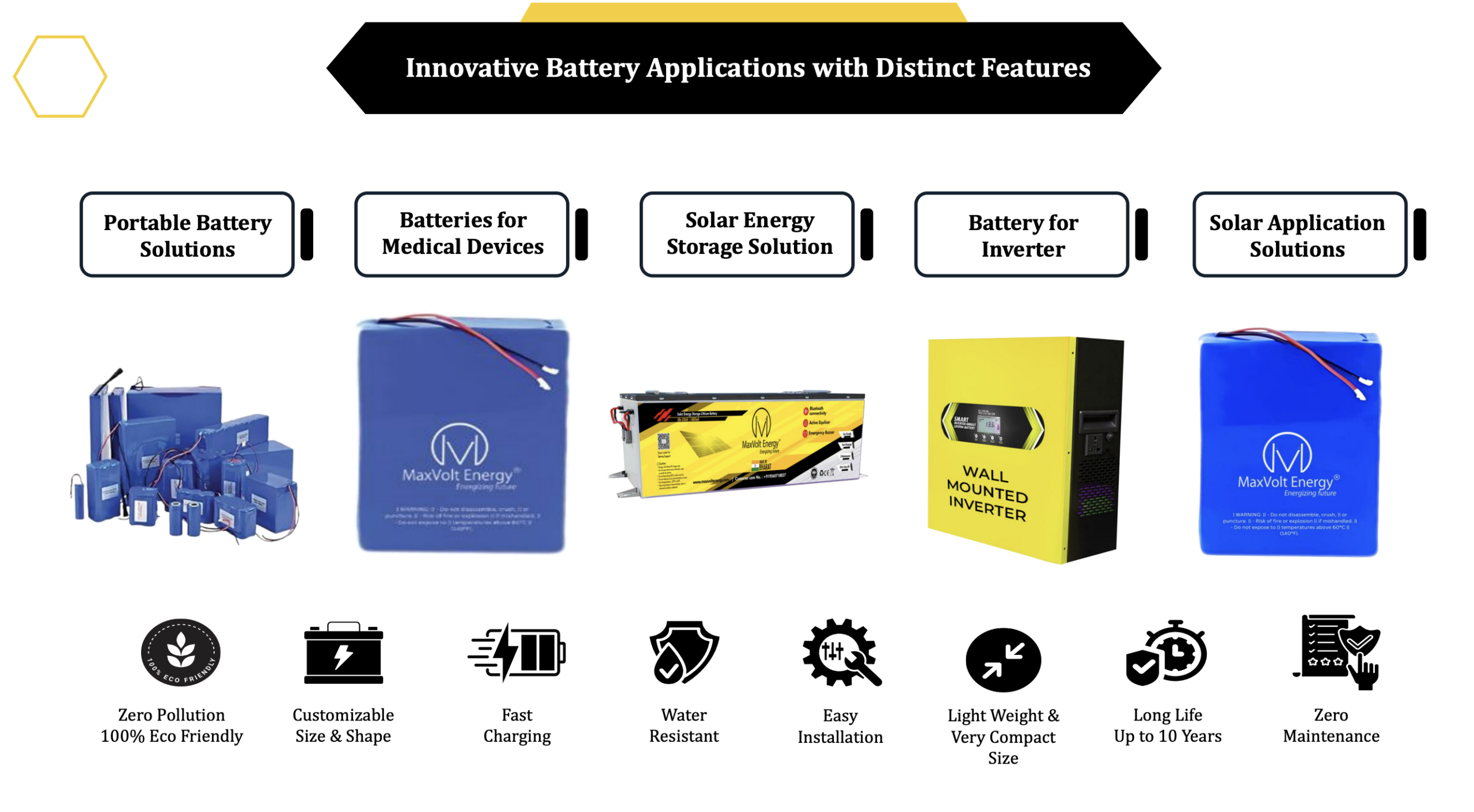
The lithium-ion sector is no longer just a buzzword; it is a brutal, high-stakes battleground where only the vertically integrated survive. Maxvolt Energy Industries Limited is currently attempting a high-wire act—transitioning from a pure-play battery assembler to a “circular economy” powerhouse. The numbers coming out of the latest H2 FY26 results are, quite frankly, staggering from a top-line perspective. With a 176% YoY revenue growth, the company is scaling at a pace that would make most mid-caps blush.
However, behind the celebratory growth figures lies a complex web of aggressive capacity expansion, shifting margins, and a bold pivot into battery recycling. The market is watching to see if this ₹497 Cr market cap player can actually turn its ambitious “circular” vision into sustainable bottom-line profit. When a company doubles its capacity and targets a 5% national market share by FY32, you don’t just look at the sales; you look at the debt, the cash flow, and whether the management is biting off more than they can chew.
1. At a Glance
Maxvolt Energy is currently riding the EV wave with a vengeance. The company’s revenue has rocketed from ₹107 Cr in FY25 to ₹297 Cr in FY26. This isn’t just organic growth; it’s an industrial-scale explosion. Investors are flocking to the story of a company that manages the entire lifecycle of a battery—from manufacturing for E-Scooters to repurposing old cells for solar storage.
But let’s get real. The “Red Flags” aren’t invisible. While revenue grew 176%, PAT (Profit After Tax) grew 141%. Notice the gap? Expenses are rising, and the EBITDA margin has compressed from 13% to 12%. The company is trading at a P/E of 20.4, which might look “cheap” compared to industry giants, but remember, this is a company in a capital-intensive race where competition from cheap Chinese imports is a constant shadow.
The most critical factor gaining attention is their ₹557 Cr Enterprise Value and the massive jump in borrowings from ₹10 Cr to ₹85 Cr in just one year. Maxvolt is betting the house on their new 55,000 sq. ft. automated plant in Ghaziabad. They are no longer just a small-scale shop; they are an automated factory aiming for 25,000 packs per month.
The “Intriguing Teaser” here is their upcoming Aligarh recycling plant. Management claims recycling margins could hit 30-35%. If they pull that off, the current margin compression will look like a minor speed bump. If they don’t, they’re just another assembler fighting for scraps in a commoditized market.
2. Introduction
Maxvolt Energy Industries Limited started its journey in 2019, right before the world flipped upside down. While many were struggling to survive, they were busy prototyping their first lithium-ion packs. Fast forward to today, and they are a listed entity on the NSE SME Emerge platform, providing the “heart” for thousands of E-Scooters and E-Rickshaws across India.
The company operates under the “MaxVolt Energy” brand. They don’t make the cells—let’s be clear about that. They source cells globally and assemble them into sophisticated, smart-BMS (Battery Management System) enabled packs. Their bread and butter is the EV segment, which accounts for over 82% of their revenue.
What makes them interesting is their distribution reach. Covering over 1,200 pin codes with 875+ dealers, they have built a moat that isn’t technological, but logistical. In the battery world, service is the ultimate deal-breaker. If your E-Scooter battery dies, you don’t want a 30-day wait; Maxvolt promises a 48-hour service turnaround.
They are currently in a “transition phase.” The IPO funds are being deployed, the new automated lines are humming, and the focus is shifting toward Energy Storage Systems (ESS) and Recycling. This isn’t just about selling batteries anymore; it’s about owning the molecules inside them.
3. Business Model – WTF Do They Even Do?
If you think Maxvolt is just putting “AA batteries” in a plastic box, you’re missing the point. They are the “System Integrators” of the EV world. They take raw lithium cells, add a brain (the BMS), wrap them in thermal protection, and sell them to OEMs like E-Scooters and E-Cycles manufacturers.
They also have a clever “Outsourcing” arm. For things they don’t want to build—like chargers or lead-acid batteries—they get third parties to manufacture them under the MaxVolt brand. It’s a low-capex way to ensure the customer stays within their ecosystem.
The real “kicker” is their Circular Economy Model.
- Sell the battery.
- Buy back the battery when it’s old.
- Repurpose it for home inverters (where high performance isn’t as critical as in a vehicle).
- Recycle it to recover expensive metals like Lithium, Cobalt, and Nickel.
It sounds brilliant on paper. In reality, it’s a logistics nightmare that requires massive scale. They are currently chasing that scale with 30+ OEM partners. They want to be the “intel inside” for every electric three-wheeler you see on the road.
4. Financials Overview
The numbers for H2 FY26 show a company that is hitting the gas pedal. However, with massive growth comes massive complexity.
Financial Performance Table (Standalone)
| Metric (₹ in Cr) | Latest Half-Year (H2 FY26) | Same Period LY (H2 FY25) | YoY Change (%) |
| Revenue | 166.73 | 67.19 | +148.1% |
| EBITDA | 17.17 | 8.56 | +100.5% |
| PAT | 11.45 | 5.34 | +114.5% |
| EPS (Annualised) | 21.02* | 10.68 | +96.8% |
*Annualised EPS calculated as H2 EPS (10.51) x 2.
Witty Commentary:
Management talked the talk about expansion, and the revenue figures show they definitely walked it. But notice the EBITDA growth (100%) lagging behind Revenue growth (148%). This is what happens when you chase market share—you lose a bit of “meat” on the bone. The interest costs have also tripled, showing the weight of the new debt used to fuel this fire.
5. Valuation Discussion – Fair Value Range
Valuing a high-growth SME in a cyclical sector is like trying to catch a greased pig. Here is the breakdown:
Method 1: P/E Multiple
The Industry P/E is roughly 27.0. Maxvolt is currently at 20.4.
- Annualised EPS (FY26 based on H2): ₹21.02
- Lower Band (P/E 18): ₹378
- Upper Band (P/E 24): ₹504
Method 2: EV to EBITDA
- TTM EBITDA: ₹35.6 Cr
- Enterprise Value: ₹557 Cr
- EV/EBITDA: ~15.6x. (Fairly standard for a growing manufacturing firm).
Method 3: DCF (Discounted Cash Flow)
Assuming a 25% growth for the next 3 years (conservative given their current 176%) and a terminal growth of 5%, the intrinsic value sits in a wide range due to the negative free cash flow of -₹59 Cr.
Fair Value Range: ₹395 – ₹485
Disclaimer: This fair value range is for educational purposes only and is not investment advice.
6. What’s Cooking – News, Triggers, Drama
The company is currently in a “Warrant & ESOP” frenzy. In February 2026, they allotted nearly 9.6 lakh warrants at ₹440 each. This is a classic move to bring in fresh capital (₹42 Cr) without immediate equity dilution. It shows the promoters are hungry for cash to fund the Aligarh recycling plant.
There is also some “related-party” drama. They recently sought approval for transactions up to ₹400 Crore with related entities. While common in growing groups, auditors usually look at this with a raised eyebrow. Why so much? Management says it’s for supply chain efficiency. We say it’s a lot of money moving between “friends.”
The biggest trigger? The Aligarh Land Allotment. They’ve secured 23,524 sq. m. for a 2 GWh ESS facility and recycling. If this plant goes live by FY27, Maxvolt stops being a “packager” and starts being a “resource” company.
7. Balance Sheet
The balance sheet is where the “Bold” story is written. The company has moved from a lean operation to a heavy industrial player.
| Particulars (Standalone) | Mar 2026 (₹ Cr) | Mar 2025 (₹ Cr) | Mar 2024 (₹ Cr) |
| Total Assets | 225 | 96 | 32 |
| Net Worth | 104 | 69 | 12 |
| Borrowings | 85 | 10 | 6 |
| Other Liabilities | 35 | 17 | 14 |
| Total Liabilities | 225 | 96 | 32 |
Balance Sheet Sarcasm:
- Borrowings went from ₹10 Cr to ₹85 Cr. Someone really likes the smell of bank loans in the morning.
- Total Assets jumped 134%. That’s a lot of shiny new machines that better start producing profit soon.
- Net Worth is up, mostly thanks to the IPO and warrant money. It’s nice to play with other people’s capital, isn’t it?
8. Cash Flow – Sab Number Game Hai
The cash flow statement is the “Reality Check” for Maxvolt.
| Cash Flow (₹ Cr) | Mar 2026 | Mar 2025 | Mar 2024 |
| Operating (CFO) | -29 | -45 | -8 |
| Investing (CFI) | -30 | -3 | -1 |
| Financing (CFF) | 84 | 49 | 8 |
Where did the money go?
The company is bleeding cash in operations (-₹29 Cr). Why? Because Working Capital is a monster. They are holding ₹62 Cr in inventory. They are essentially buying cells, keeping them in stock, and waiting for OEMs to pay. The only reason the lights are still on is the ₹84 Cr coming in from Financing. They are growing by borrowing.
9. Ratios – Sexy or Stressy?
| Ratio | Mar 2026 | Mar 2025 | Witty Judgement |
| ROE | 28.2% | 28.2% | Consistent, but let’s see if it holds as equity expands. |
| ROCE | 27.1% | 32.0% | Dropping. The new capital isn’t as efficient as the old capital… yet. |
| Debt to Equity | 0.82 | 0.14 | From “Debt-Free” to “Bank’s Best Friend” real quick. |
| PAT Margin | 8.2% | 9.4% | The margins are thinning. Volume is the only savior. |
| Inventory Days | 94 | 85 | Storing batteries is risky. If lithium prices crash, this inventory hurts. |
10. P&L Breakdown – Show Me the Money
| Component (₹ Cr) | Mar 2026 | Mar 2025 | Mar 2024 |
| Revenue | 297 | 107 | 48 |
| EBITDA | 36 | 14 | 7 |
| PAT | 24 | 10 | 5 |
Stand-up Comedy Commentary:
Maxvolt’s P&L is like a teenager hit by a growth spurt—tall, awkward, and hungry. Revenue tripled, but interest costs went from ₹1 Cr to ₹3 Cr. They are paying more in interest than they used to make in total profit just three years ago. It’s a “Scale or Die” game. If the EV market slows down, that ₹297 Cr revenue target will feel like a heavy backpack.
11. Peer Comparison
| Company | Revenue (₹ Cr) | PAT (₹ Cr) | P/E Ratio |
| Samvardhana Motherson | 31,409 | 1,072 | 37.7 |
| Uno Minda | 5,018 | 300 | 56.0 |
| Maxvolt Energy | 297 | 24 | 20.4 |
| Tube Investments | 6,214 | 234 | 82.3 |
Sarcastic Note: Maxvolt is the “tiny tot” in a room full of giants. While the giants are trading at sky-high P/Es (82.3x for Tube Investments? Really?), Maxvolt is the “value” play at 20.4x. However, the giants have deep pockets; Maxvolt has a bank limit. Who’s winning? The big boys are laughing all the way to the bank, while Maxvolt is crying over its working capital cycle.
12. Miscellaneous – Shareholding and Promoters
| Holder | Percentage (Mar 2026) |
| Promoters | 39.14% |
| FIIs | 0.43% |
| DIIs | 0.76% |
| Public | 59.67% |
Promoter Roast:
The promoter holding is at 39.1%. That’s… low for a smallcap. Usually, you want the “captains” to own more of the ship. Bhuvneshwar Pal Singh and Vishal Gupta are the brains here, but with 59% in public hands, this stock is a playground for retail investors. The FIIs and DIIs are barely in the room—they are likely waiting to see if the recycling plant is real or just a PPT slide.
13. Corporate Governance – Angels or Devils?
Maxvolt is making the right noises. They have a CEO (Satendra Shukla) and a CS (Amisha Swain) in place. They’ve moved from “Unlisted” to “Listed” status officially.
However, the Related Party Transactions of up to ₹400 Crore need to be watched. Why is an SME with ₹297 Cr revenue needing a ₹400 Cr ceiling for related-party deals? It signals either massive future growth or a very complex internal structure.
The auditor reappointments and regular board meetings suggest they are following the rulebook, but in the SME space, the rulebook is often used as a suggestion rather than a law. The shift in the registered office and the warrant issue at ₹440 (close to CMP) shows management is confident, or at least they want you to be.
14. Industry Roast and Macro Context
The battery industry is currently a mess of “Green Dreams” and “China Reality.” India wants to be self-reliant, but we still import the cells. We are essentially just “glorified mechanics” assembling Chinese tech.
The Lead-Acid giants (Exide, Amara Raja) are finally waking up and moving into Lithium. When the big sharks enter the pool, the little fish like Maxvolt either get eaten or need to find a very specific niche. The macro context is favorable—the government’s PLI schemes and the push for EVs are tailwinds.
But let’s be honest: the sector is plagued by low barriers to entry. Any guy with a soldering iron and a shipping connection to Shenzhen can start an assembly unit. Maxvolt’s only defense is their 875+ dealer network and their AIS 156 safety certifications.
15. EduInvesting Verdict
Maxvolt Energy is a classic high-risk, high-reward SME story. They have successfully scaled their top line, proving that there is massive demand for their battery packs. The move into Energy Storage Systems (ESS) is smart, as it diversifies them away from just the 2W/3W mobility market.
Past Performance: Stellar top-line growth, but tightening margins. They have utilized their IPO funds to double capacity, which is a “Walk the Talk” checkmark.
Headwinds: * Rising Debt: Interest coverage is still okay (10.5x), but the jump in borrowings is steep.
- Working Capital: The cash is locked in inventory and receivables. They are running a marathon while holding their breath.
- Competition: As the market matures, margins will be squeezed further.
Tailwinds:
- Recycling Pivot: This is the game-changer. If they can recover lithium and nickel, they move up the food chain.
- Automation: The new plant should lower per-unit labor costs.
SWOT Analysis:
- Strengths: Massive distribution network (1,200 pin codes), AIS 156 certified products.
- Weaknesses: Low promoter holding (39%), negative operating cash flow.
- Opportunities: Expansion into the Middle East and Africa for ESS.
- Threats: Crashing lithium prices (inventory loss) and predatory pricing from China.
Is Maxvolt a “Circular Economy” pioneer or just a debt-fueled assembler? The next 18 months, specifically the commissioning of the Aligarh plant, will provide the answer.
Disclaimer: This analysis is for educational purposes only. The fair value range and financial assessments provided do not constitute a buy, sell, or hold recommendation. Investing in SME stocks involves significant risk, including the potential loss of principal. Always consult with a SEBI-registered investment advisor before making any financial decisions.